

Most people assume TSA is only hunting for weapons and that infamous 3.4 oz liquid rule. But the moment a traveler over 65 steps into the security line, trained officers quietly run through a very specific mental checklist that almost nobody outside the agency ever talks about.
Some of it is about risk. A surprising amount is about exemptions, modified procedures, and accommodations that nobody announces over the intercom – and that millions of qualifying seniors miss every single day. What agents are actually watching for is far more nuanced than most people expect. Here’s what TSA’s own official policy actually says, starting with the one detail that catches nearly every older traveler off guard.
#15 – Whether You Appear to Be 75 or Older
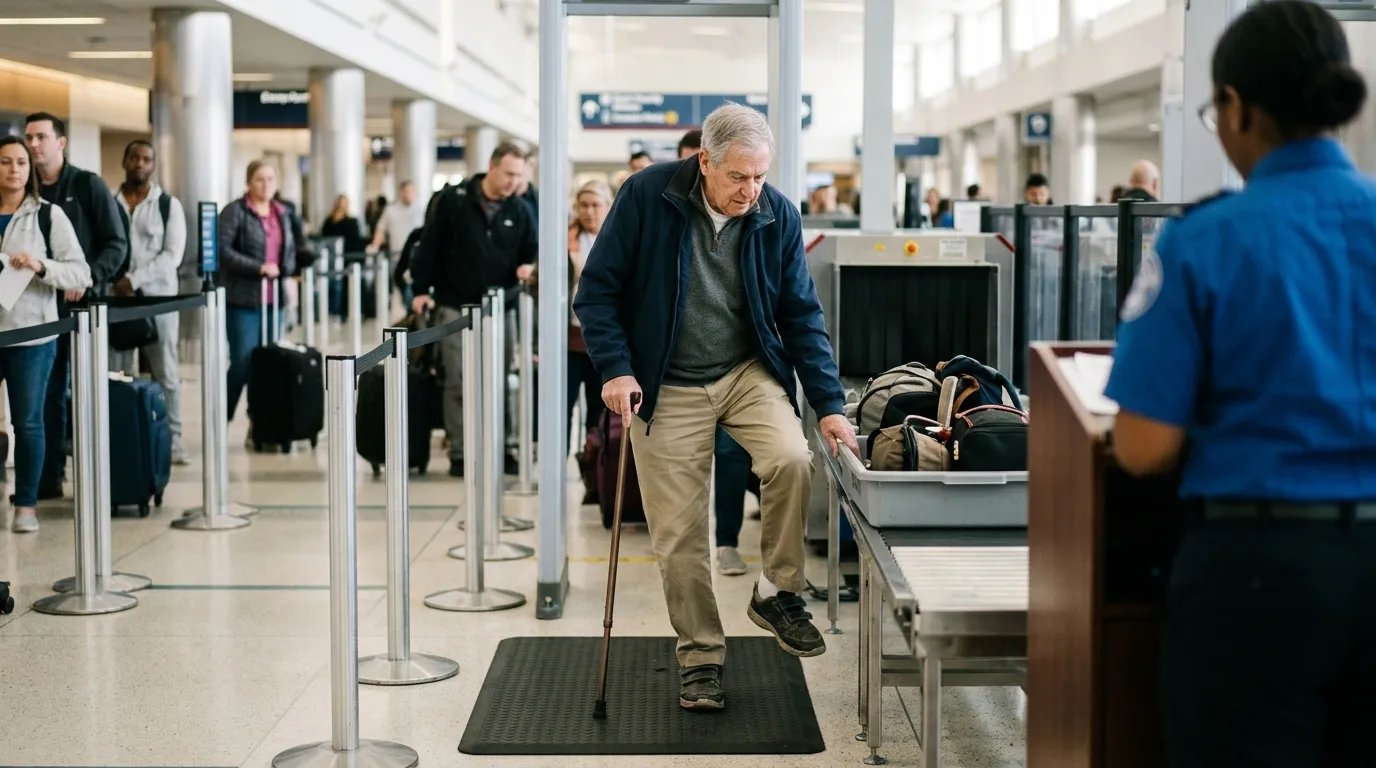
The very first thing a trained TSA agent clocks when an older traveler steps into line is a rough estimate of age – specifically whether that person appears to be 75 or older. This matters because federal TSA policy provides a distinct tier of modified screening for that age group, separate from what everyone else receives.
Passengers 75 and older are eligible for expedited, risk-based screening that allows TSA to focus resources more strategically. Most agents won’t announce this to the line. They’ll simply route the traveler – or quietly watch as that traveler removes their shoes out of pure habit anyway.
Millions of qualifying seniors go through the slower, more stressful standard process every year simply because no one told them they didn’t have to. But that habit of removing shoes? That’s exactly what #14 is about.
At a Glance: The 75+ Screening Tier
- Shoes stay on – no removal required at the checkpoint
- Light jacket stays on during standard screening
- One additional AIT pass allowed to clear any anomalies
- Seated screening available if standing is not possible
- Applies at all U.S. TSA checkpoints – no enrollment required
#14 – Whether You’re About to Remove Your Shoes Unnecessarily
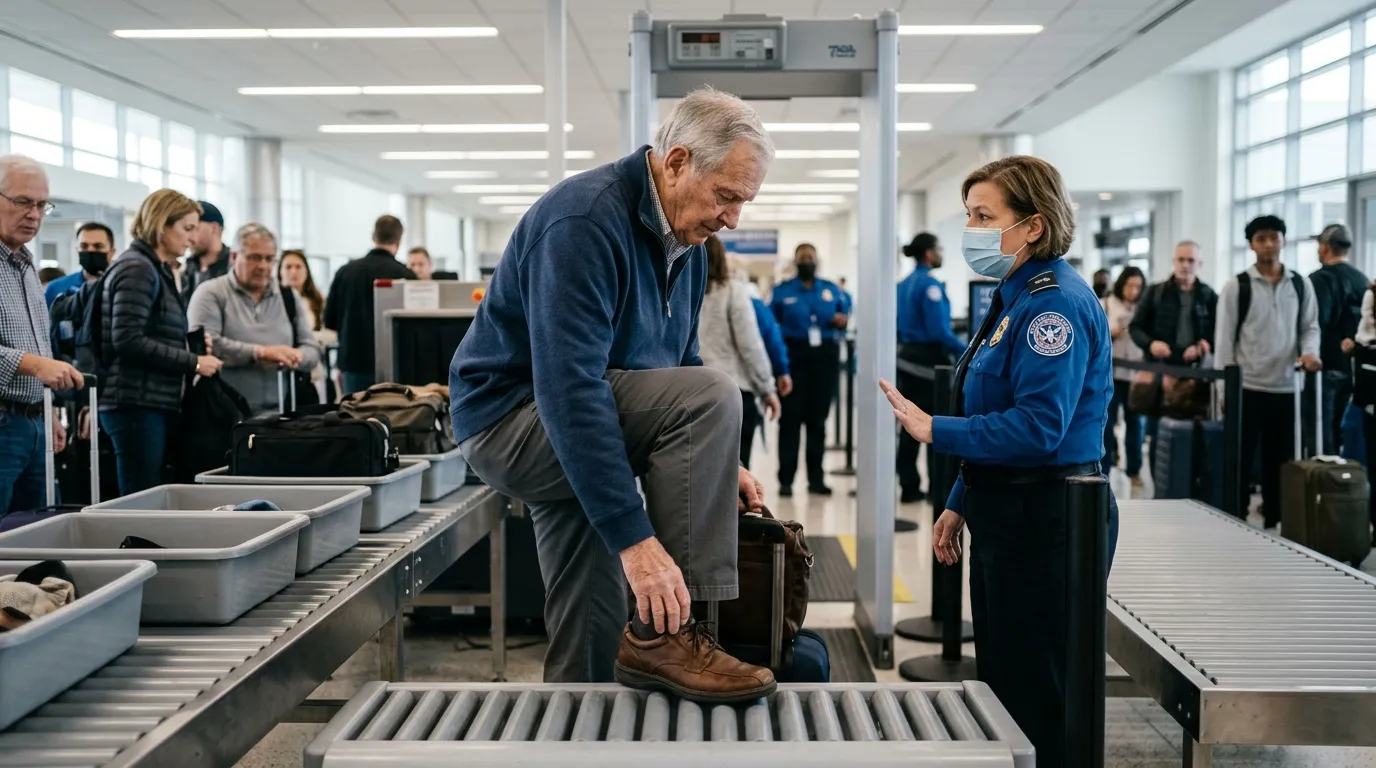
Passengers 75 and older are permitted to keep their shoes on during standard security screening as part of TSA’s risk-based approach. If you clear the checkpoint without triggering an alarm, your shoes stay on – full stop.
Agents see this mistake play out dozens of times every single shift. Older travelers instinctively start unlacing the moment they hit the belt, because that’s what they’ve always done. If the metal detector does go off, they’ll be allowed through a second time before a pat-down or shoe removal becomes necessary.
One caveat almost everyone misses: the 75-plus shoe exemption does not extend to light jackets. Jacket removal is still required for Advanced Imaging Technology screening, even for passengers over 75. That small distinction trips up a lot of people – and it’s nothing compared to what agents catch next.
#13 – Your Gait, Balance, and How You Walk to the Belt
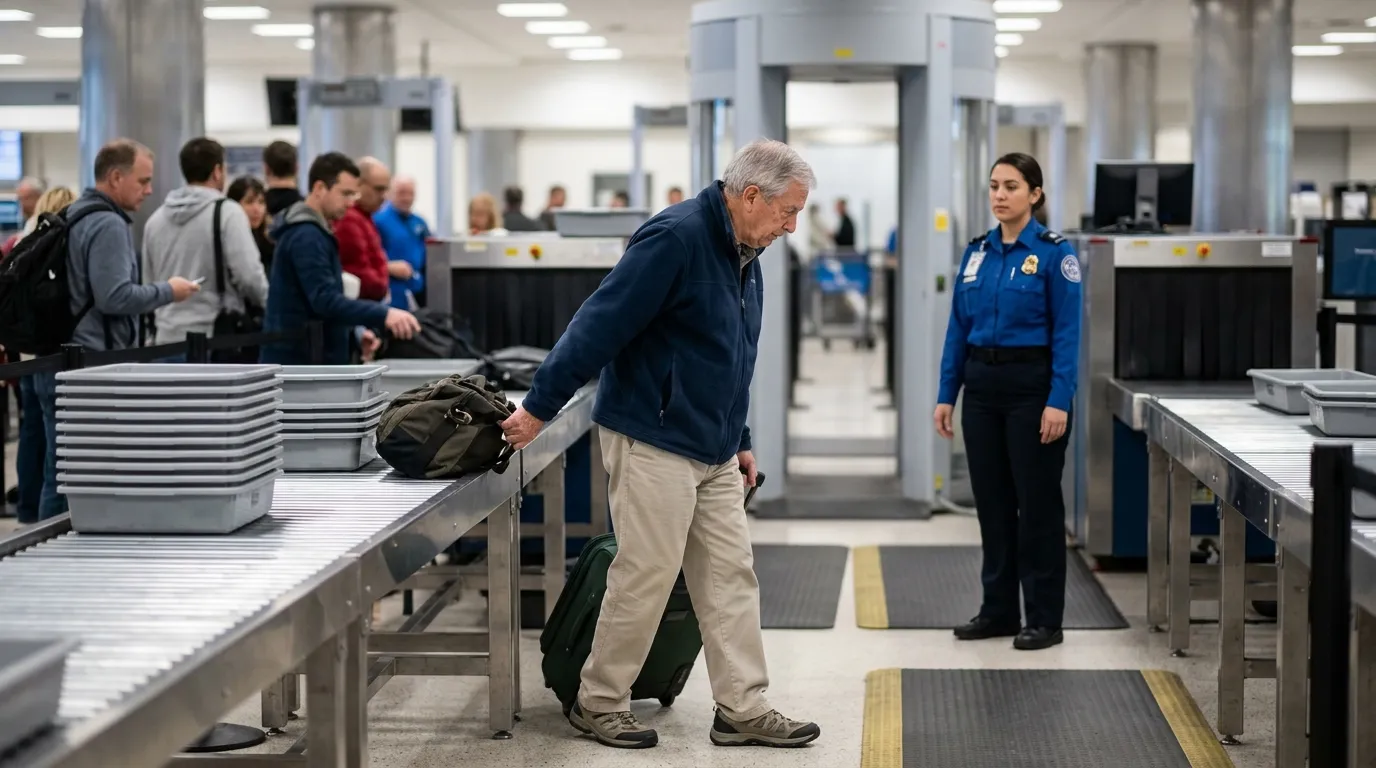
Experienced agents start reading a traveler’s physical capabilities long before anyone reaches the conveyor belt. They’re watching for a slower gait, uneven balance, visible pain when bending, or that telltale hesitation before stepping toward the scanner.
This isn’t profiling – it’s how TSA identifies passengers who may need modified procedures before things get awkward at the machine itself. What the agent sees in those first ten seconds determines the entire flow of your screening. Walking in slowly but confidently sends a very different signal than freezing at the entrance.
Agents who spot mobility challenges early can quietly prep the lane, alert a colleague, or arrange a seated option before the traveler even arrives. But if that traveler is in a wheelchair or using a mobility aid, the watch list gets even more specific.
#12 – Whether You’re Using a Wheelchair or Mobility Device
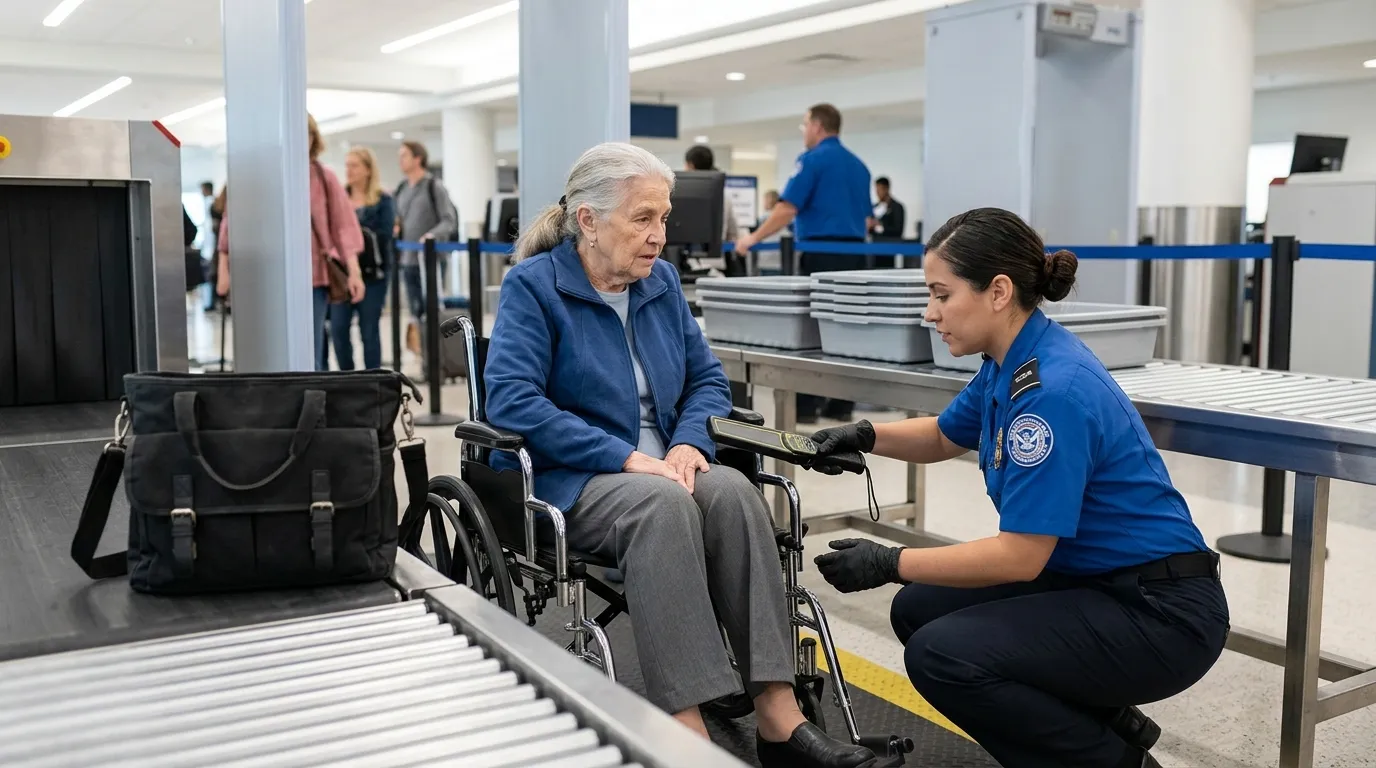
TSA has found weapons and prohibited items stashed inside wheelchairs and mobility devices – which is exactly why every passenger using a motorized scooter, wheelchair, walker, or cane must be screened in some form. The device itself doesn’t get a pass just because you need it.
Passengers 75 and older with mobility devices may remain seated while security officers check the individual, the device, and any accompanying service animal. But any bags or satchels attached to the device must come off and go through the X-ray belt separately.
Most travelers don’t learn this until it’s already happening to them – and then the entire lane stops. Which leads directly to what happens to your hands next.
#11 – Whether Your Hands Will Be Swabbed for Explosive Trace
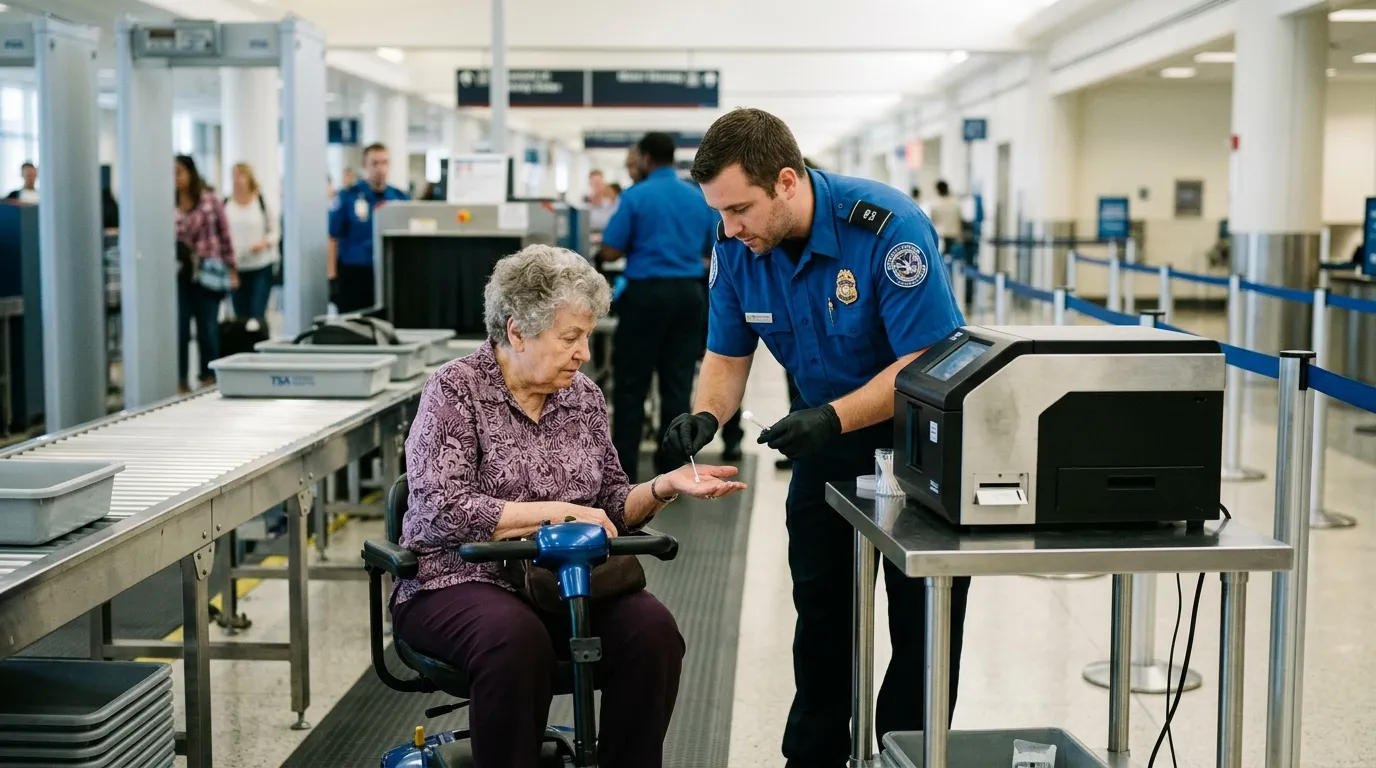
TSA officers may swab your hands, mobility aids, and external medical devices to test for explosive residue. This isn’t random. It happens far more frequently with passengers using mobility aids – and most people over 65 have never been warned it’s coming.
The swab is placed into a machine that cross-references it against a library of explosive chemical signatures in just a few seconds. The entire test takes under a minute. If you’re 75 or older in a wheelchair or scooter, you may remain seated while the officer conducts the test.
Fast, routine, and almost never explained in advance. What agents check next, though, is something far more personal.
Worth Knowing: Mobility Device Rules at a Glance
- All wheelchairs, scooters, walkers, and canes must be screened – no exceptions
- Bags and satchels attached to any mobility device must be removed for X-ray
- Passengers 75+ may stay seated while officers conduct hand-trace testing
- A service animal accompanying the traveler is also subject to visual inspection
- Requesting a Passenger Support Specialist in advance can streamline the entire process
#10 – Whether You Can Stand Upright for the Full Screening
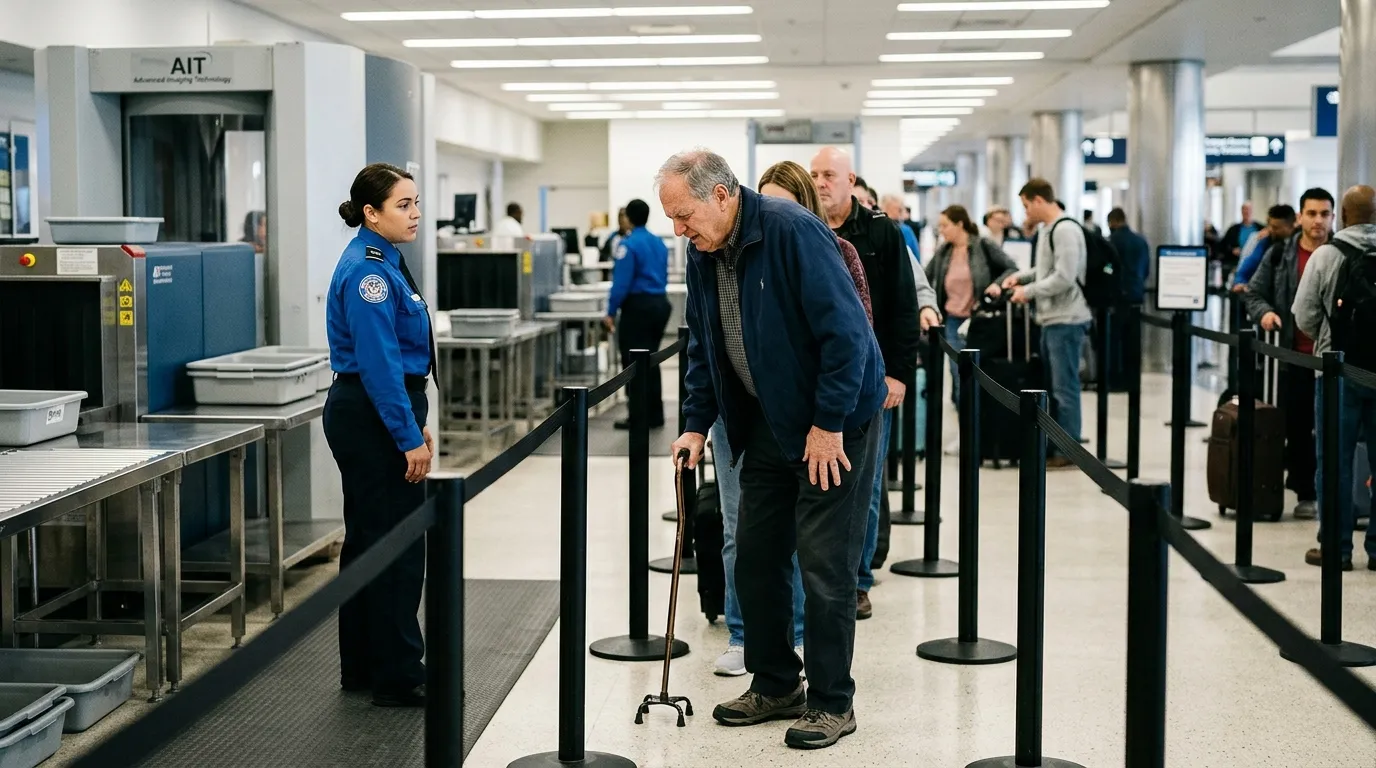
One of the least-known things TSA agents quietly assess is whether an older traveler can comfortably stand for the duration of screening. This matters because a legitimate alternative exists: a fully seated pat-down.
Passengers with medical conditions that prevent standing or sustained walking will not be required to do so, though manual inspection will still occur. Agents are supposed to offer this option – but most won’t volunteer it unless the traveler is visibly struggling.
If you’re in pain standing in that line, you are allowed to ask to sit. Almost nobody over 65 knows they have that right. And speaking of things agents watch for that most travelers never disclose – #9 is one of the most common.
#9 – Whether You Have a Pacemaker or Internal Implant
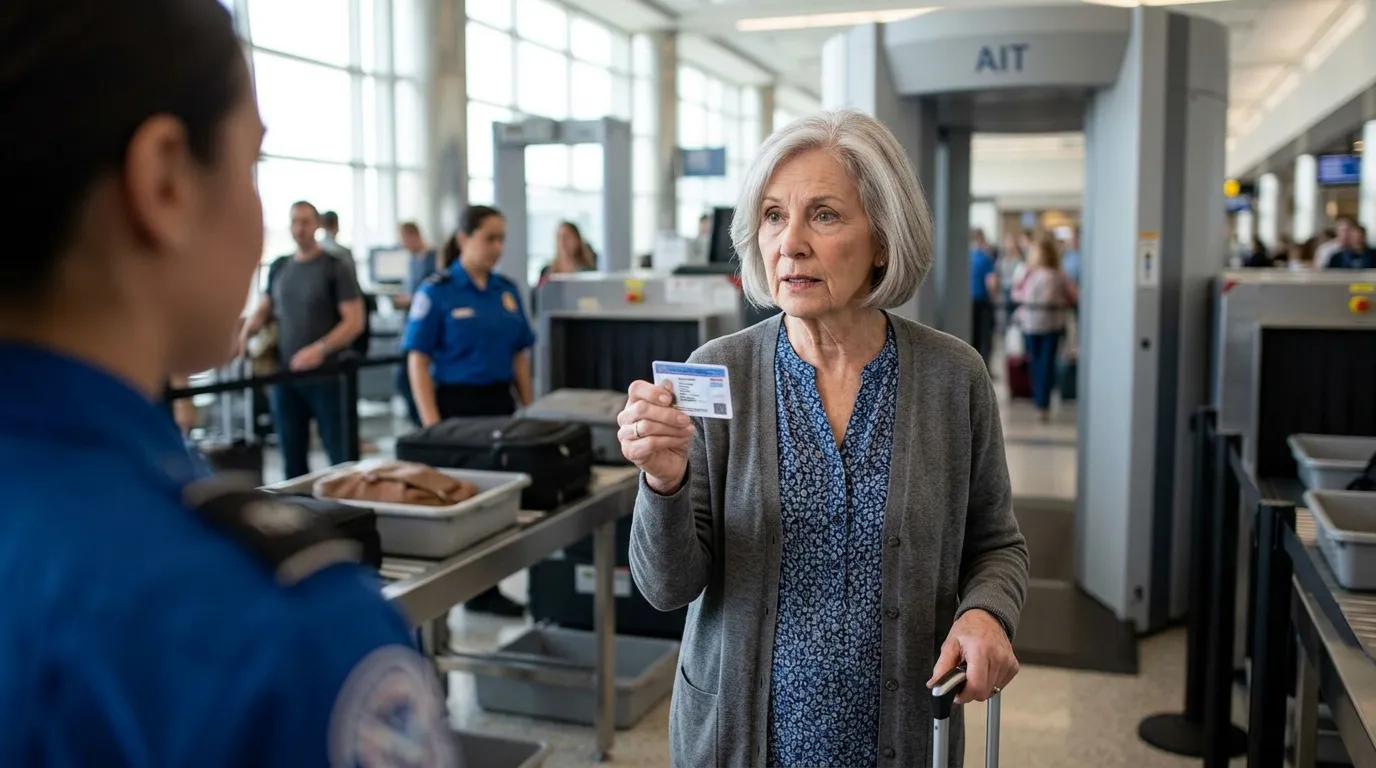
If you have a pacemaker, defibrillator, artificial knee, hip replacement, or any other internal metal implant, you should not be screened by a walk-through metal detector without telling an agent first. One sentence at the start of the line can prevent an entirely avoidable secondary screening.
Most travelers with pacemakers trigger the alarm, get flagged, and go through a pat-down that could have been bypassed with a simple declaration upfront. Inform the officer before screening begins, and if you have a medical device ID card, present it. Advanced Imaging Technology can often facilitate your screening and significantly reduces the likelihood of a pat-down.
Implants are invisible – but the delay they cause is very visible to every person waiting behind you in line. Hearing devices, on the other hand, create a different kind of problem entirely.
#8 – Whether Your Hearing Aid Is About to Set Off an Alarm
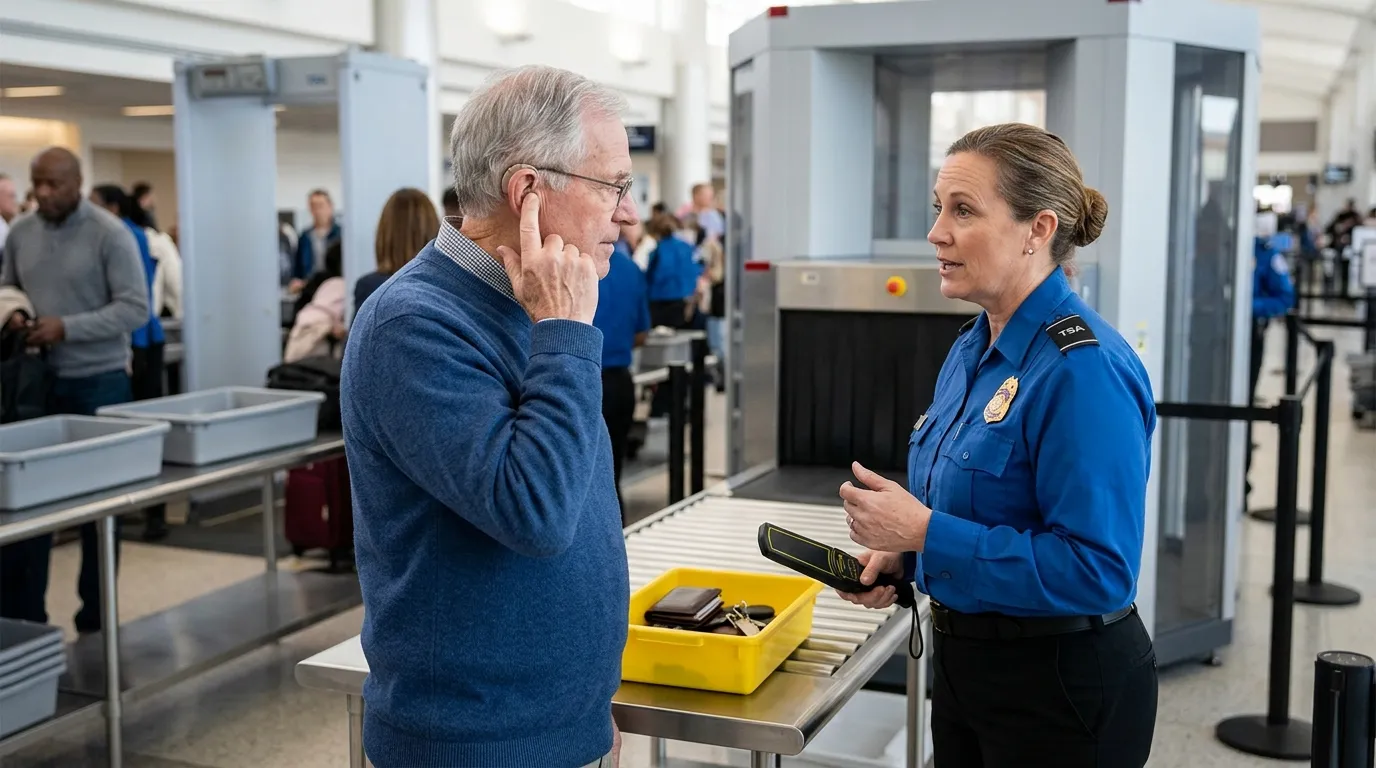
You are not required to remove hearing aids or the exterior component of a cochlear implant at the security checkpoint. But if those devices alarm a metal detector or AIT scanner, additional screening – including a pat-down or physical inspection – may follow.
Agents are trained to watch for the small tell of a passenger touching their ear, which is a near-universal sign of a hearing device. More importantly, if instructions are being called out and you’re not responding, what looks like non-compliance is often just a missed cue.
Telling the officer you’re hard of hearing before screening begins changes everything about how that interaction unfolds. The next item causes just as much confusion – but for a very different reason.
#7 – Whether You’re Carrying a CPAP Machine
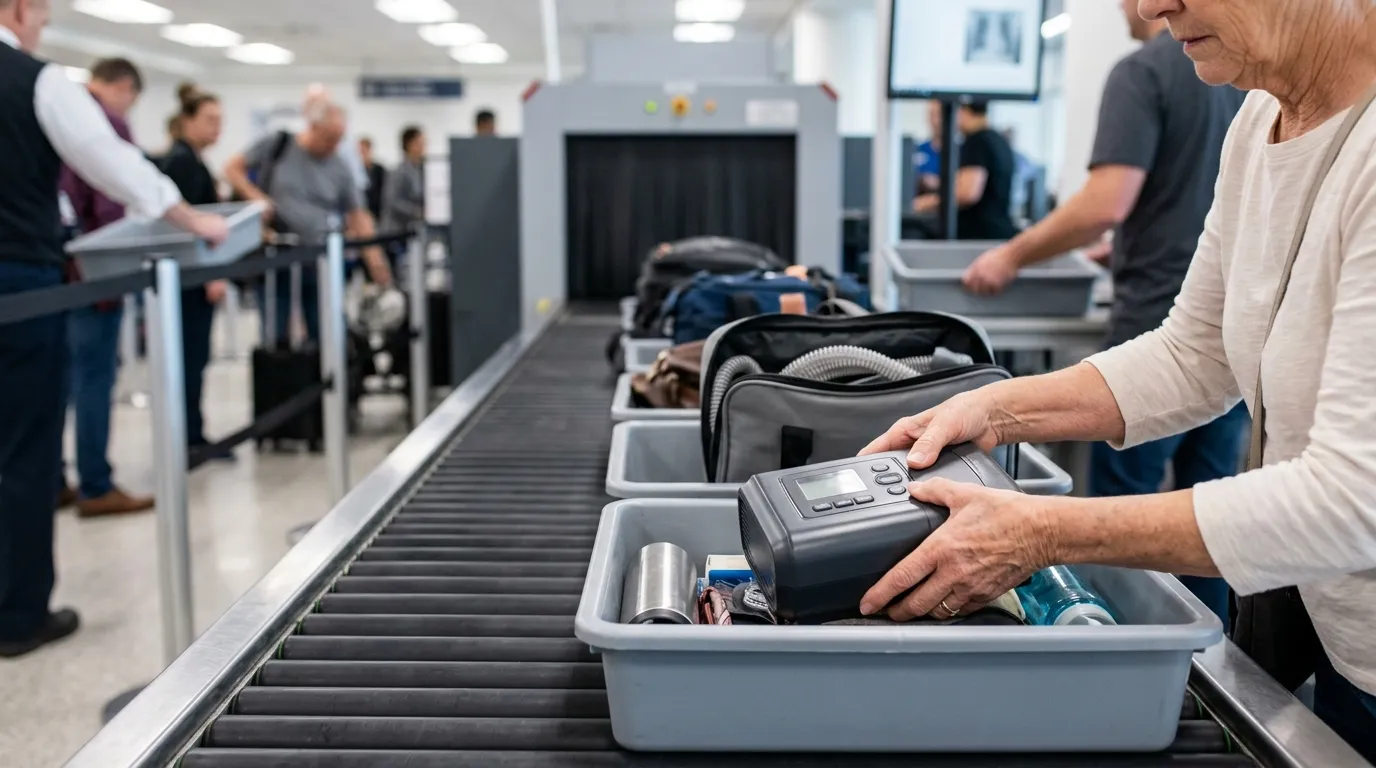
CPAP, BiPAP, and APAP machines must go through the X-ray screener separately – out of the bag, on the belt. Masks and tubing can stay in the case, but the device itself needs to be visible to X-ray. Packing it in a clear plastic bag inside the carrying case helps speed things along considerably.
Agents immediately recognize the distinctive rectangular carrying case. If you must remain connected to your equipment during screening, the device will be tested for explosive residue. This is the single most common surprise checkpoint delay for older travelers, and the fix takes about ten seconds: pull the CPAP out before you even reach the belt.
Medications create a strikingly similar problem – and the detail most people miss about them is right in #6.
Quick Compare: Medical Device Checkpoint Rules
- CPAP / BiPAP / APAP: Must come out of the case for X-ray; masks and tubing may stay inside
- Pacemaker / implant: Declare before screening; use AIT lane to reduce pat-down risk
- Hearing aid / cochlear implant: No removal required; may trigger additional screening if alarmed
- Wheelchair / scooter: Full inspection required; rider 75+ may remain seated
- Oxygen device: Must be screened; tell agent immediately if you cannot disconnect
#6 – Whether Your Medications Are Properly Declared
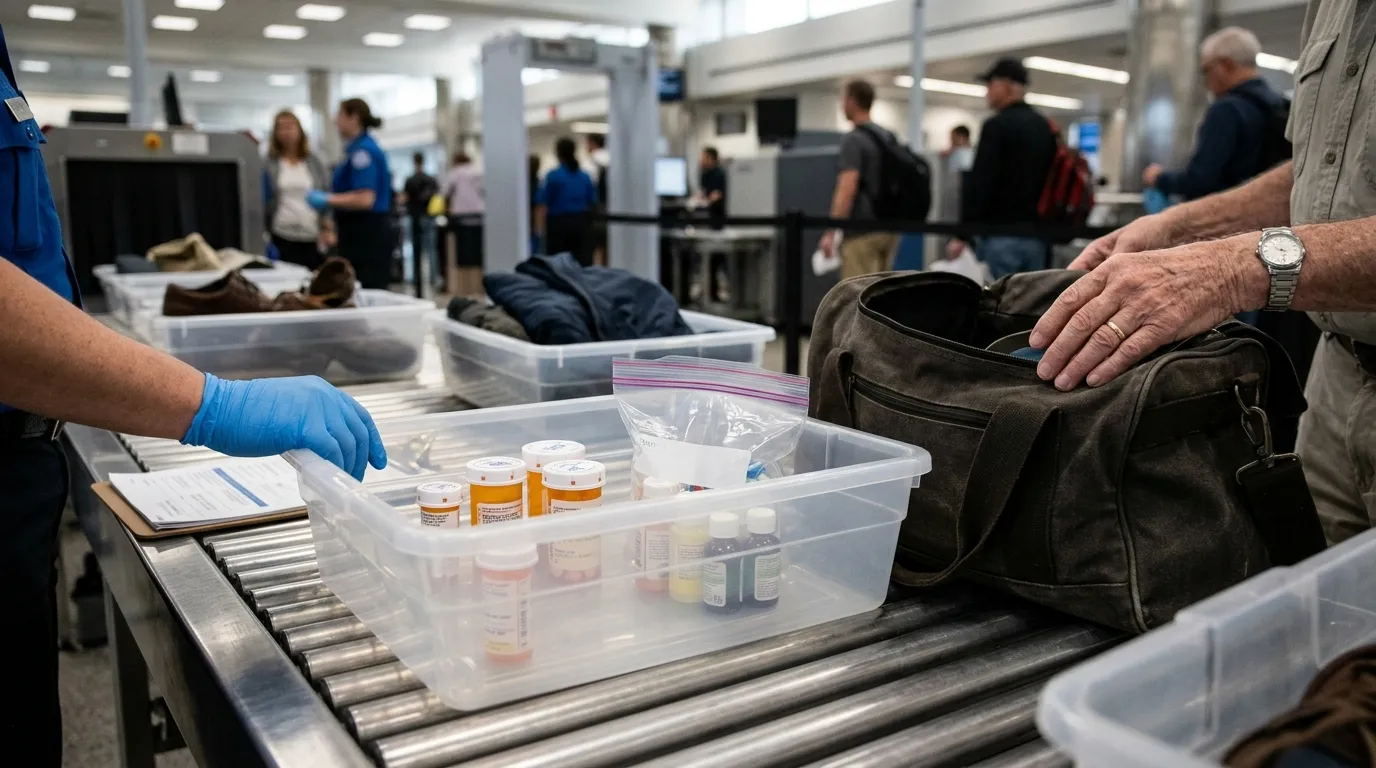
TSA officers may open medication containers, test liquids and gels for explosives, and transfer pills to another container for examination. Unlabeled pill bottles on an older traveler are one of the fastest triggers for a secondary bag check – agents are specifically trained to flag them.
Medications in pill or solid form must go through security screening. Keeping them clearly labeled speeds everything up. Medically necessary liquids, gels, and aerosols are allowed in larger quantities than the standard 3.4 oz limit, but they must be declared at the checkpoint and removed from your carry-on for separate screening.
Declare it first, avoid the delay entirely. If you’re traveling with oxygen, though, that conversation needs to happen even earlier.
#5 – Whether You’re Traveling with an Oxygen Device
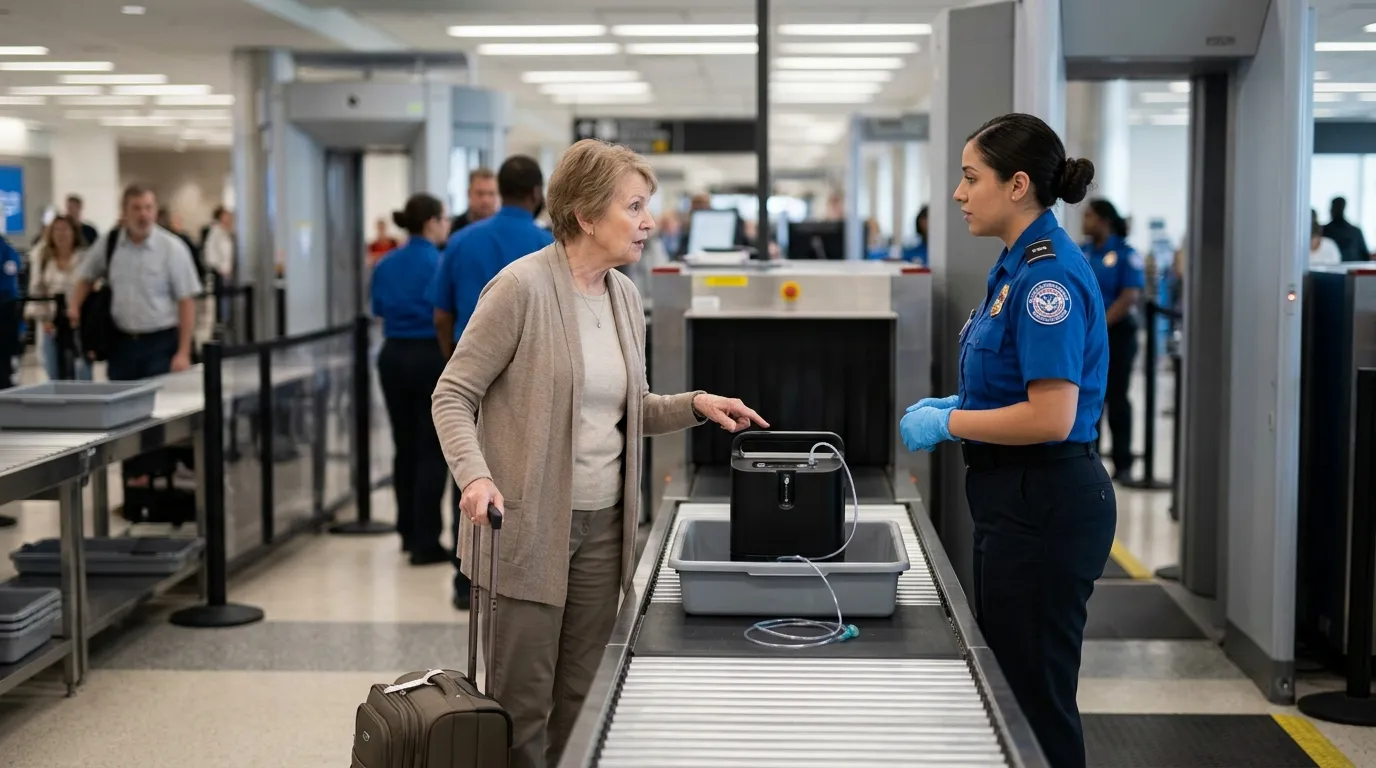
Oxygen and other respiratory devices must be screened before going through a checkpoint. Have your medical documentation ready and tell the agent upfront whether you can disconnect from the device or not – that single piece of information determines your entire screening path.
If you can disconnect, you’ll move through screening like everyone else. If you can’t, an agent will test the equipment for explosive residue using an alternative process. Oxygen devices that aren’t declared upfront cause the longest checkpoint delays of any medical equipment category – agents see the tank on the belt and immediately need answers. If those answers aren’t ready, the lane freezes.
Non-visible conditions create their own entirely different set of checkpoint dynamics. And that’s where #4 gets genuinely important.
#4 – Whether You Have a Non-Visible Cognitive Condition
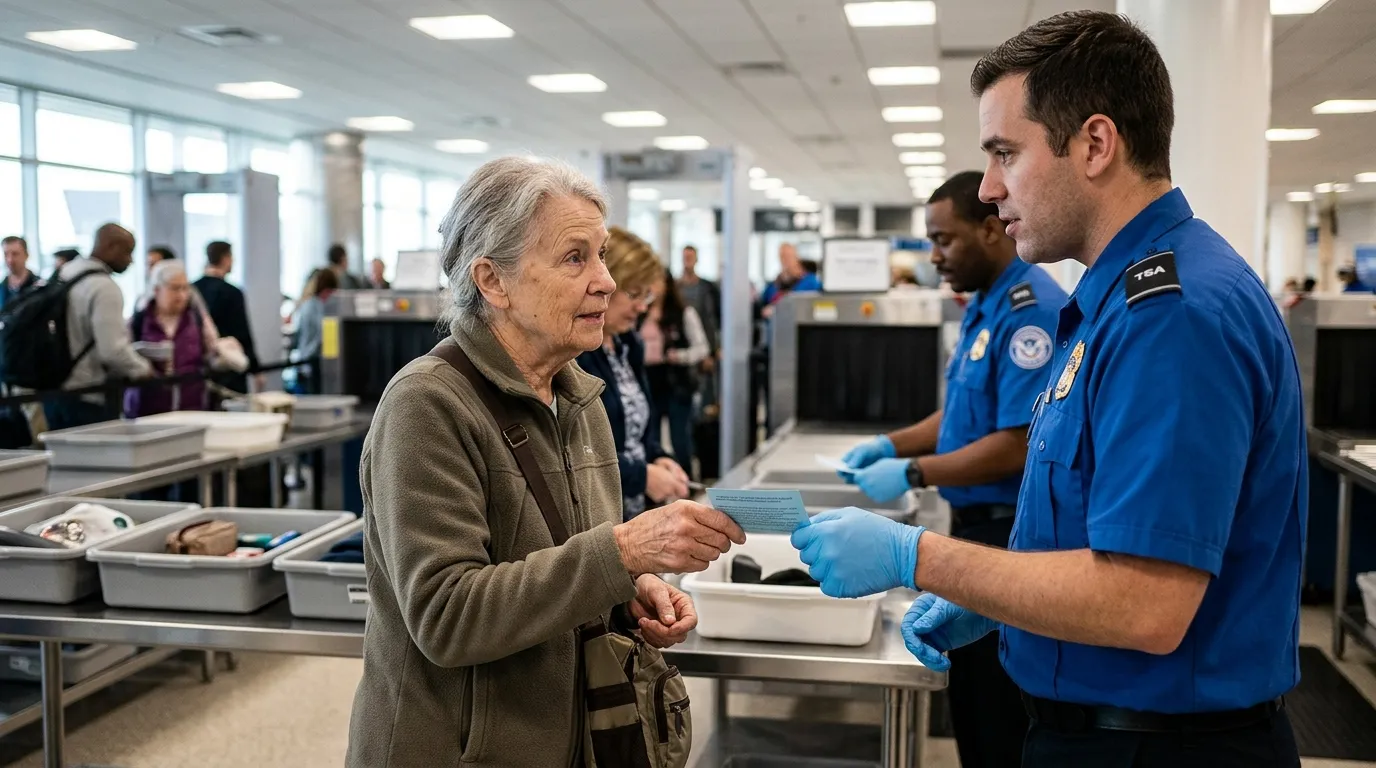
Passengers with non-visible disabilities – including Alzheimer’s, dementia, aphasia, autism spectrum disorder, and brain injury – can be screened without being separated from their traveling companion. Informing the TSA officer upfront is what makes that possible.
Agents are trained to recognize signs of confusion or disorientation not to penalize, but to route the traveler to a Passenger Support Specialist who can guide them through with calm, adapted communication. A TSA notification card or medical documentation can be presented at the checkpoint to explain the individual’s needs before any misreading occurs.
If the person has a Hidden Disabilities Sunflower lanyard, inform the officer what it means. And if a companion is helping manage all of this – #3 contains a fact that almost no one knows going in.
#3 – Whether You Have a Travel Companion – and What Role They’re Playing
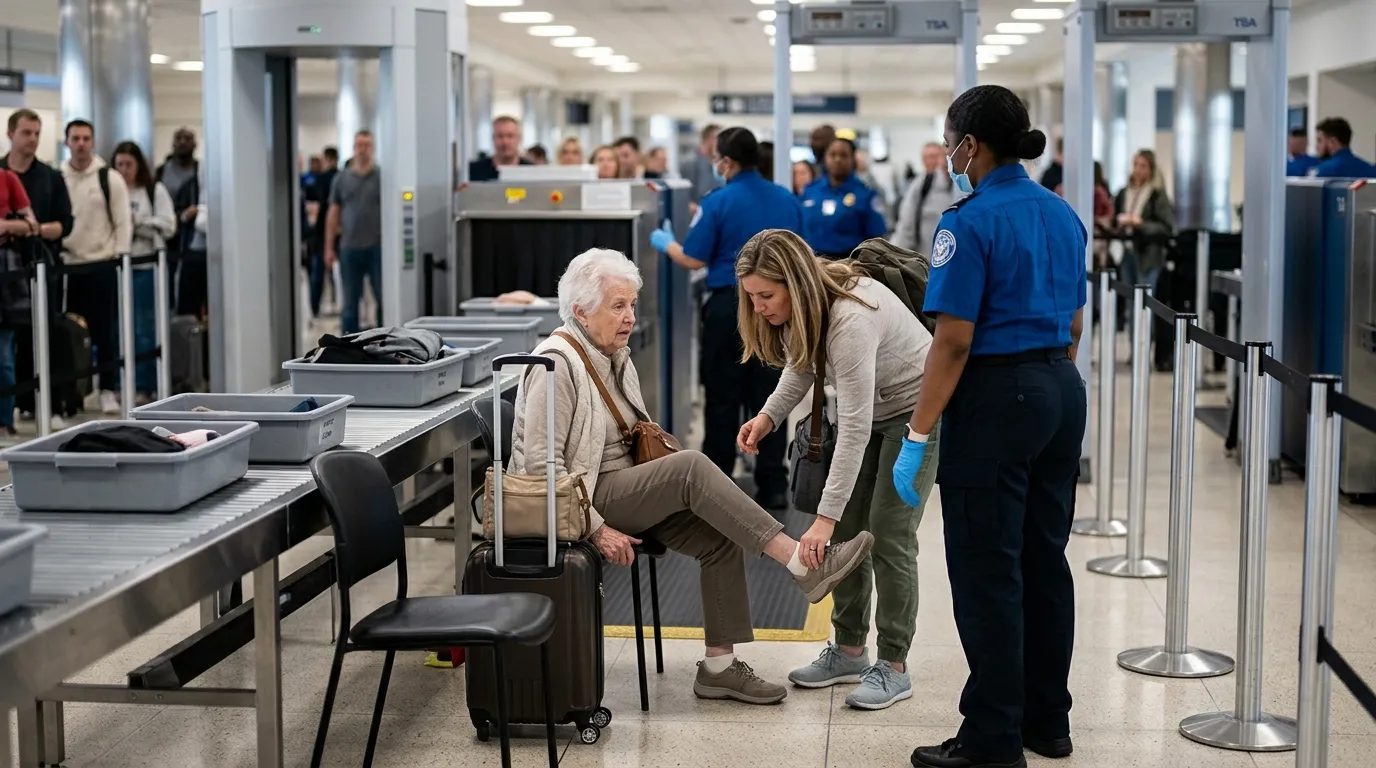
Travel companions can inform TSA officers of disabilities, medical conditions, respiratory equipment, and medication needs on behalf of the person they’re with. You can stay beside your companion during screening to reduce anxiety, and you can request a private screening room if that makes the process easier for either of you.
Here’s what almost nobody knows: if a companion physically assists during screening, they must be rescreened themselves. That’s a documented TSA rule, and it catches families off guard every single day. Knowing it in advance means no one gets stuck, separated, or confused at the worst possible moment.
All of this becomes dramatically easier if you’ve used the one resource in #2 – which the vast majority of older travelers have never even heard of.
#2 – Whether You Know About TSA Cares – and Used It
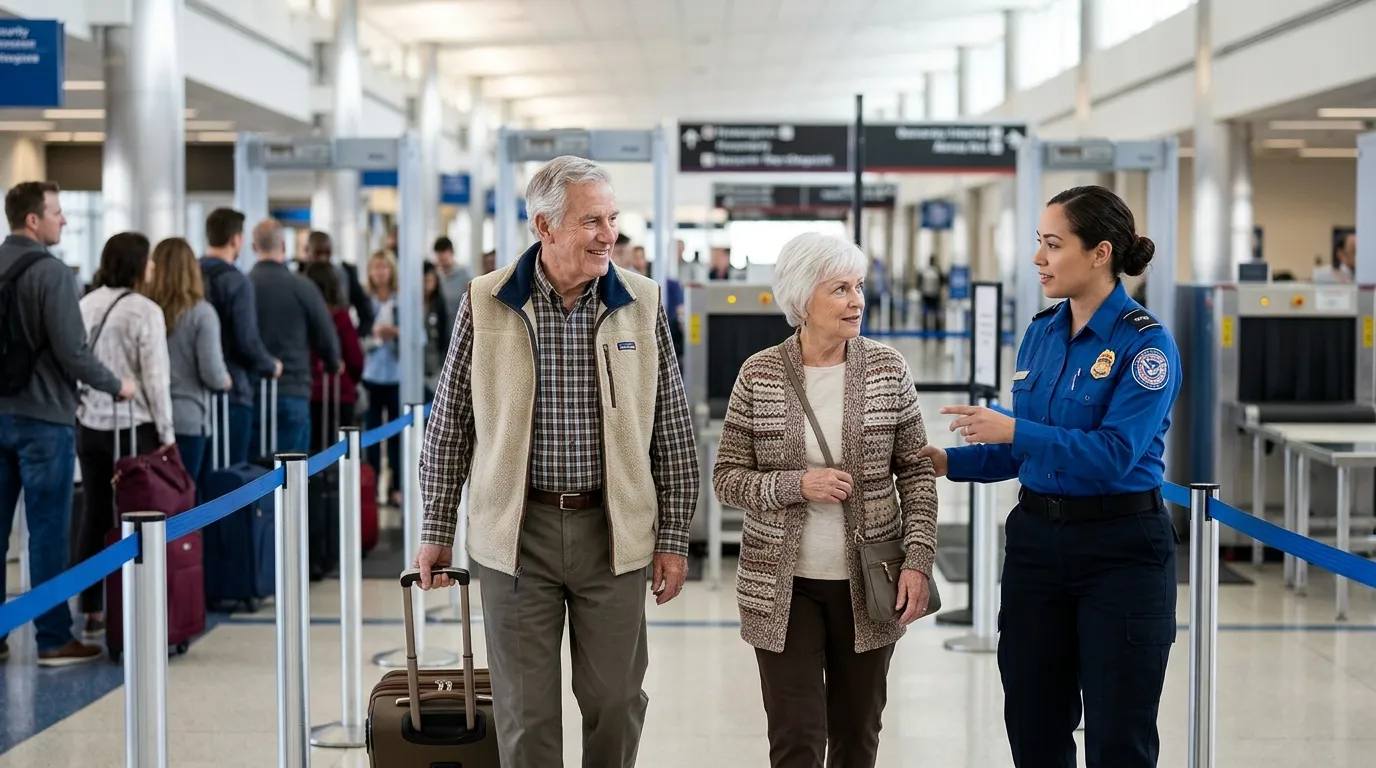
TSA Cares is a dedicated helpline – (855) 787-2227 – that connects travelers with disabilities, medical conditions, and other special circumstances to additional support before and during security screening. Through TSA Cares, you can request a Passenger Support Specialist: a TSA officer with specialized training in communicating with and assisting travelers who have disabilities or medical conditions.
Call 72 hours before your flight. That window gives you time to plan, make adjustments, and arrive at the checkpoint already matched with someone who knows your situation. Agents can immediately tell who called ahead – those travelers move through in a fraction of the time. Most travelers over 65 have never heard of this number.
Fast Facts: TSA Cares by the Numbers
- Helpline number: (855) 787-2227 – call at least 72 hours before departure
- In 2024, TSA Cares assisted 69,000 travelers with disabilities and special needs
- TSA screened 904 million passengers total in 2024 – demand for specialist support is real
- Passenger Support Specialists can also be requested on-the-spot at any checkpoint
- The service is free and available at every U.S. TSA checkpoint
But all of that – every device, every exemption, every accommodation – comes down to the single thing agents notice most. And it has nothing to do with what you’re carrying.
#1 – Whether You Know Your Own Rights at the Checkpoint
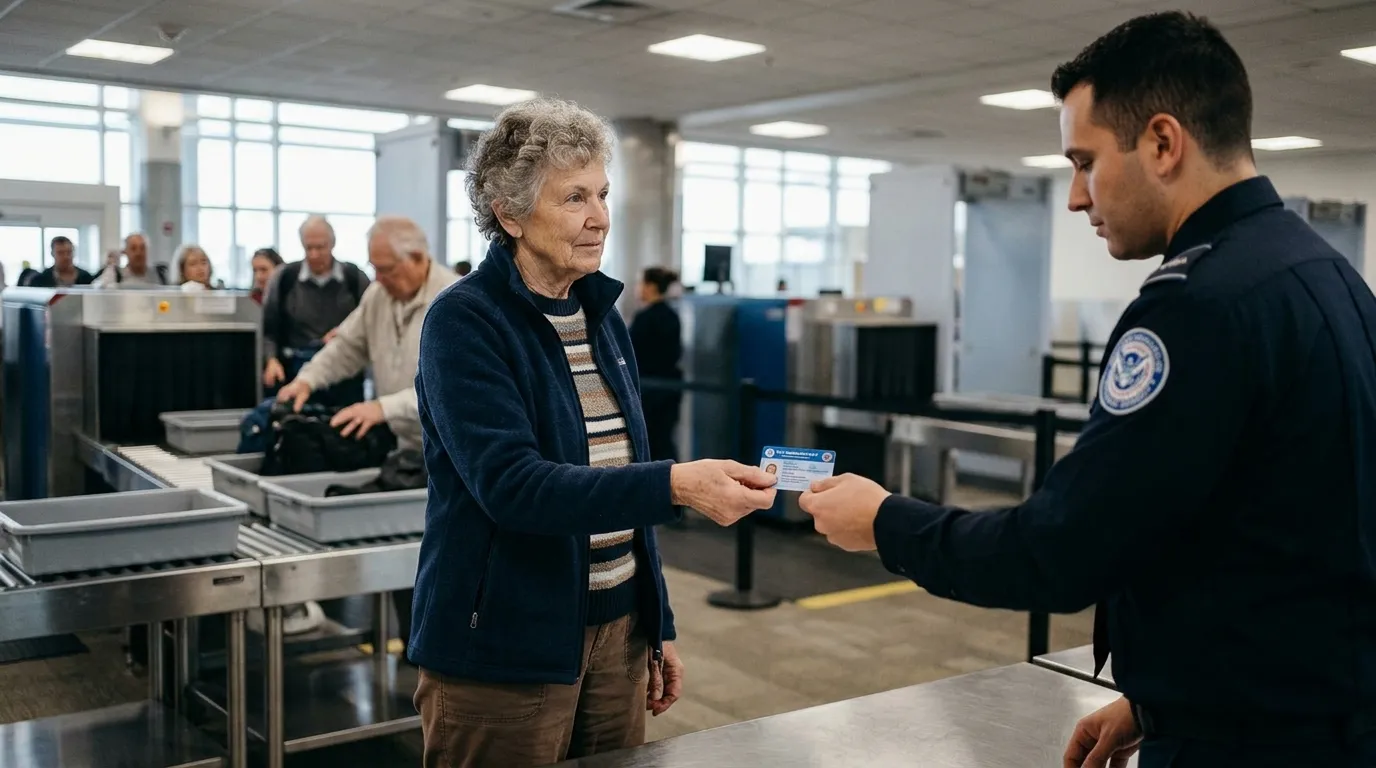
The most telling thing TSA agents notice about older travelers isn’t a device, a condition, or a bag. It’s whether the traveler knows what they’re actually entitled to – and has the confidence to act on it.
Agents watch the same preventable delays unfold every single day: seniors removing shoes they’re allowed to keep on, freezing at the scanner when a seated option exists, triggering alarms from implants they never disclosed. A TSA notification card won’t get you out of screening – but it communicates your medical situation instantly, without a word of explanation, the moment you hand it over.
Knowing your rights doesn’t get you out of security. It gets you through it faster, with less stress – every time.
TSA Official Guidance on Disability and Medical Condition Screening
Shoes on. Card in hand. Device declared. TSA Cares called 72 hours out. Four steps that take less time to prepare than a single checkpoint delay – and the difference between dreading the airport and walking through it like you own the process.
Bonus: The One Thing Seasoned Travelers Do the Night Before – And Almost Nobody Else Does
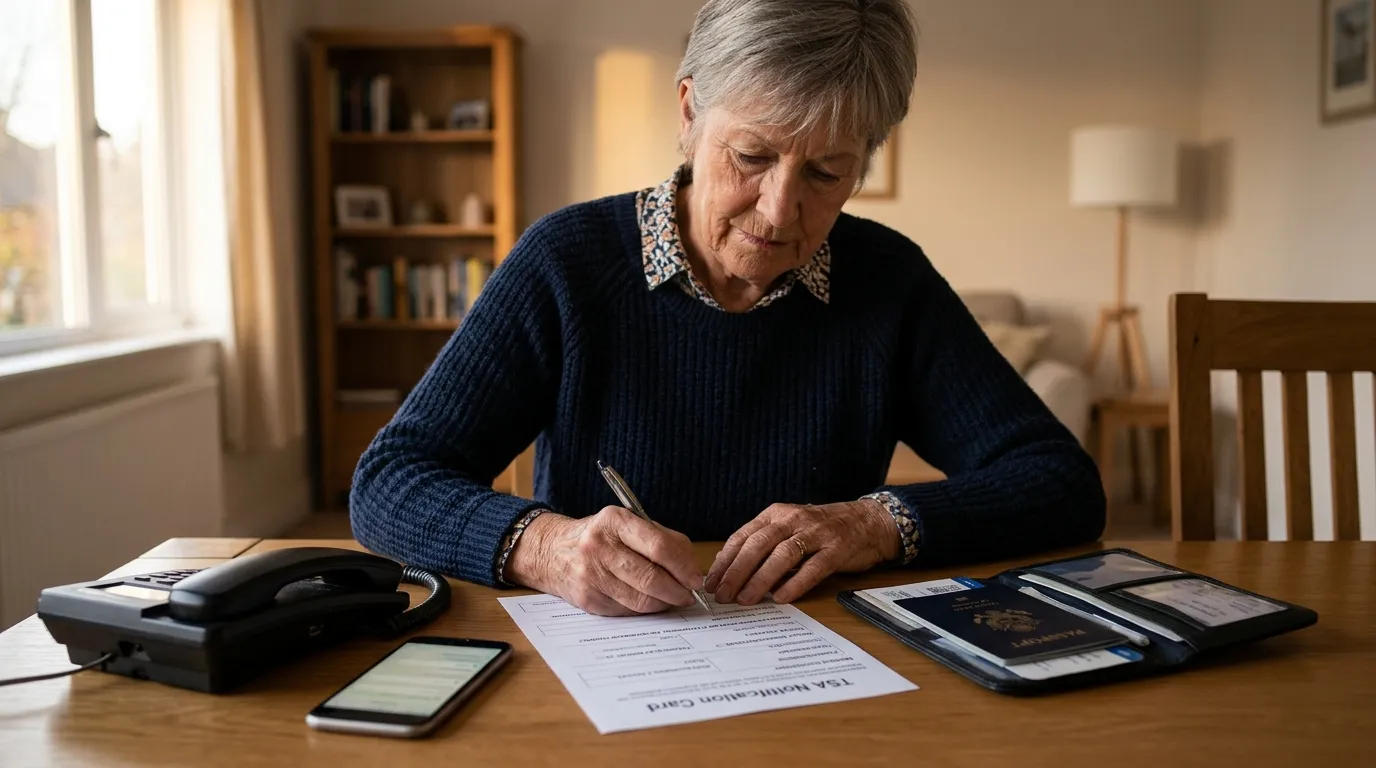
Here is the single most effective pre-airport move that virtually no traveler over 65 actually takes: download, fill out, and print the official TSA Notification Card before your trip – then pair it with a TSA Cares call made exactly 72 hours before departure.
Most people either call TSA Cares or carry a doctor’s note. Almost nobody does both together. The combination is what agents actually respond to fastest.
- Step 1: Go to tsa.gov and download the free TSA Notification Card PDF. Fill in your name, your specific condition or device (pacemaker, hip replacement, CPAP, hearing aid – be exact), and your emergency contact.
- Step 2: Print it, laminate it or slip it into a card sleeve, and keep it in your front pocket – not your bag. Hand it to the officer before a single word is spoken. This communicates everything silently and sets the tone immediately.
- Step 3: Call TSA Cares at (855) 787-2227 exactly 72 hours before your flight. Tell them your departure airport, flight time, and what the card says. A Passenger Support Specialist will be assigned and notified in advance.
- Step 4: When you arrive, go to the front of the lane and say: “I called TSA Cares – I have a Passenger Support Specialist request on file.” Those nine words trigger a completely different response than anything else you can say at a checkpoint.
The card alone is useful. The call alone is useful. Together, with the right opening sentence, they signal a prepared, informed traveler – and agents treat that traveler differently from the very first second.


