

Everyone assumes older travelers pack the same as everyone else, just a little slower at the X-ray belt. Gate agents will tell you that’s completely wrong.
AARP’s 2026 Travel Trends survey found nearly two-thirds of travelers over 50 plan to fly this year, and the most experienced among them have quietly built a carry-on system nobody else has caught onto yet. It starts small, at #23, and by the time you reach #1, you’ll understand exactly why crews notice these passengers first.
#23 – A Laminated Medical Summary Card
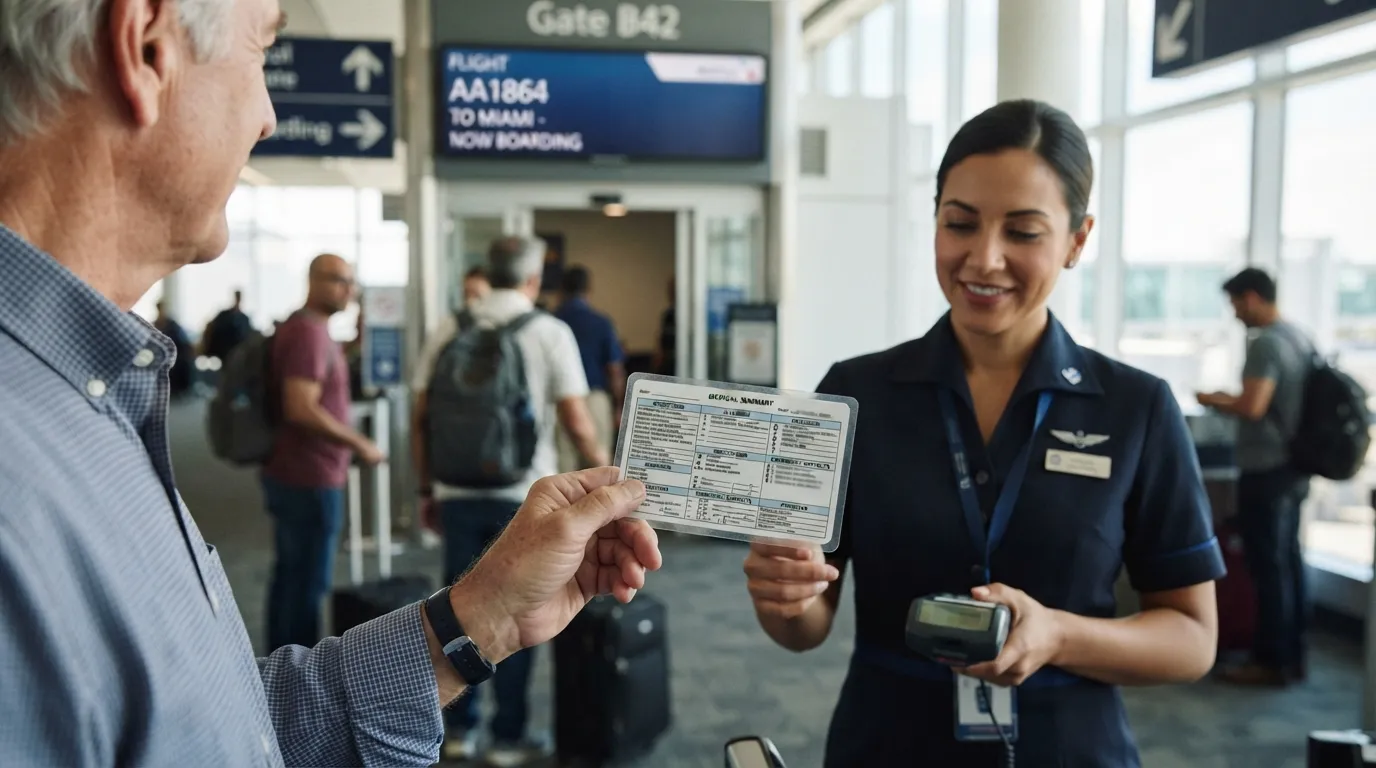
Veteran travelers don’t dig through their phone at security. They just hand over one laminated card.
The State Department recommends carrying medical alert details and a provider letter listing conditions, allergies, and medications. Seasoned fliers condense all of it onto a single card that fits in a shirt pocket.
Gate agents notice it instantly – it’s the clearest signal that a passenger is prepared, not panicked.
This tiny card prevents the most common senior travel nightmare: a security delay over unexplained meds or devices. It’s the first tell that separates a veteran flier from a first-timer.
But something even smarter comes next, and almost nobody has heard of it…
#22 – A TSA Notification Card
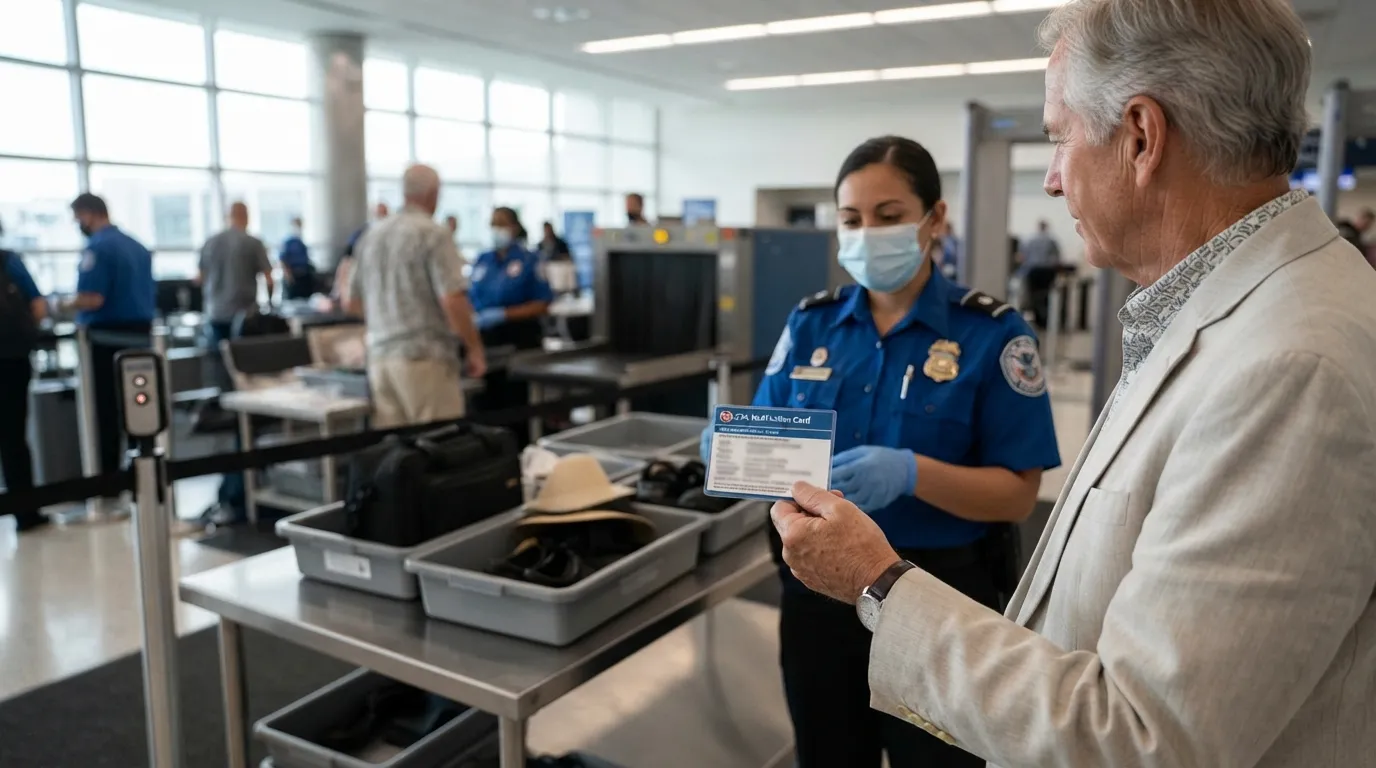
The laminated card is for the gate. This one is strictly for the checkpoint.
Travelers with disabilities or medical conditions can request a free TSA Notification Card listing conditions or devices that affect screening. You simply hand it to the officer at the checkpoint.
It’s free, it’s official, and it turns a stressful pat-down into a five-minute formality.
No verbal explaining a pacemaker or insulin pump to a stranger in uniform. The card does the talking.
Paired with what’s coming next, these two form what frequent fliers call their “security stack”…
#21 – Medications Kept in Original, Clearly Labeled Packaging
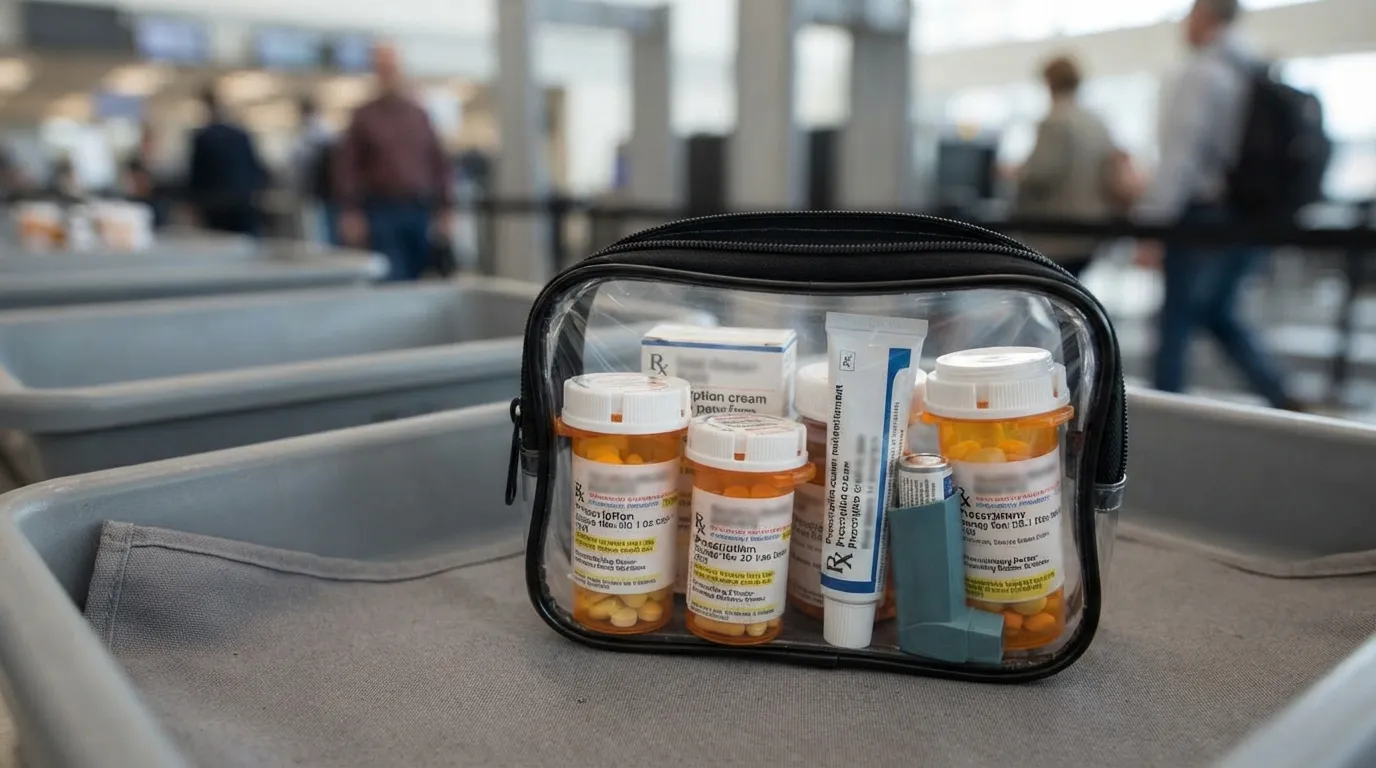
Here’s the mistake most people make: decanting pills into a weekly organizer and assuming TSA waves it through. It doesn’t always.
Liquid, gel, and aerosol medications can exceed 3.4 ounces in a carry-on, but keeping them in original prescription packaging (or with a pharmacist’s note) avoids extra scrutiny. Pack them in a bag you can pull out fast, since they’re inspected separately.
Experienced travelers carry a two-week surplus of every critical medication – in the carry-on only, never checked.
They also memorize generic drug names, not just brand names. Foreign pharmacies often only recognize the generic.
Next up is a detail gate agents spot from ten feet away…
#20 – A REAL ID or Passport, Never Just a Standard License
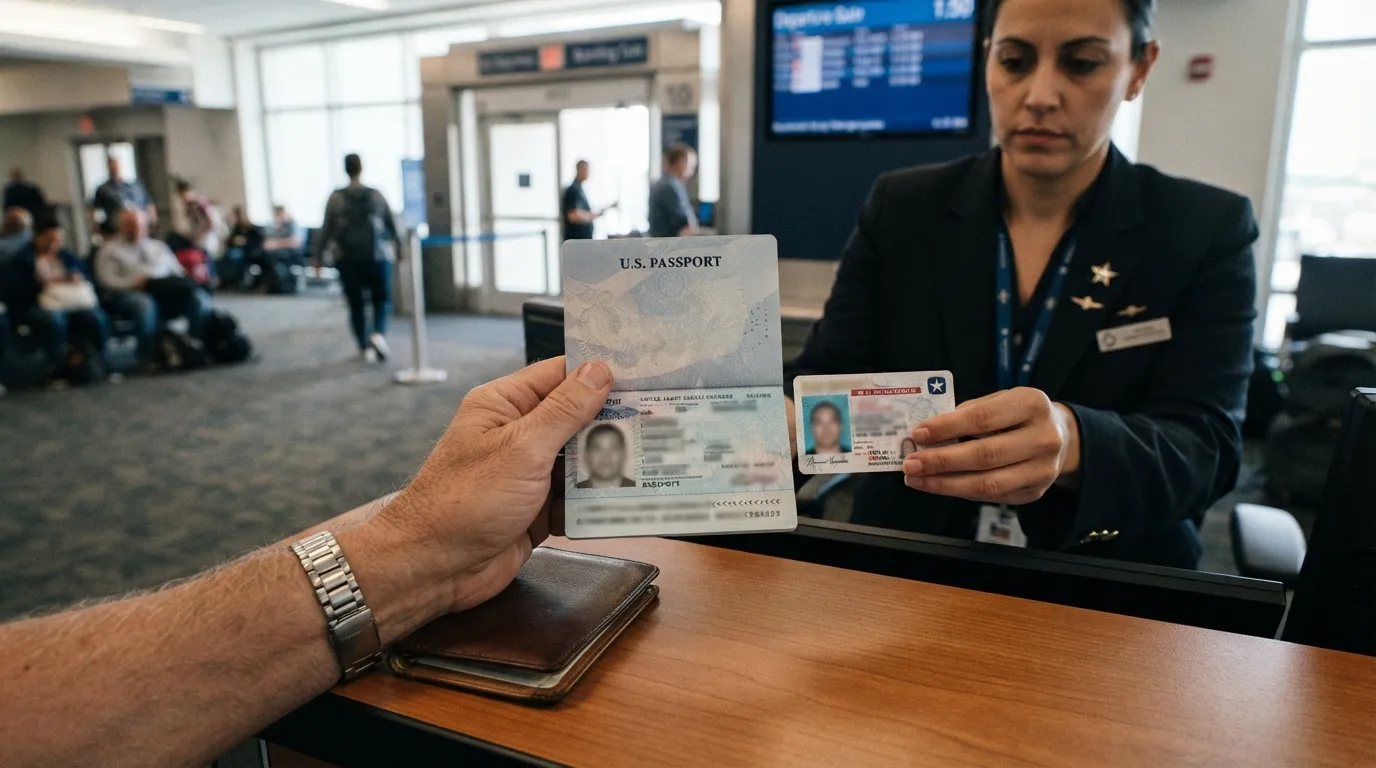
This one is no longer optional, and thousands of travelers are still learning it the hard way.
Since May 7, 2025, every adult flying domestically needs a REAL ID-compliant license or another accepted ID like a passport. A standard license without the star is no longer enough.
Frequent senior travelers keep a passport in their carry-on as backup, even for domestic flights. A lost wallet before departure is catastrophic without one.
Fast Facts
- REAL ID enforcement began nationwide on May 7, 2025.
- Compliant licenses show a star in the upper right corner.
- Since February 1, 2026, travelers without compliant ID face a $45 TSA ConfirmID fee and added screening.
- Roughly 94% of travelers now arrive with acceptable identification, but the other few often get pulled aside.
Check the corner of your license for a star. No star means sort it out before your next trip.
Gate agents see the fallout every week. Speaking of what they look for – next is something they actively scan for…
#19 – Compression Socks, Worn Before Boarding
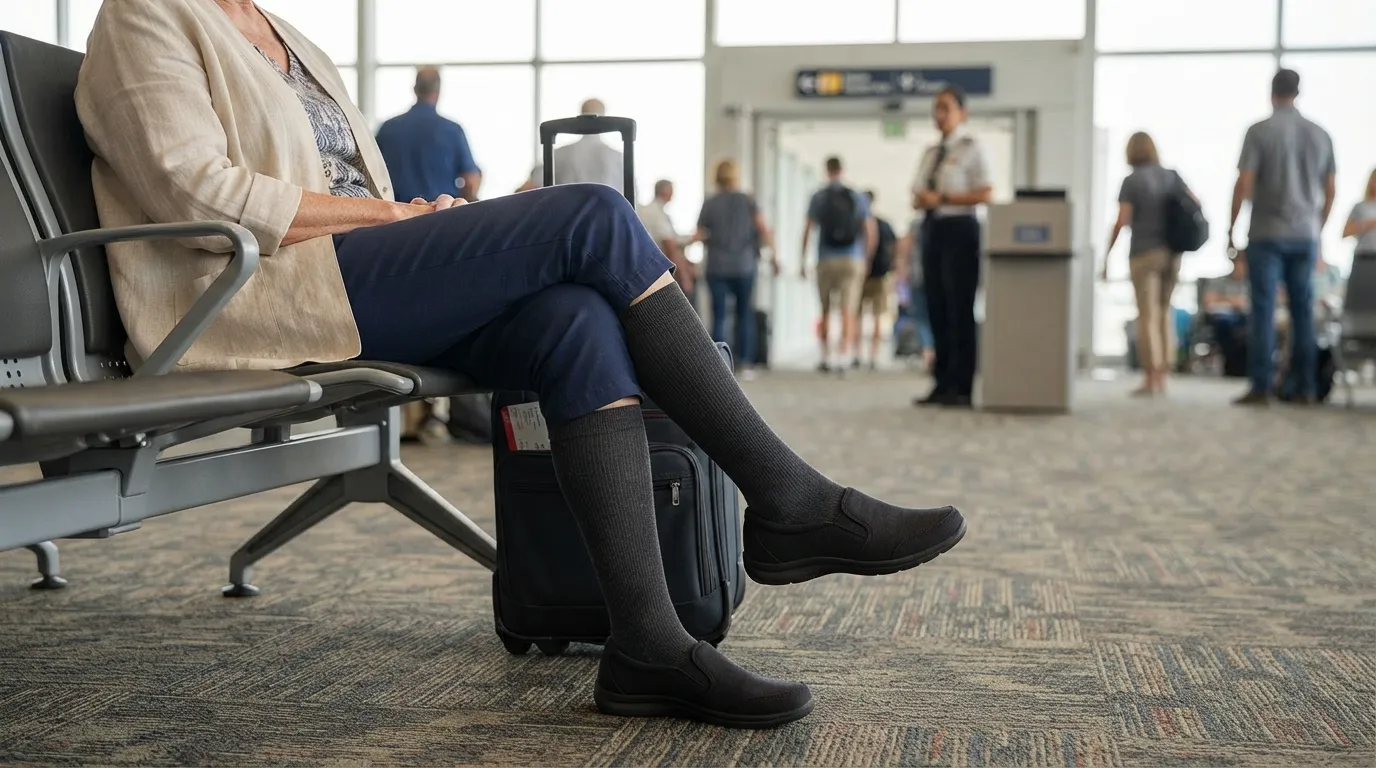
Most people pack compression socks. Veterans put them on at home.
Compression socks improve blood flow during long, sedentary flights and reduce swelling. Airline medical staff note they work best worn before circulation is compromised, not after.
Putting them on after your feet swell is like grabbing an umbrella after you’re already soaked.
Gate agents notice the socks during boarding on long summer routes. It signals a passenger who understands their body at altitude.
Next is a rule almost nobody uses, even though it’s completely legal…
#18 – Medically Necessary Liquids Kept in a Separate Pouch
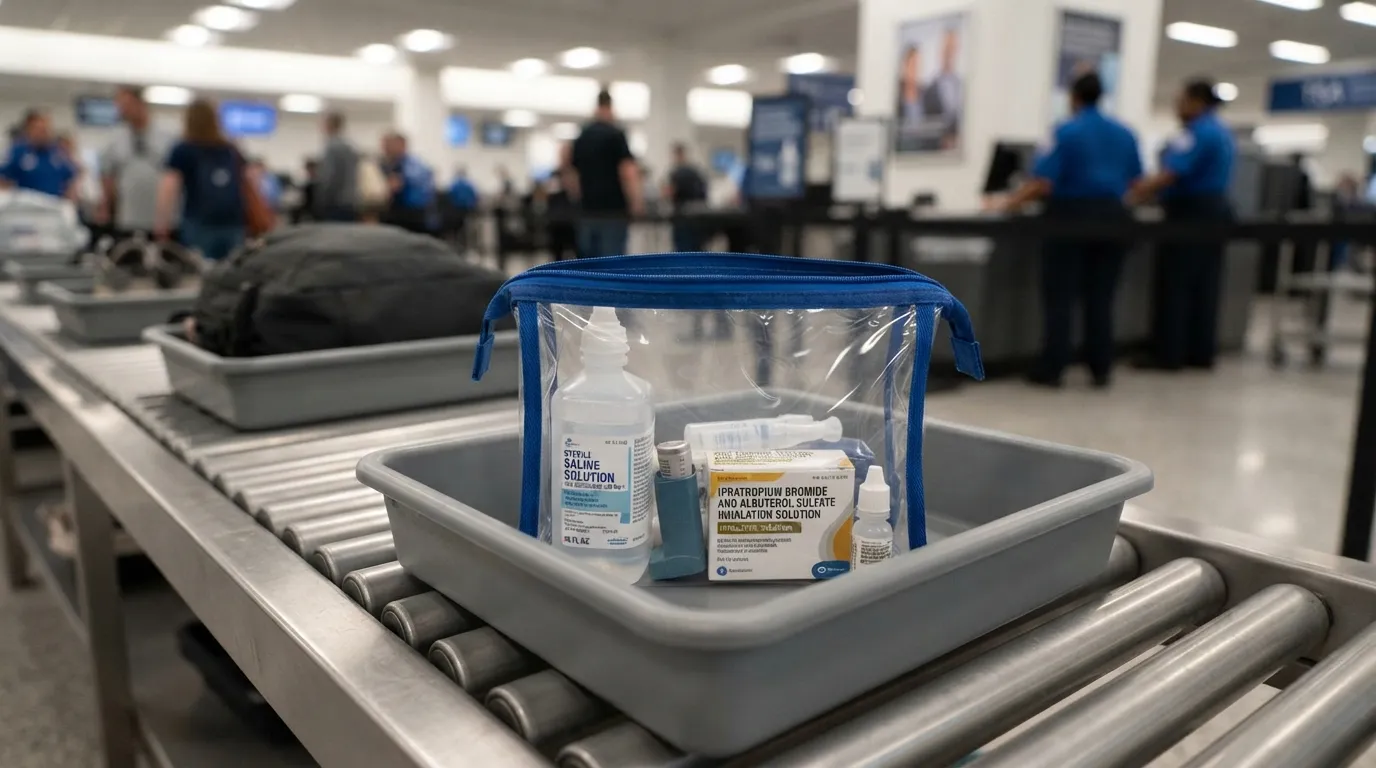
Here’s a rule most travelers don’t know exists, and it saves seasoned seniors real stress.
Medically necessary liquids over 3.4 ounces are allowed in carry-ons and don’t need a zip-top bag, including nebulizer liquids. You just have to declare them at the start of screening.
It’s completely legal, completely ignored by most people, and completely standard among experienced fliers.
The key is declaring it upfront, not waiting to get flagged. Veterans keep the pouch separate from everything else so the whole exchange takes three seconds.
Coming up: something gate agents flag when it’s missing…
#17 – A Compact Power Bank, Always in the Carry-On
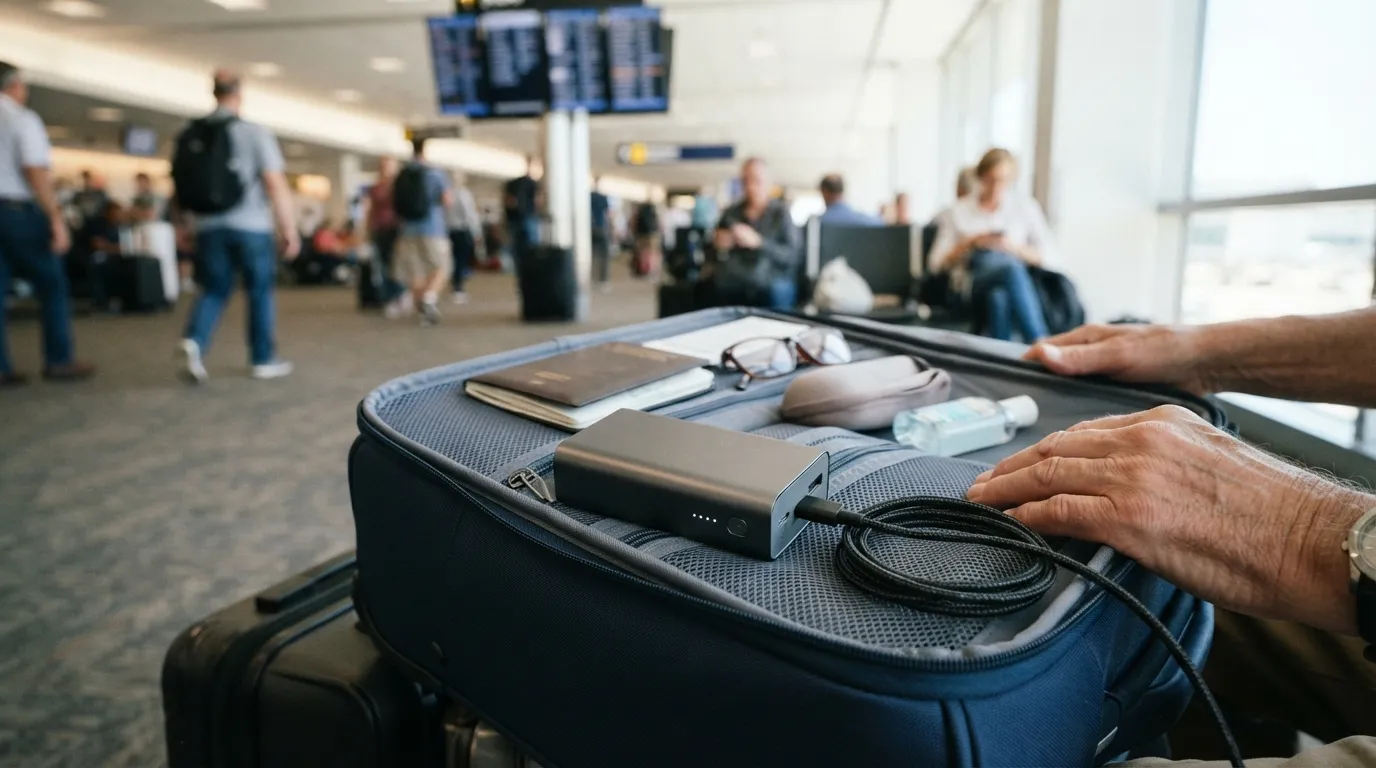
This isn’t a convenience item anymore. TSA made it a hard rule.
Power banks and spare batteries must stay in carry-ons, never checked bags, enforced at every checkpoint. For senior travelers, a charged bank keeps medical apps and emergency contacts reachable through any delay.
The veteran move is a 20,000mAh bank – enough to charge a phone four times over a full travel day.
It means never hunting for an airport outlet or running dry mid-layover. Phones, tablets, even camera gear stay powered.
Next up: an item so low-tech it’s almost embarrassing, until you actually need it…
#16 – Antibacterial Wipes for the Seat Area
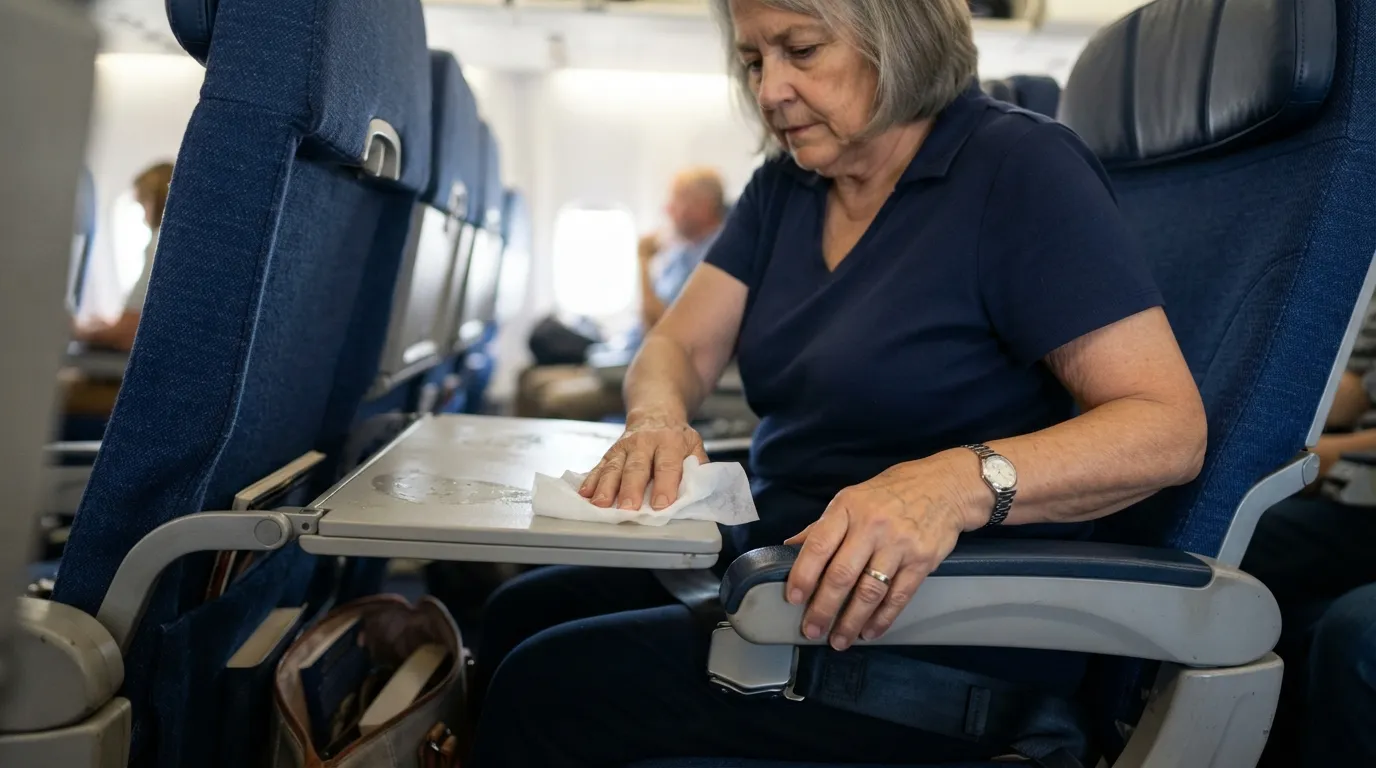
Cabin air is recycled. Tray tables are rarely sanitized between flights.
The National Council on Aging flags wipes as a carry-on essential for older adults, since immune systems weaken with age. Seasoned fliers wipe down the tray, armrest, seatbelt buckle, and seat before sitting down, every single flight.
Studies on cabin surfaces have found bacteria on tray tables and armrests touched by hundreds of passengers between cleanings.
It’s not paranoia, it’s biology. Crew members now consider the wipe-down habit a hallmark of a seasoned flier.
Next: something smaller, lighter, and arguably more important on a hot summer flight…
#15 – Electrolyte Packets for Dehydration
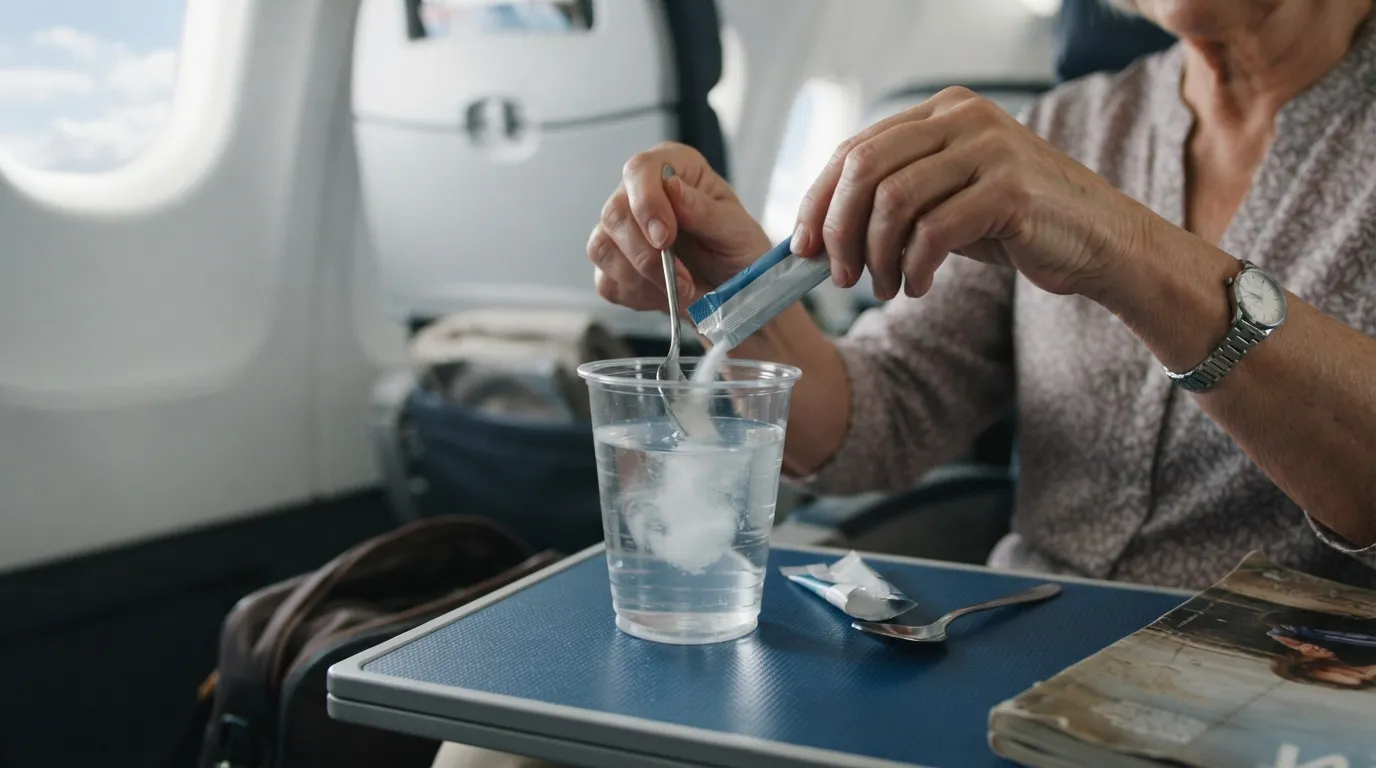
Summer flights mean hot terminals and cabin air dry enough to dehydrate you before cruising altitude.
Low cabin humidity and pressure can cause dizziness, fatigue, and reduced blood oxygen. TSA-friendly electrolyte packets dissolve in water and help fight dehydration and jet lag.
These packets are lighter than a coin and more effective than three cups of airline water.
Experienced travelers dissolve one right after boarding. By the time the drink cart arrives, they’re already ahead.
Next: the item you’ll kick yourself for not thinking of sooner…
#14 – An Empty Reusable Water Bottle
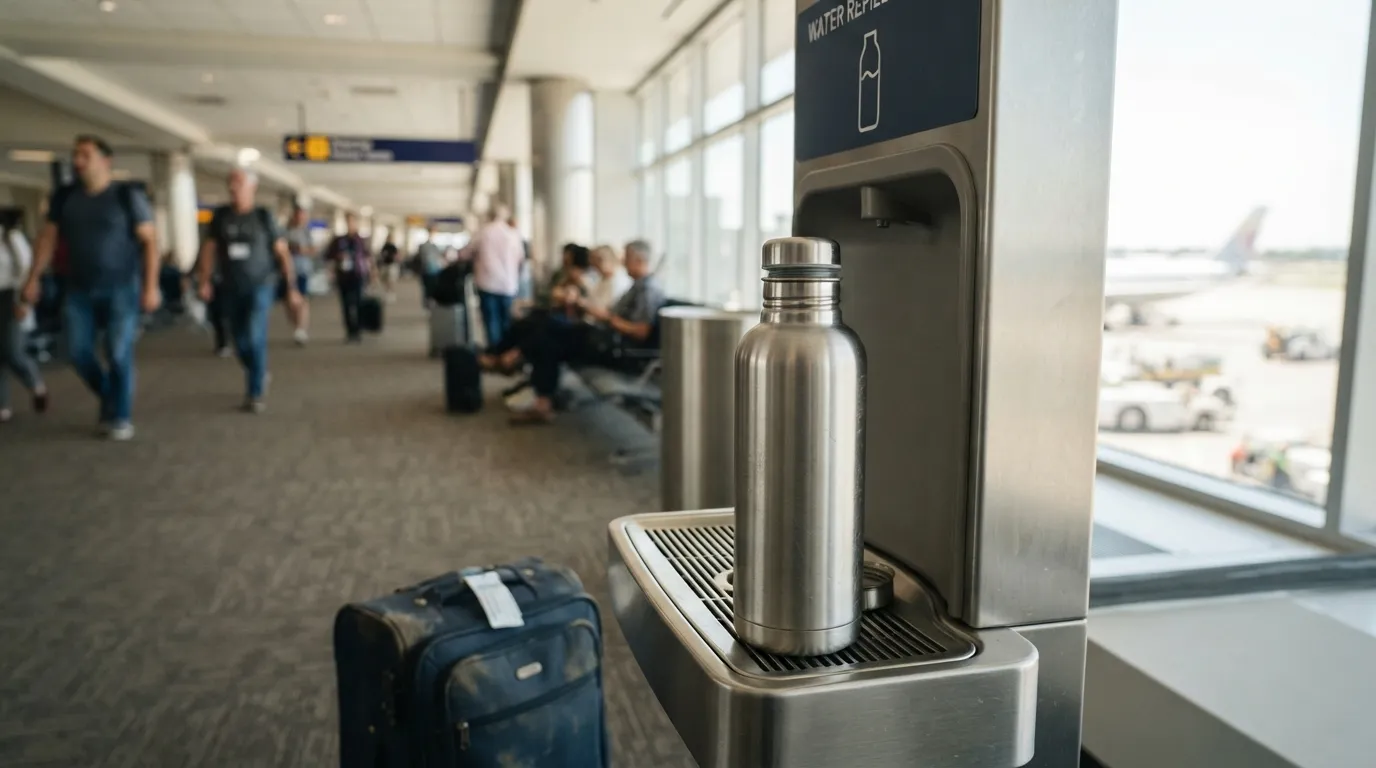
Electrolyte packets are useless without somewhere to put them. Veterans always clear security with an empty bottle, then fill it at the airside fountain.
Hydration guidance for older travelers recommends at least 8 oz of water per hour of flight – far more than crews typically pour unprompted.
On a four-hour summer flight, that’s 32 oz minimum. One drink cart pass delivers maybe 8.
The bottle also skips the plastic-cup cycle entirely. Gate agents notice it because it signals someone who’s done this many times before.
Next: a tool veteran fliers adopted years ago that younger travelers are only just catching onto…
#13 – Noise-Canceling Earbuds
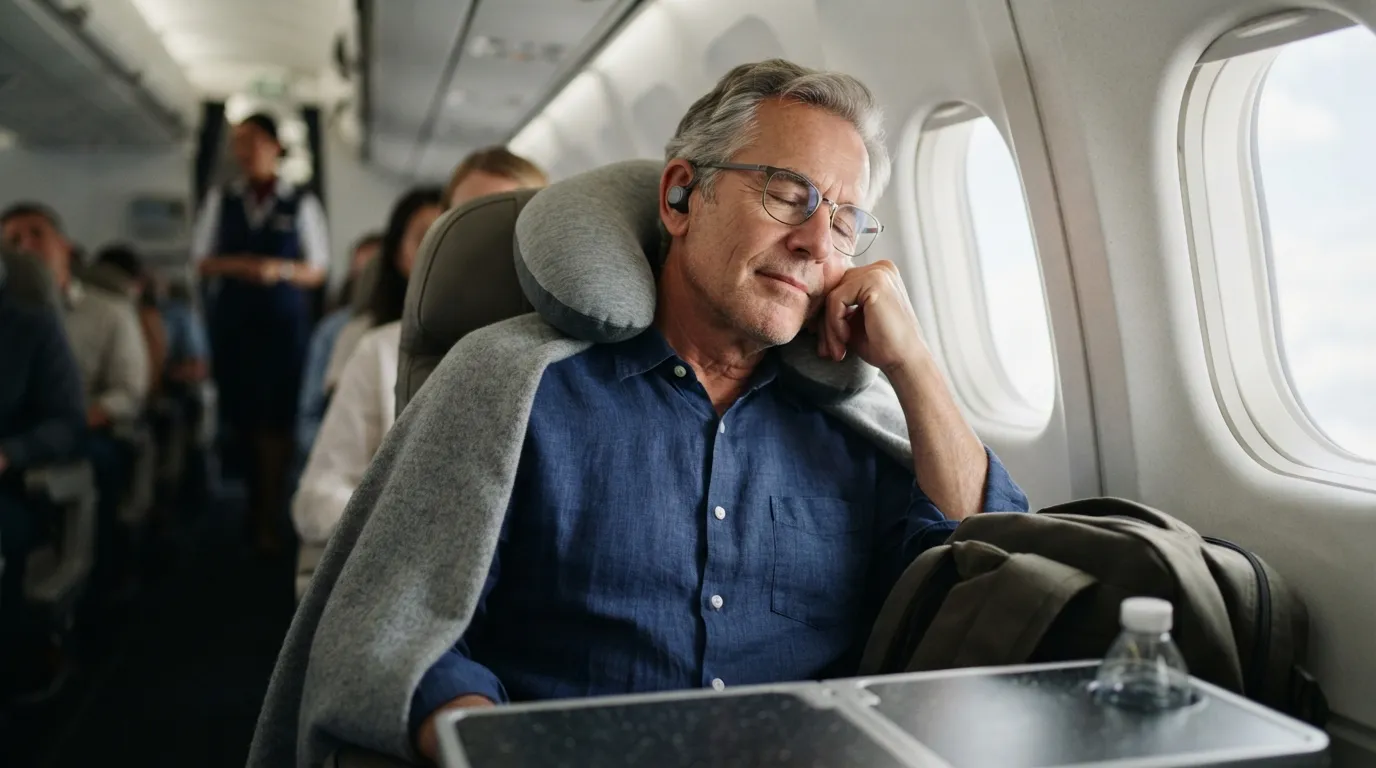
This isn’t about entertainment. Sustained cabin noise causes real fatigue in older travelers – the kind that ruins the first two days of a trip.
Cruise-altitude cabin noise runs 80-85 decibels for hours, comparable to a busy restaurant. Noise-canceling tech cuts that roar enough to allow genuine rest.
Experienced travelers treat noise-canceling earbuds as medical equipment, not a luxury.
Silence works the same way a travel pillow or eye mask does – it prevents circadian disruption. It’s a recovery tool, not an indulgence.
Next: an item gaining traction fast that costs almost nothing…
#12 – A Silk or Lightweight Sleep Mask
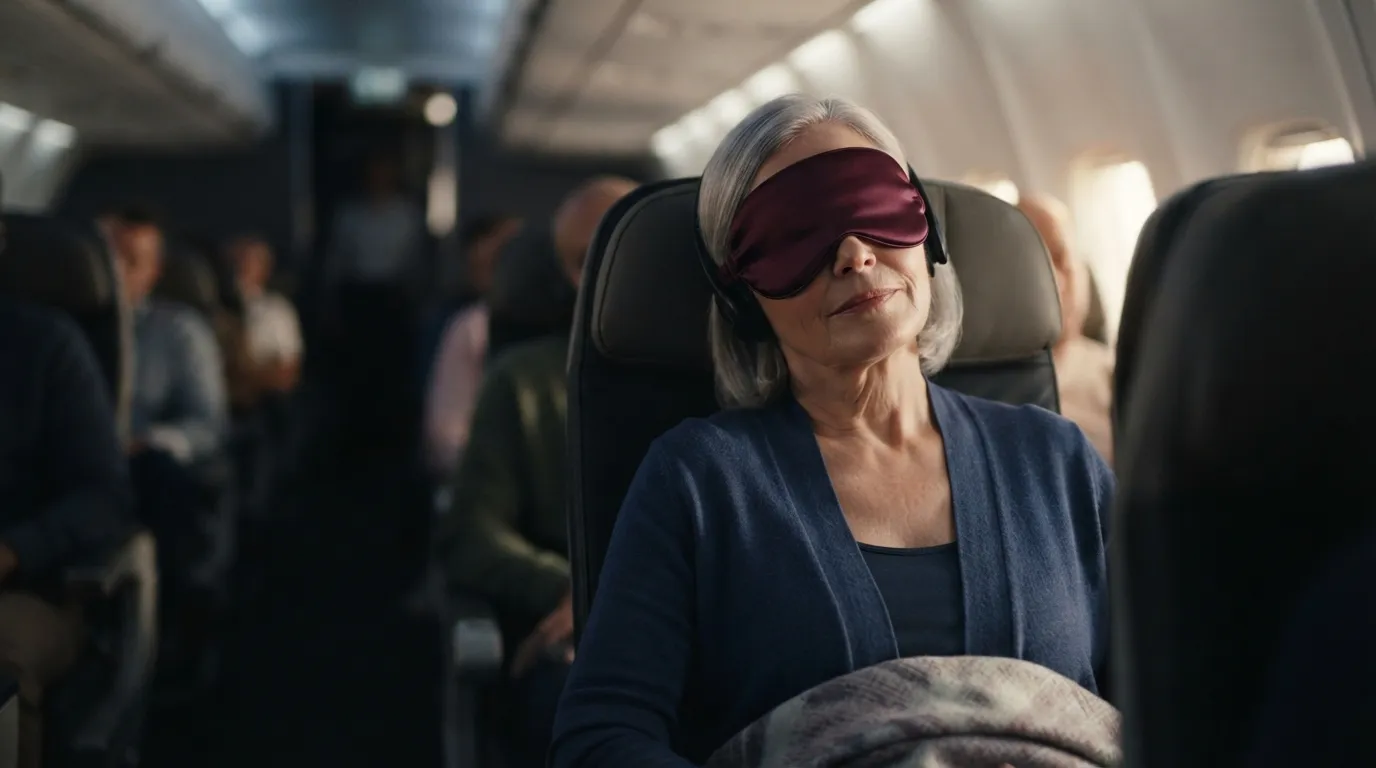
Summer flights mean bright cabins, afternoon sun through portholes, and circadian disruption. A sleep mask fixes all three at once.
Quality masks block light while staying soft against the skin, useful on red-eyes or when adjusting to a new time zone. For older travelers, sleep disruption compounds fast across time zones.
What a 30-year-old shakes off in a day can cost a 70-year-old a week of their trip.
The mask also doubles as a “do not disturb” signal that even flight attendants respect. It’s the cheapest, lightest tool for making rest actually happen.
Next: something gate agents have actually told travelers to get before their next flight…
#11 – A Printed Itinerary With Emergency Contacts
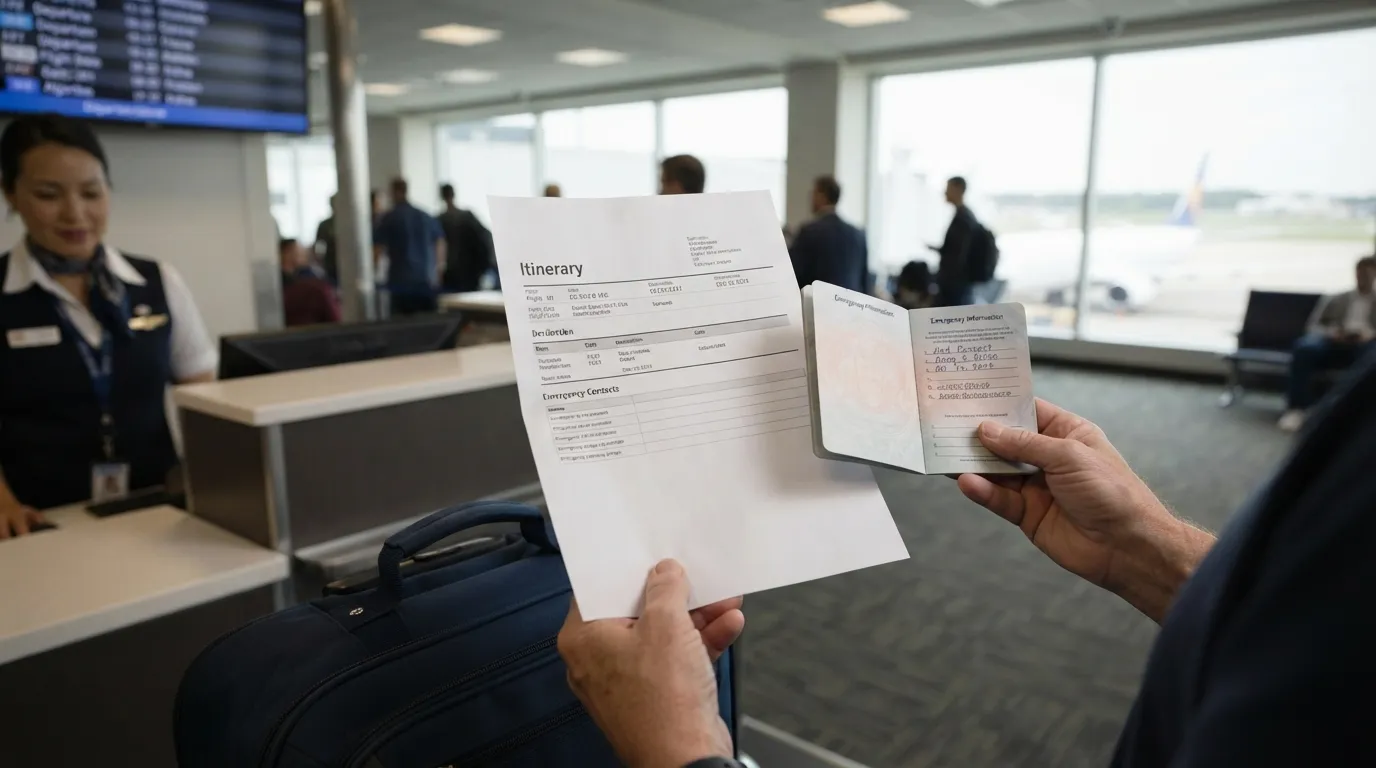
Everyone has their itinerary on their phone. Veterans also have it on paper.
The State Department recommends copying key documents – passport, license, Medicare card, itinerary – and leaving a set with someone at home. A dead phone or stolen device makes a printed sheet critical, and gate agents and crew specifically look for it in emergencies.
The State Department also recommends penciling emergency contact info directly into your passport’s emergency section – most travelers have never done this.
It takes 30 seconds. It could be the most important 30 seconds of the whole trip.
Next: the item that surprises people most, because it’s about what you don’t pack…
#10 – A Doctor’s Letter for Medical Devices and Implants
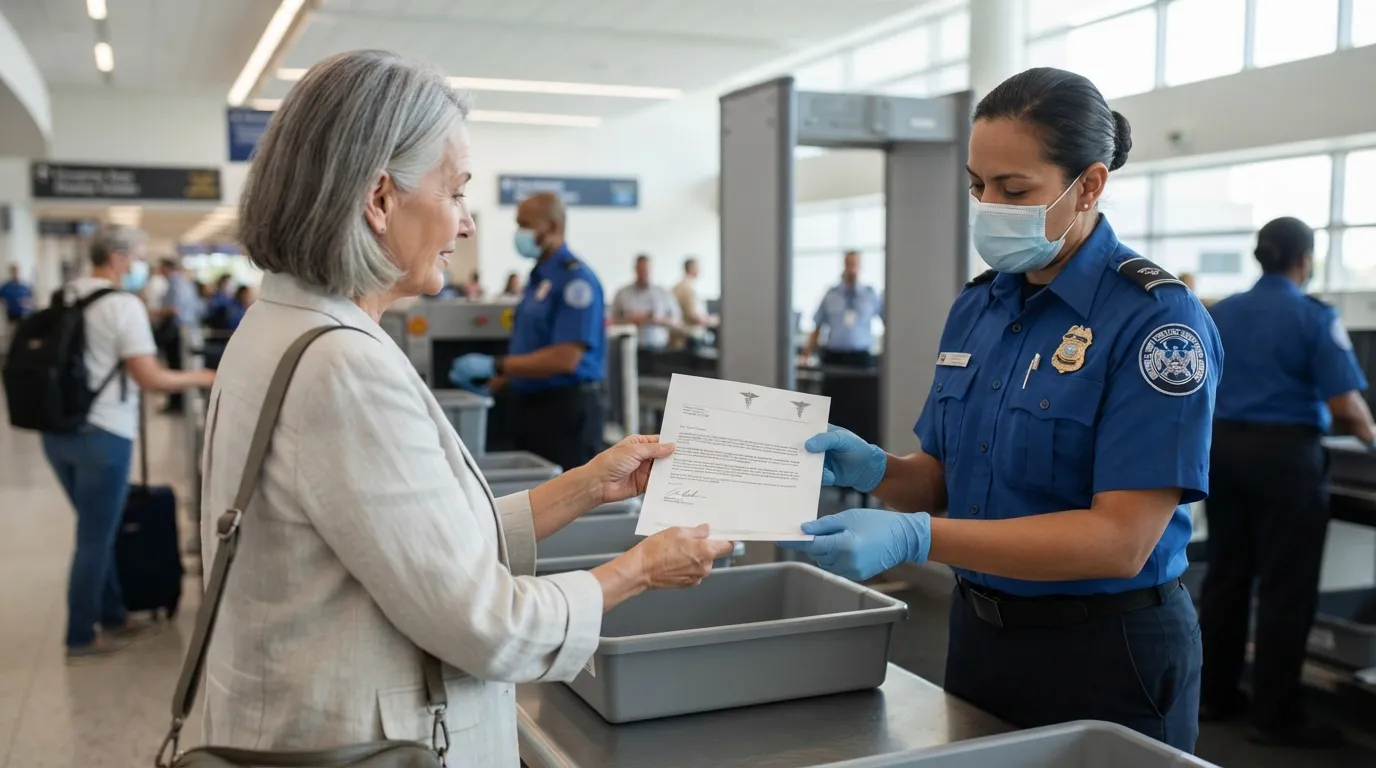
Hip replacements, pacemakers, spinal hardware – standard realities for many travelers over 65, and every one sets off a metal detector.
Security officers should be told about implants in advance, since alternative screening may apply. A doctor’s card explaining the device’s location speeds things up dramatically.
Without the letter, a security delay can run 20 minutes. With it, it’s typically under two.
This single item separates the traveler who breezes through secondary screening from the one who misses a connection. Gate agents see the difference constantly during busy summer travel.
Next: an item that directly affects what gate agents can do for you…
#9 – Proof of TSA PreCheck or Global Entry Enrollment
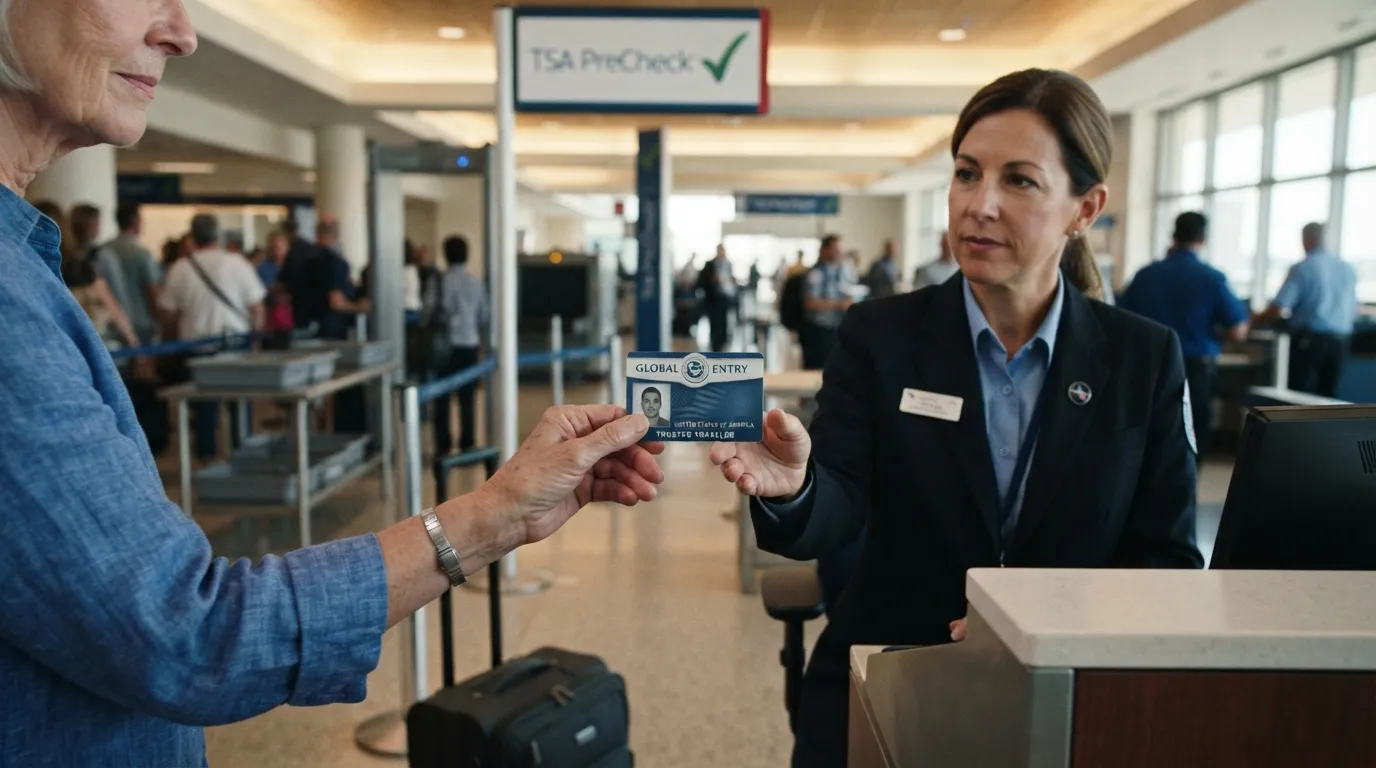
Experienced senior travelers don’t stand in the standard line unless they absolutely have to.
TSA PreCheck covers domestic flights, Global Entry covers international ones, and both require an advance application and non-refundable fee. Once approved, status lasts five years.
Quick Compare
- TSA PreCheck: $78-$85 for five years, domestic security lanes only, about $15.60 a year.
- Global Entry: $120 for five years, includes all PreCheck benefits plus expedited customs on return to the U.S.
- Both programs: about 99% of members wait under 10 minutes at security.
- Best fit: PreCheck for domestic-only flying, Global Entry for anyone crossing borders even once a year.
TSA PreCheck runs about $78 for five years – roughly $15.60 a year to skip the standard lane every single flight.
Frequent fliers know their Known Traveler Number by heart and carry a printed backup. Gate agents notice enrolled passengers immediately, and it often streamlines assistance requests too.
Next: a detail even experienced travelers sometimes forget to separate properly…
#8 – A Dedicated Clear Medication Pouch
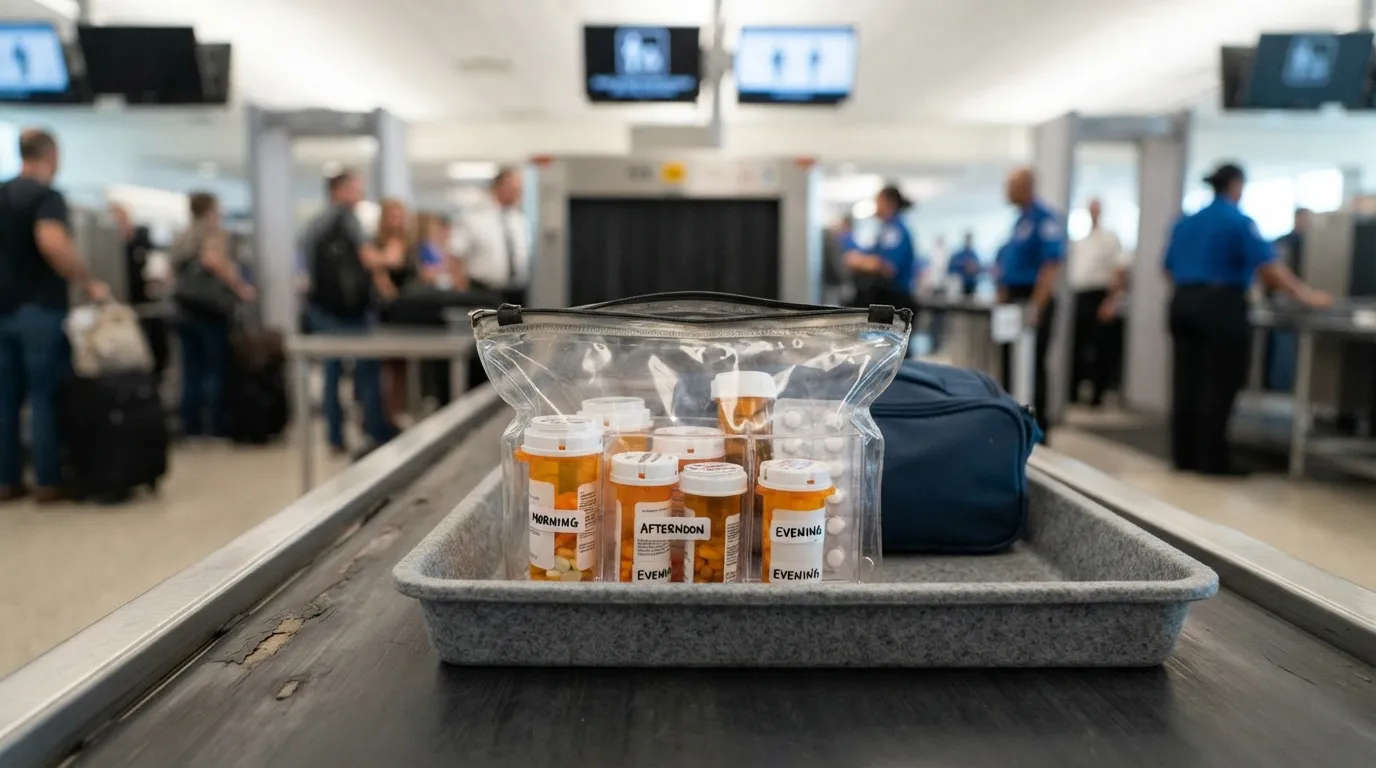
This looks minor. Skip it, and it creates real problems at the checkpoint.
Medications need to come out fast and get inspected separately, but a loose handful of pill bottles buried in a bag triggers a full search every time. The fix is a standalone clear zip pouch, meds only, ready the moment you reach the belt.
Experienced fliers label each compartment by time of day – morning, afternoon, evening. It’s the detail gate agents mention when they talk about passengers who “have it together.”
The pouch also works as an instant emergency kit any responder can interpret. No digging, no delay.
Next: something most people only think about after they land…
#7 – A Compact Facial Mist or Saline Nasal Spray
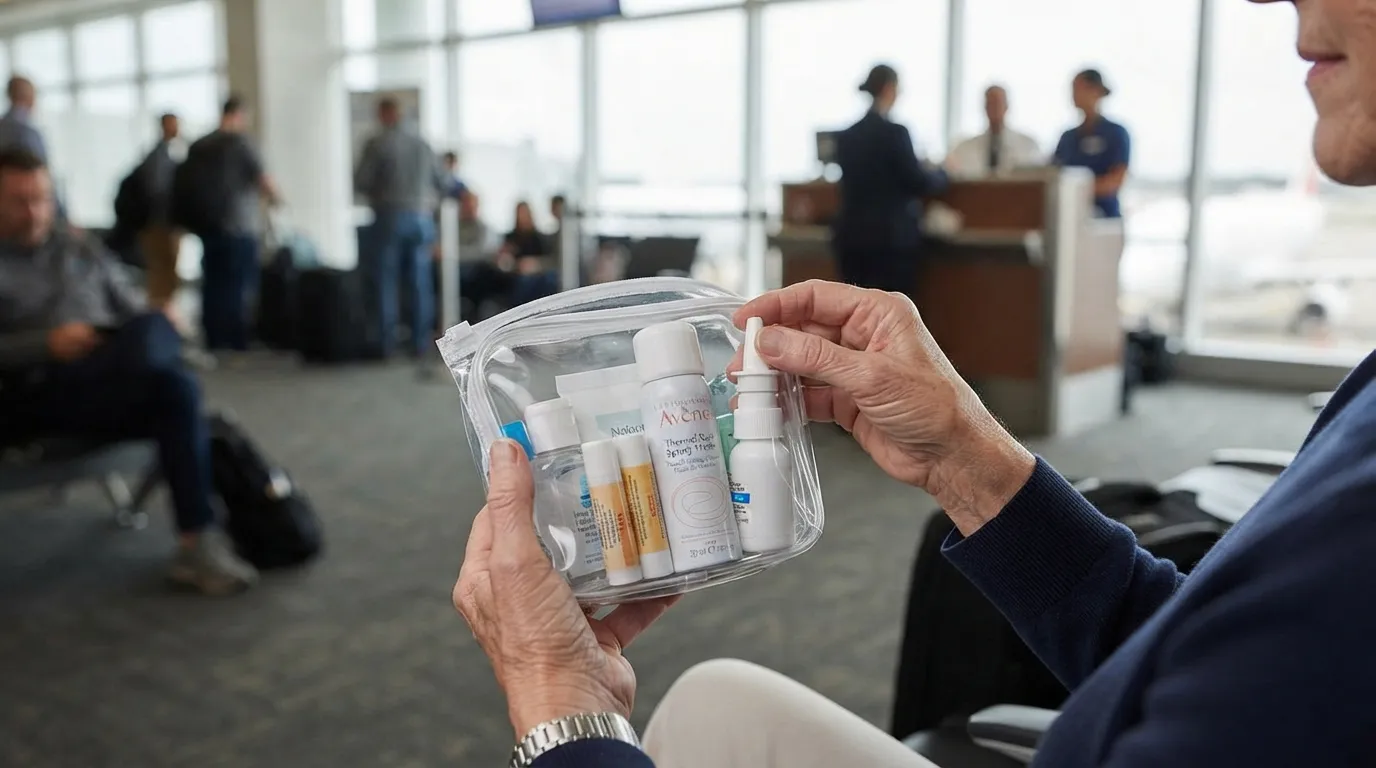
Summer flights bake you from both sides: dry terminal air, then drier cabin air. After 65, the effect on mucous membranes is real, and it opens the door for illness.
A facial mist gives skin a quick hydration burst during and after travel. Saline spray keeps nasal passages moist, which is the body’s first defense against airborne pathogens in recirculated cabin air.
At cabin humidity that often sits below 20%, keeping membranes hydrated is genuinely protective, not cosmetic vanity.
Both fit easily in a standard 3-1-1 bag. Gate agents notice the habit – it’s the mark of someone who’s gotten sick on a plane before and refuses to repeat it.
Next: an item directly tied to how gate agents treat you at boarding…
#6 – A Pre-Requested Wheelchair or Mobility Aid Confirmation
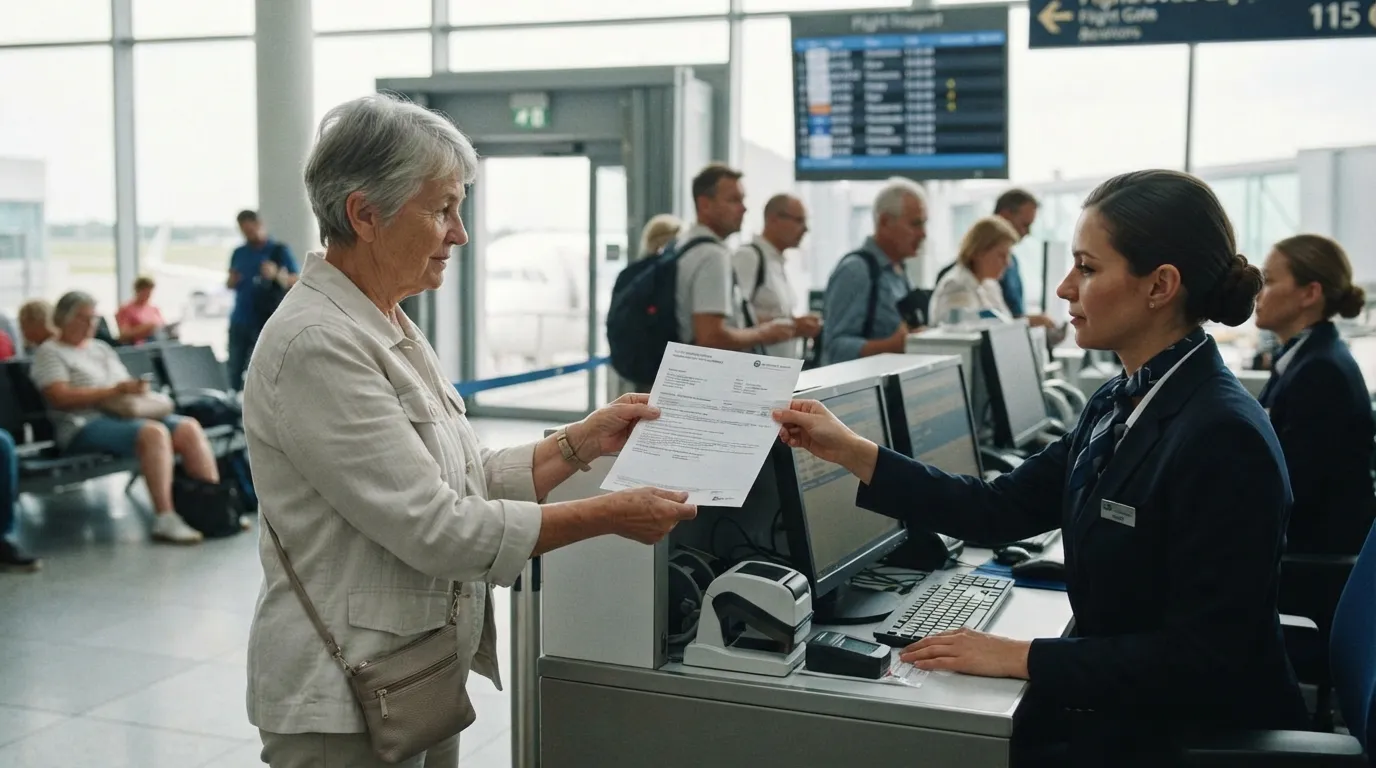
Requesting assistance at booking is only half the job. Having proof of that request at the gate is what actually closes the loop.
Wheelchair assistance should be requested at booking or at least 48 hours ahead, but airline systems lose requests and gate agents inherit no notes from the last shift. Airlines are legally required to provide guided help from check-in through to your seat.
At a Glance
- Request assistance at booking or at least 48 hours before departure.
- The service is free and covers curb-to-seat guidance.
- Airlines are legally required to provide it under federal law.
- A printed confirmation resolves most on-the-day mix-ups instantly.
A printed confirmation means you can hand it to a gate agent and say “this was arranged” – and it will be.
A dedicated agent can meet you at the curb, handle luggage, and escort you through security at no charge, when requested in advance. The printout is what makes it happen on the day.
Next: where things get seriously strategic…
#5 – Foldable Flat Shoes or Slippers
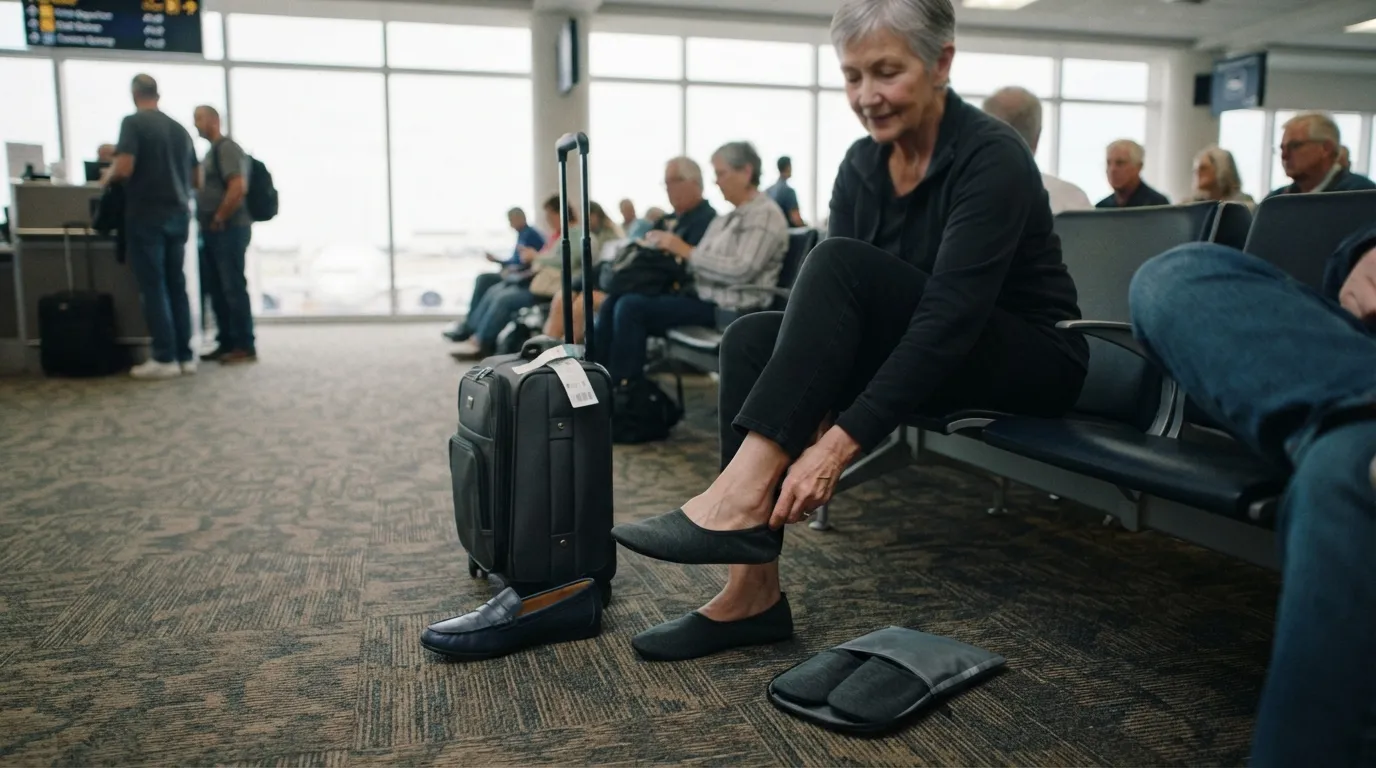
Younger travelers think this one’s silly, until they’ve done a six-hour connection in dress shoes during a July heat wave.
Foldable slippers take up almost no room and matter most on long travel days, whether slipped on mid-flight or worn at the hotel. Foot swelling on long flights is common and often underestimated after 65.
The veteran trick: wear the tightest shoes through the airport, switch to slippers at the gate, swap back before landing. Feet arrive without the usual punishment.
They also help at security – no fumbling with laces, no hopping on one foot on a wet floor. Gate agents assisting seniors notice this detail often.
Next: the one most people assume is already taken care of, but usually isn’t…
#4 – An Insulated Medication Bag With a Freezer Pack
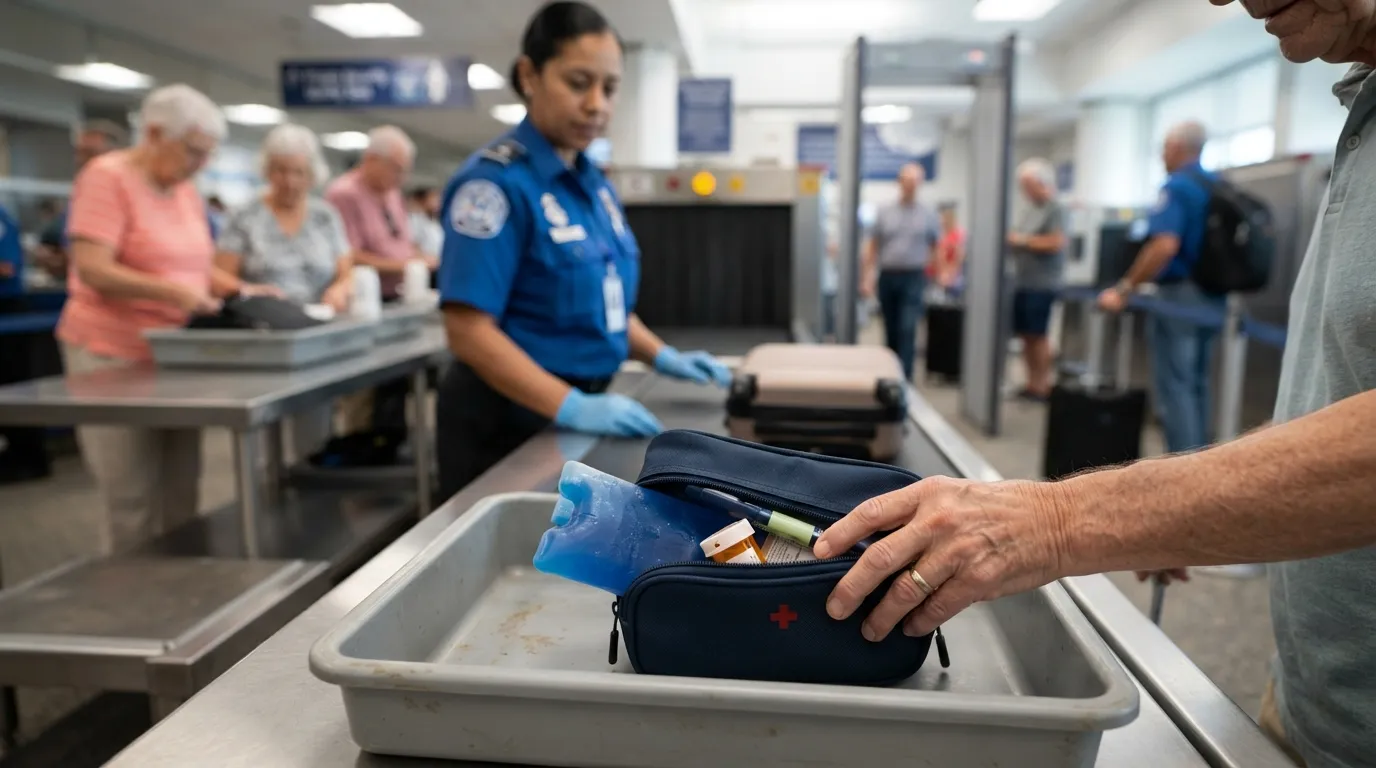
Insulin, certain eye drops, biological medications – a lot of travelers over 65 carry something that needs refrigeration, and most have no plan for the six hours between home fridge and hotel room.
The State Department specifically flags insulated bags for senior international travelers carrying refrigerated medication. The standard 3-1-1 liquid rule doesn’t apply here, but ice packs must be frozen solid at the checkpoint.
A frozen solid ice pack is TSA-legal. A partially melted one is not – and that distinction has cost passengers their medication at the checkpoint.
Veterans freeze the pack solid overnight and say “frozen ice pack for medical use” before the bag hits the belt. It’s a tiny script, and it works every time.
Next: the item gate agents themselves say they notice more than almost anything else…
#3 – A Personalized First-Aid Kit
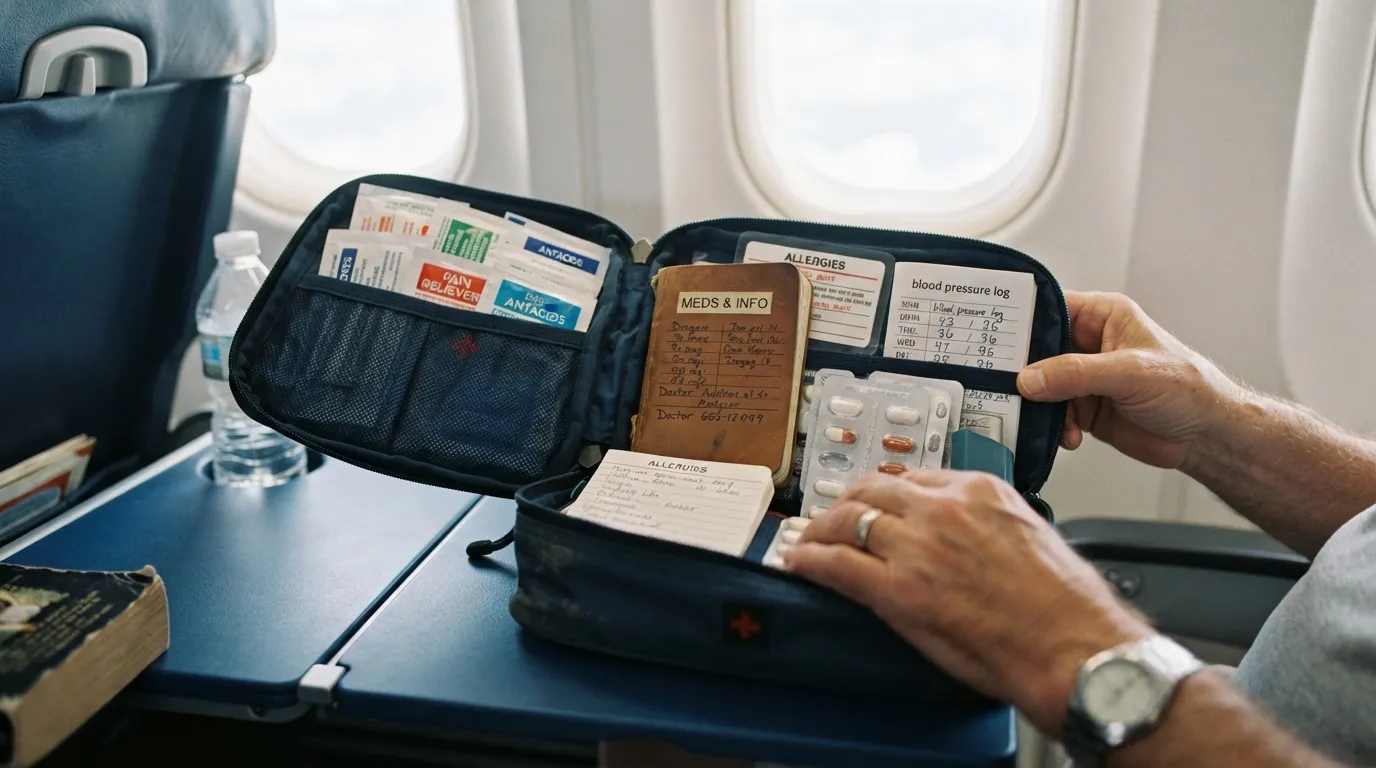
The generic drugstore travel kit is built for 30-year-olds going hiking. Experienced fliers build their own, and it looks completely different.
Standard basics – bandages, antihistamine, antacids, pain reliever – are just the base layer. The real value is personal: a blood pressure log, current medications and dosages, allergy alerts, and their doctor’s direct number.
Crew members who’ve responded to in-flight medical incidents say a personalized kit like this has directly saved time, and in some cases, lives.
It’s also where the provider letter from #23 lives. The generic meets the personal, and it becomes something #2 turns into a full system…
#2 – A TSA Cares Pre-Registration Confirmation
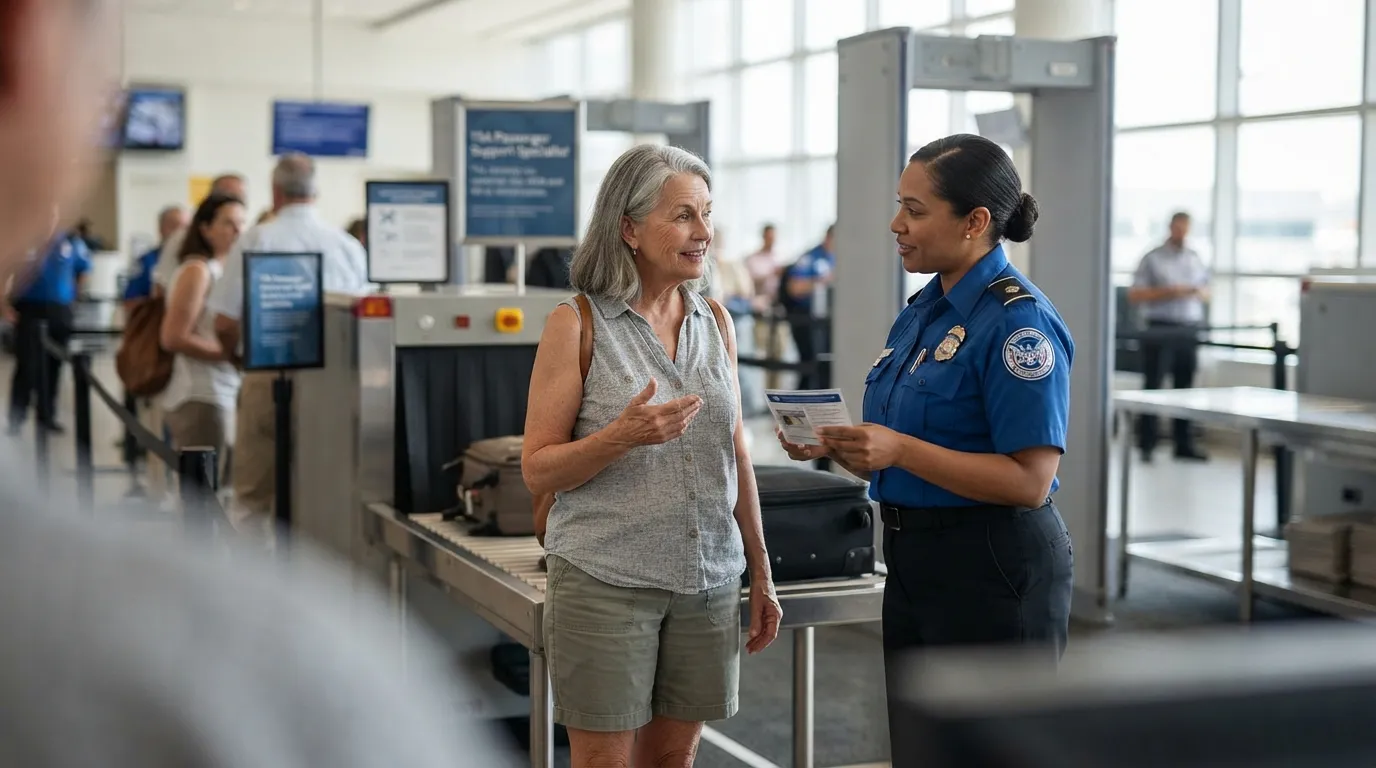
Most travelers have never heard of TSA Cares. The ones who use it call it the single biggest quality-of-life upgrade in air travel.
Calling the TSA Cares helpline 72 hours ahead gets you a passenger support specialist to walk you through security, especially useful with metal implants, portable oxygen, or trouble standing. It’s not a wheelchair, it’s a dedicated person for every step of the checkpoint.
Worth Knowing
- Call the TSA Cares helpline at least 72 hours before your flight.
- The service is completely free, no membership or paperwork required.
- Best for travelers with metal implants, portable oxygen, or mobility challenges.
- A specialist can meet you and stay with you through the entire checkpoint process.
It’s completely free, requires one phone call 72 hours in advance, and most people who qualify have never once used it.
Frequent fliers print the confirmation number and carry it in hand. Gate agents treat those passengers differently from the moment they arrive.
All of it builds toward the one thing almost nobody else packs…
#1 – A Handwritten “Fly-Day” Summary Card
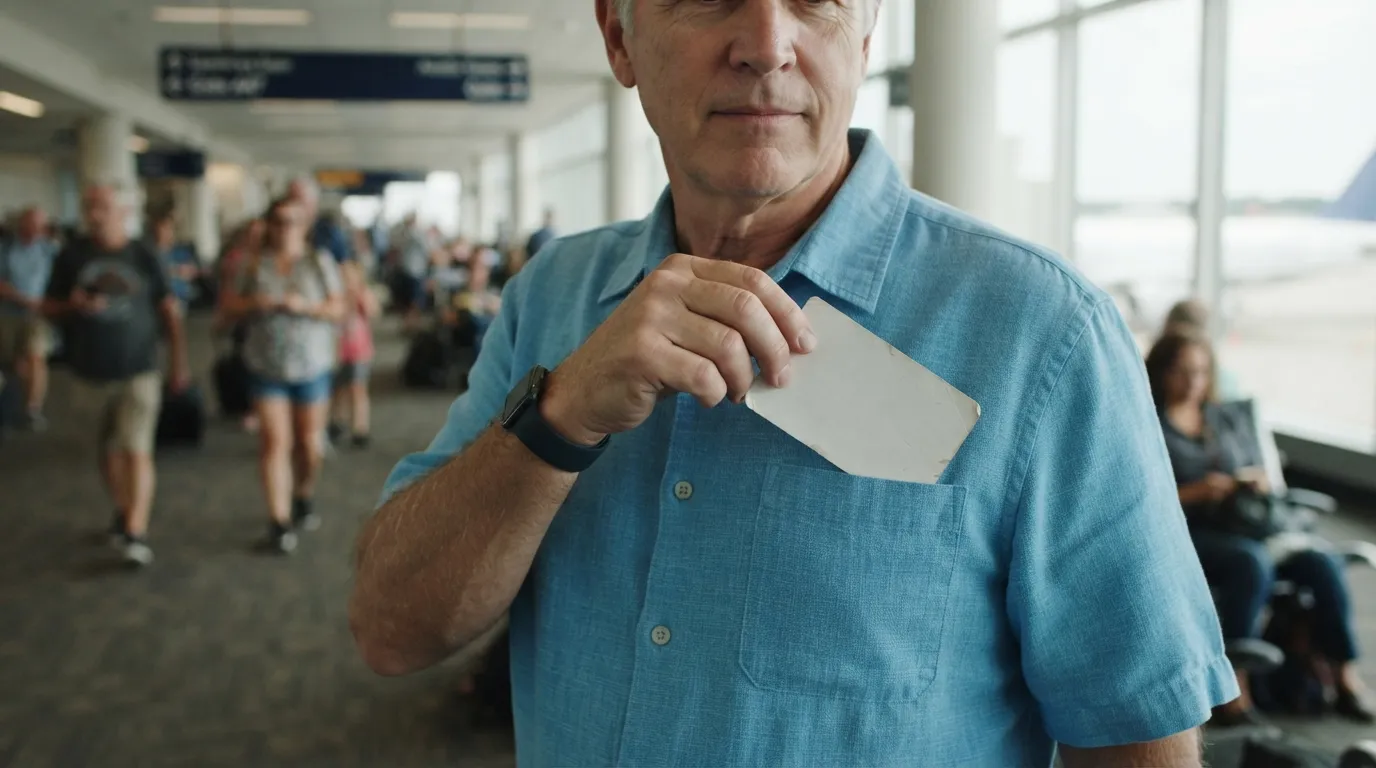
This is the one. Gate agents, crew, and TSA officers all say they notice it immediately.
It’s a single index card, handwritten or printed, kept in a shirt pocket. It lists today’s flight number, gate, destination, one emergency contact, and the single most critical medical fact about the traveler.
No phone required, no fumbling, no delay. If anything goes wrong anywhere in the airport, every piece of information a responder needs is already in their pocket.
Many travelers add one line at the bottom: “I have everything I need. Thank you for your help.” It’s quiet, confident, and invisible to every other passenger in the terminal – which is exactly why it works.
The Bottom Line
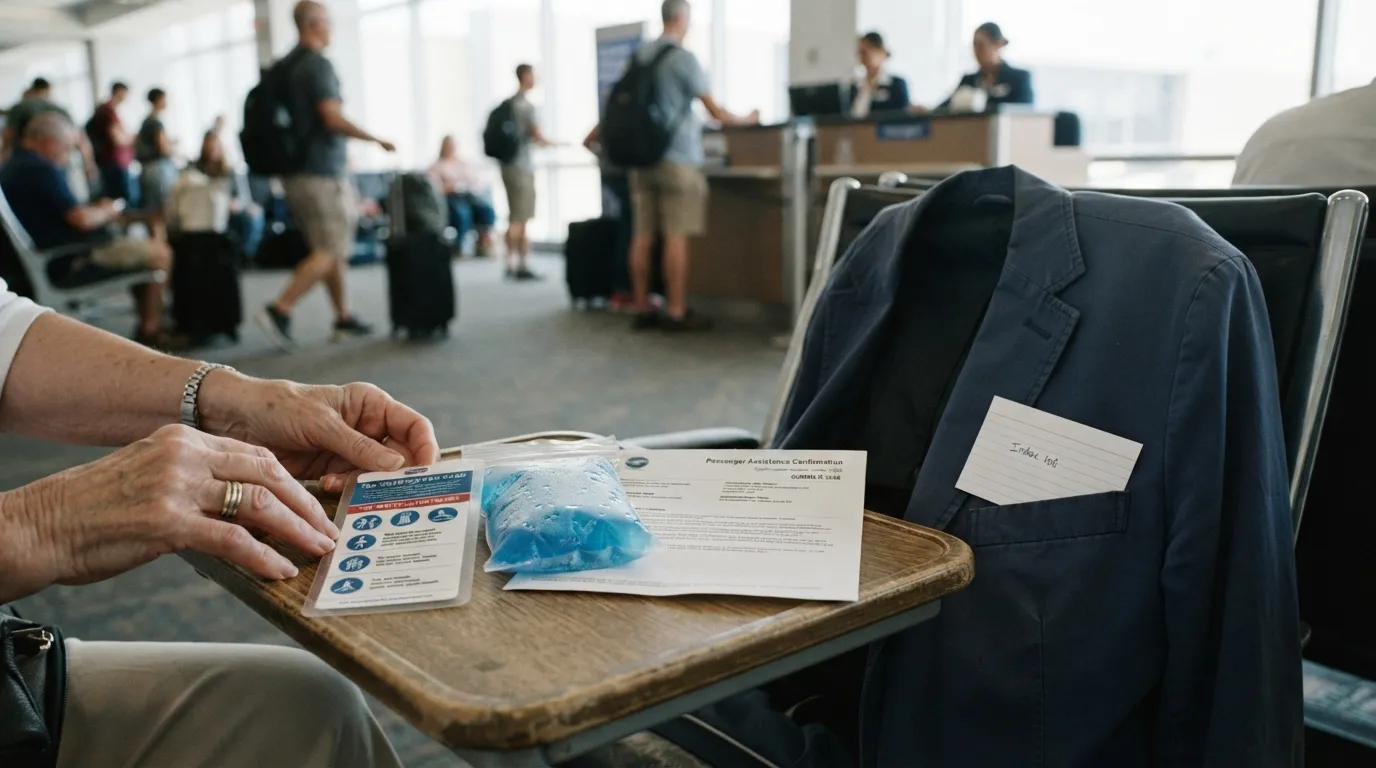
The gap between a stressful summer flight and a smooth one comes down to a dozen small decisions made weeks before departure. Experienced travelers over 65 aren’t packing items, they’re packing systems.
A TSA Notification Card, a frozen ice pack, a printed assistance confirmation, one index card in a breast pocket – together they do more for your travel day than any seat upgrade ever could. Every item on this list costs almost nothing.
The peace of mind is priceless. Which one surprised you most, or which one do you already swear by?


