

Most people assume that older travelers just need more time and a little patience to get through an airport. That assumption is exactly why younger fliers end up frazzled while travelers in their 70s and 80s glide past the chaos without breaking a sweat.
These aren’t the tips you’ve already scrolled past. These are the quiet, almost invisible habits forged through decades of missed connections, lost luggage, and expensive lessons – and the further down this list you go, the more surprising they get.
#12 – They Call the Airline at Least 48 Hours Before Departure
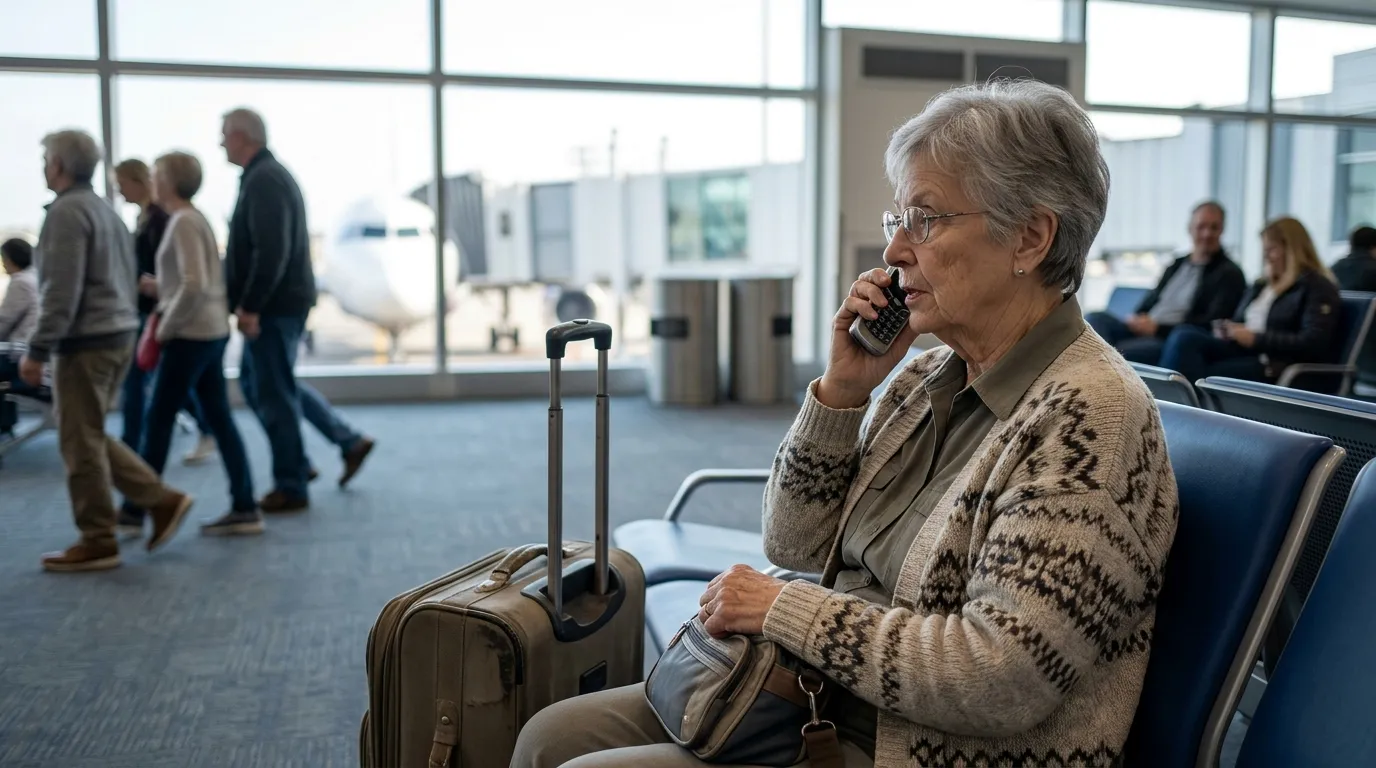
Most travelers only call the airline when something has already gone wrong. Experienced travelers over 70 call before anything can go wrong.
A 48-hour-ahead call can unlock wheelchair service, priority boarding, and custom meal options that would otherwise require awkward scrambling at the gate. Few younger travelers even know these options exist – let alone that one phone call activates them.
Calling ahead is just the opening move. What happens at the security line is where the real advantages kick in – and most people don’t know the rule that changes everything at #11.
#11 – They Know the TSA Age-75 Screening Benefit (and Use It)
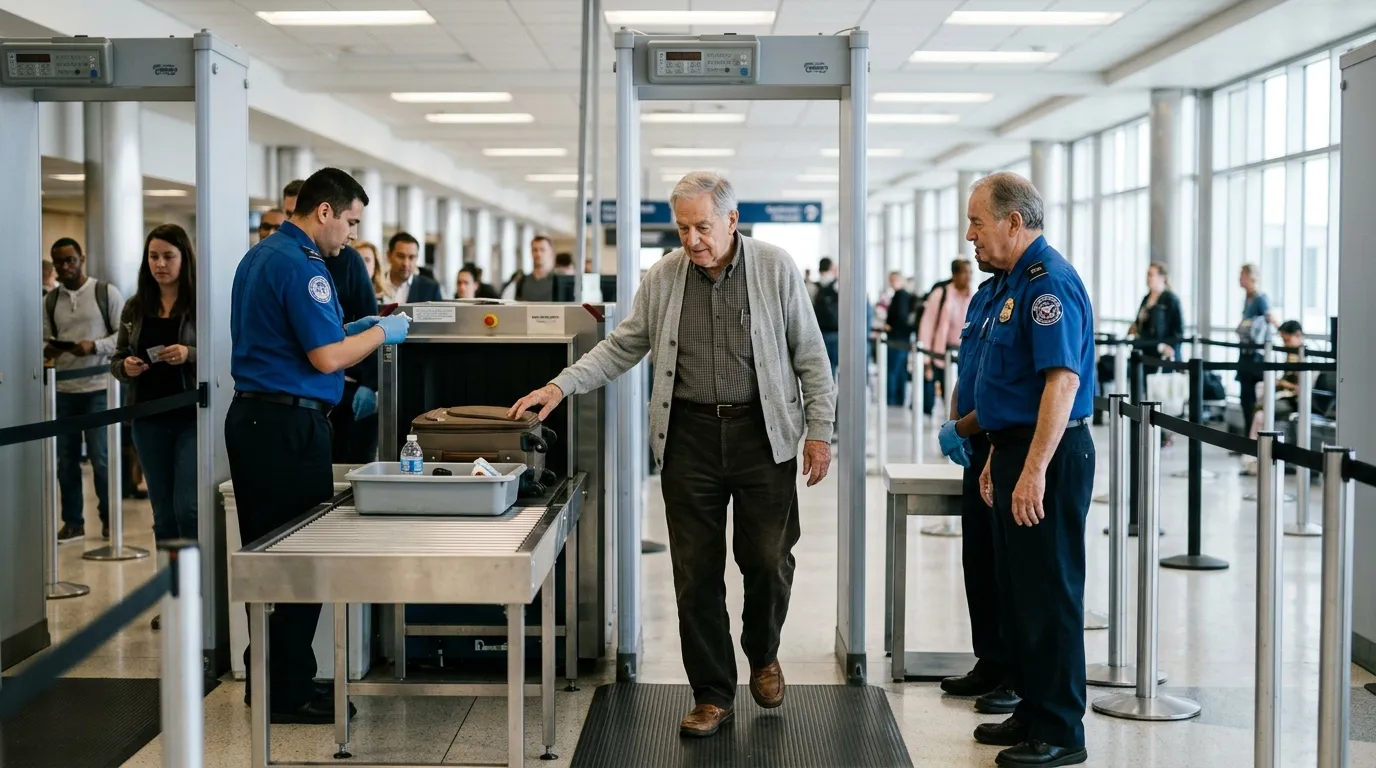
Here’s a fact that shocks most travelers: there’s a largely unpublicized TSA benefit tied directly to your age.
If you’re 75 or older, TSA provides expedited screening that lets you keep your shoes and light jacket on – even without TSA PreCheck enrollment. If you trigger the detector, you’re allowed a second pass through before a pat-down is required, and you can request to be seated during any additional screening.
At a Glance: TSA Age-75 Screening Perks
- Keep shoes and light jacket on through standard screening
- Allowed a second pass through the detector before a pat-down is required
- Can request to remain seated during additional screening
- Passengers in a wheelchair or scooter may stay seated while hands are tested for trace explosives
- No TSA PreCheck enrollment required – this applies at regular lanes
Most travelers over 75 still frantically unpack at the belt because nobody told them. Now you know. But knowing the rule is one thing – knowing how to call ahead for a dedicated escort is the next-level move, and that’s exactly what #10 covers.
#10 – They Call TSA Cares 72 Hours Before the Flight
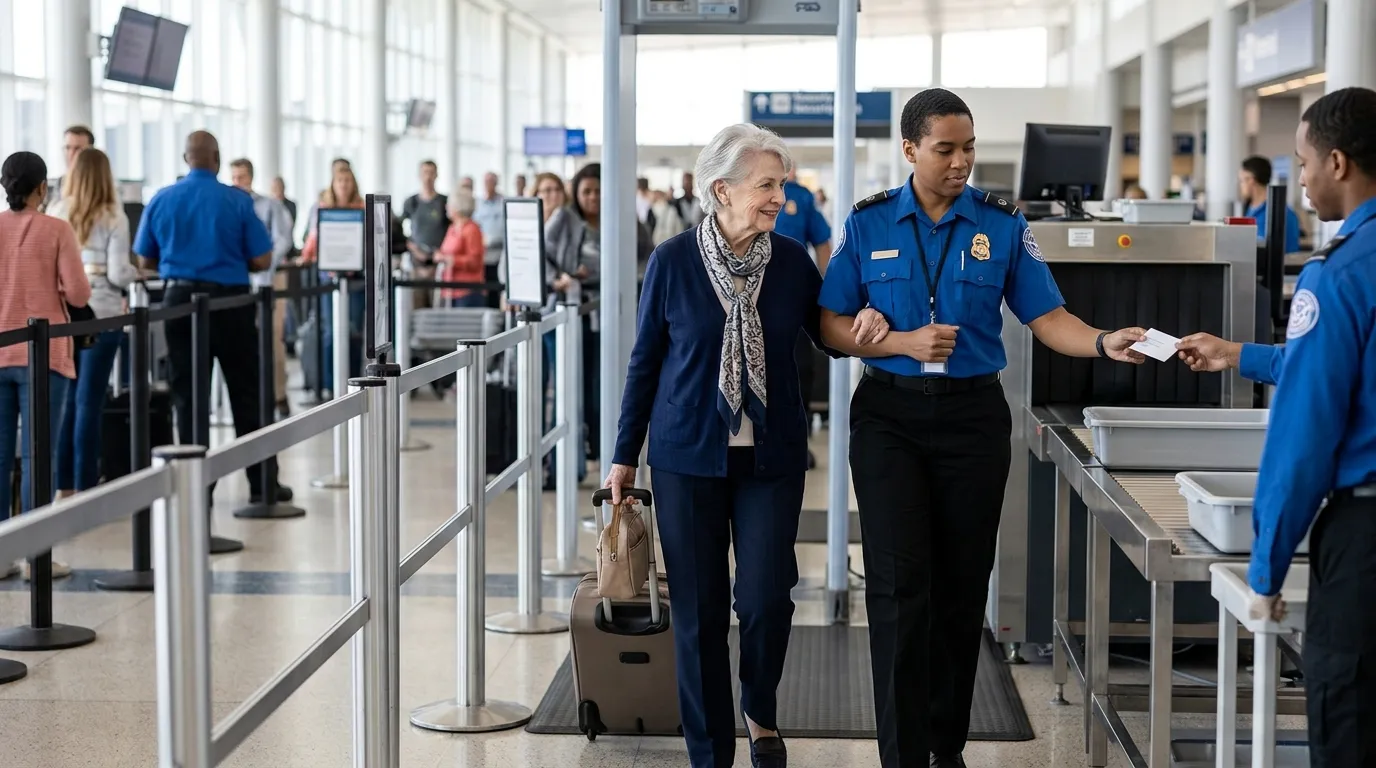
This program is one of the best-kept secrets in air travel for older passengers – and almost no one uses it proactively.
TSA Cares can be reached at (855) 787-2227 at least 72 hours before your flight. A passenger support specialist will physically escort you through the entire checkpoint process – especially useful if you have metal implants, portable oxygen, or difficulty standing for extended periods.
Travelers can also print a TSA notification card to hand to officers, flagging a medical condition without words. It doesn’t exempt you from screening, but it eliminates the confusion that turns a routine checkpoint into a stressful standoff.
Here’s what most people don’t realize next: a non-traveling family member can come right through security to help. That’s what #9 is all about.
#9 – They Request a Free Gate Pass for a Non-Traveling Companion
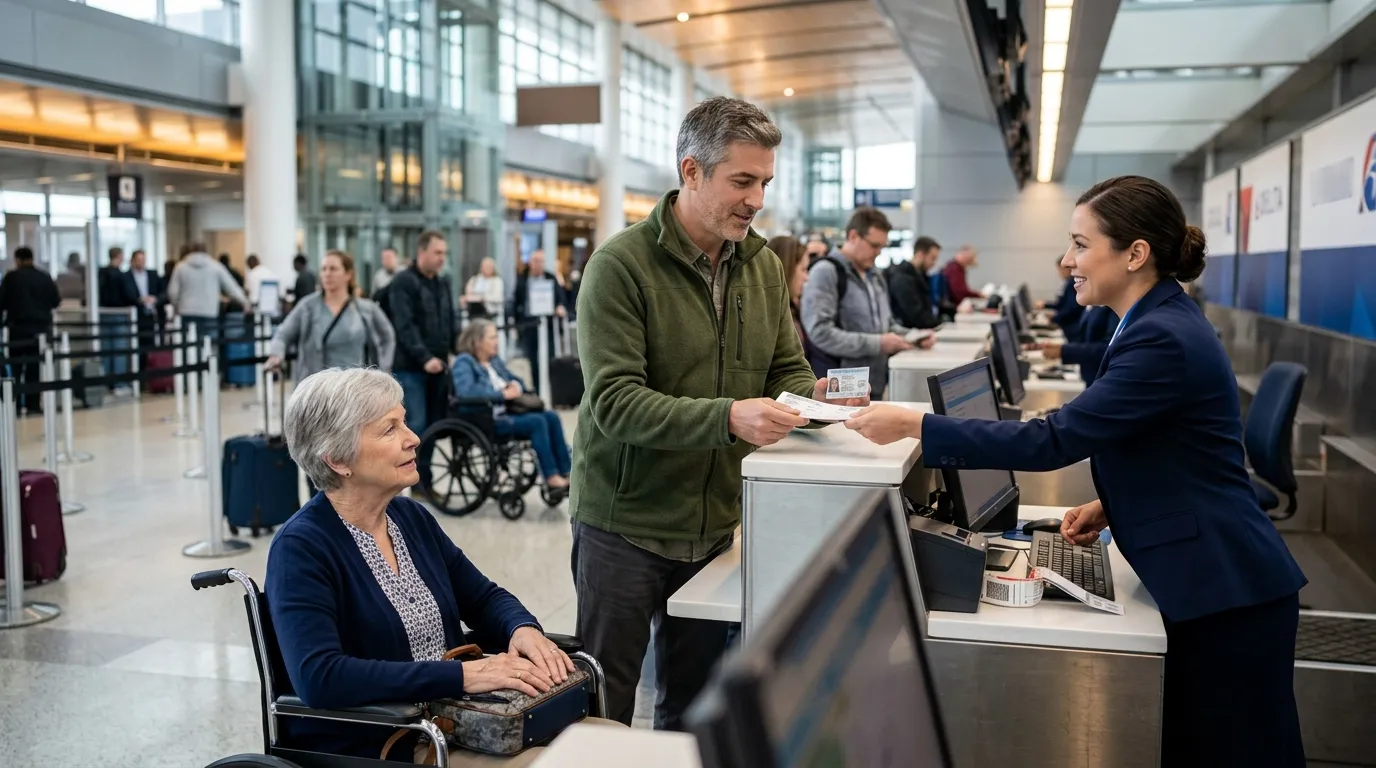
Almost no younger traveler knows this exists – and it’s completely free.
Many major U.S. airlines – including American, Delta, United, Southwest, JetBlue, Alaska, and Spirit – offer gate passes to non-passengers who are assisting older or disabled travelers. United, for example, allows up to two people to obtain a security pass directly from the ticket counter.
That means two family members can walk an older traveler all the way to the gate at no cost. The assumption that the security zone is off-limits to anyone without a boarding pass? Wrong – and that assumption is exactly what this habit quietly destroys.
Speaking of assumptions worth shattering: most travelers arrive at an unfamiliar airport and start guessing. See what experienced travelers do differently in #8.
#8 – They Study the Airport Map Before They Even Pack

Younger travelers arrive at an unfamiliar terminal and start sprinting. Experienced travelers already know the layout before they leave the house.
Checking the airport map online before departure reveals which concourses connect, how far the gates sit from security, and where the nearest restrooms and elevators are. For anyone with limited mobility, this five-minute habit isn’t just convenient – it’s the difference between calm and crisis.
Map knowledge pairs perfectly with the next move: knowing exactly which vehicle to flag down between concourses. And #7 will change the way you think about long terminal walks entirely.
#7 – They Book Courtesy Carts for Long Terminal Transfers
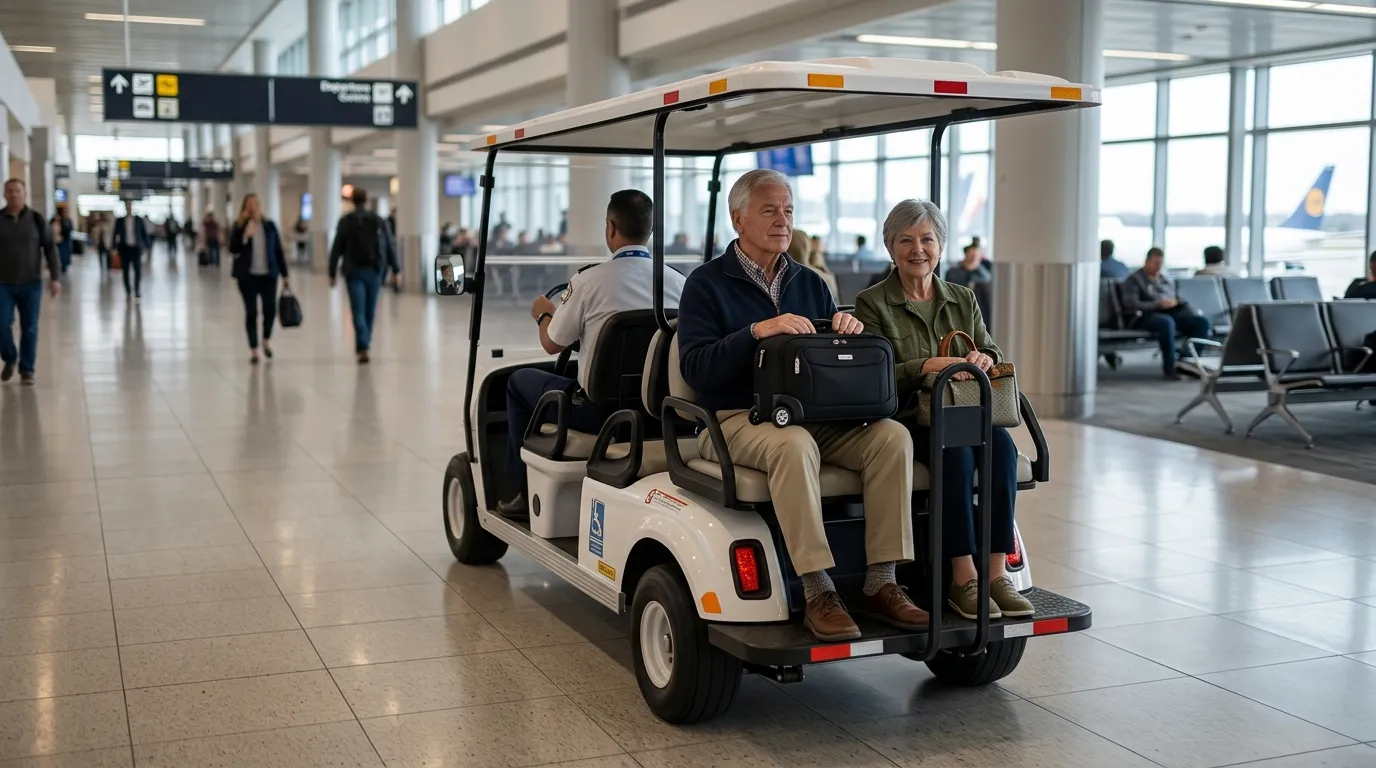
Walking half a mile between concourses is brutal – but it’s also entirely optional if you know what to ask for.
Airport courtesy carts operate in terminals across the country, driven by staff to pick up passengers who need extra assistance or are working with a tight connection. Policies vary by airport, so it’s worth checking the airport’s website or calling your airline’s customer service line ahead of time.
Many travelers simply never ask – and walk hundreds of yards they didn’t need to. The energy saved before a long flight matters more than most people realize. But it’s what smart older travelers do with their carry-on that really sets them apart. See #6.
#6 – They Travel with a Lightweight, Easy-Access Carry-On
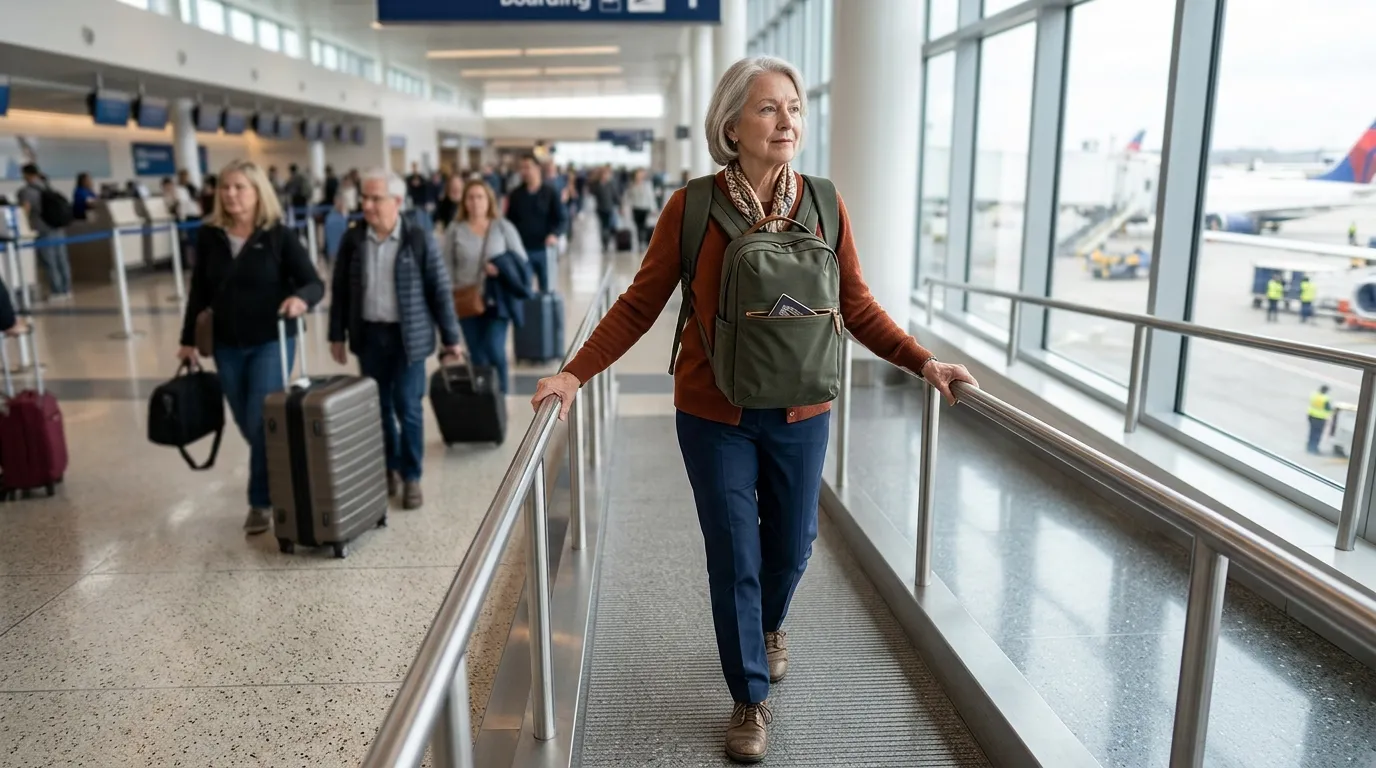
There’s a surprisingly common mistake even experienced travelers make: a carry-on bag that fights back.
A lightweight backpack keeps both hands free for railings, check-in counters, and boarding – something a wheeled hardside bag simply can’t offer in a crowded jetway. And if you can pack enough for your trip in that carry-on alone, you’ve already eliminated 20-45 minutes of baggage claim and the very real risk of a lost bag.
Quick Compare: Backpack vs. Wheeled Carry-On for Older Travelers
- Backpack: Both hands free for railings and counters; fits under seat; no overhead bin struggle
- Wheeled hardside: Easier on shoulders but requires one hand; trickier in narrow jetways
- Either one carry-on only: Skips baggage claim entirely and eliminates lost-bag risk
- Key test: Can you lift it to overhead bin height with one arm, alone? If not, downsize
Lost bags bring us directly to the next habit – one that experienced travelers treat as a hard, non-negotiable rule. #5 makes it crystal clear.
#5 – They Never – Ever – Put Medications in Checked Luggage
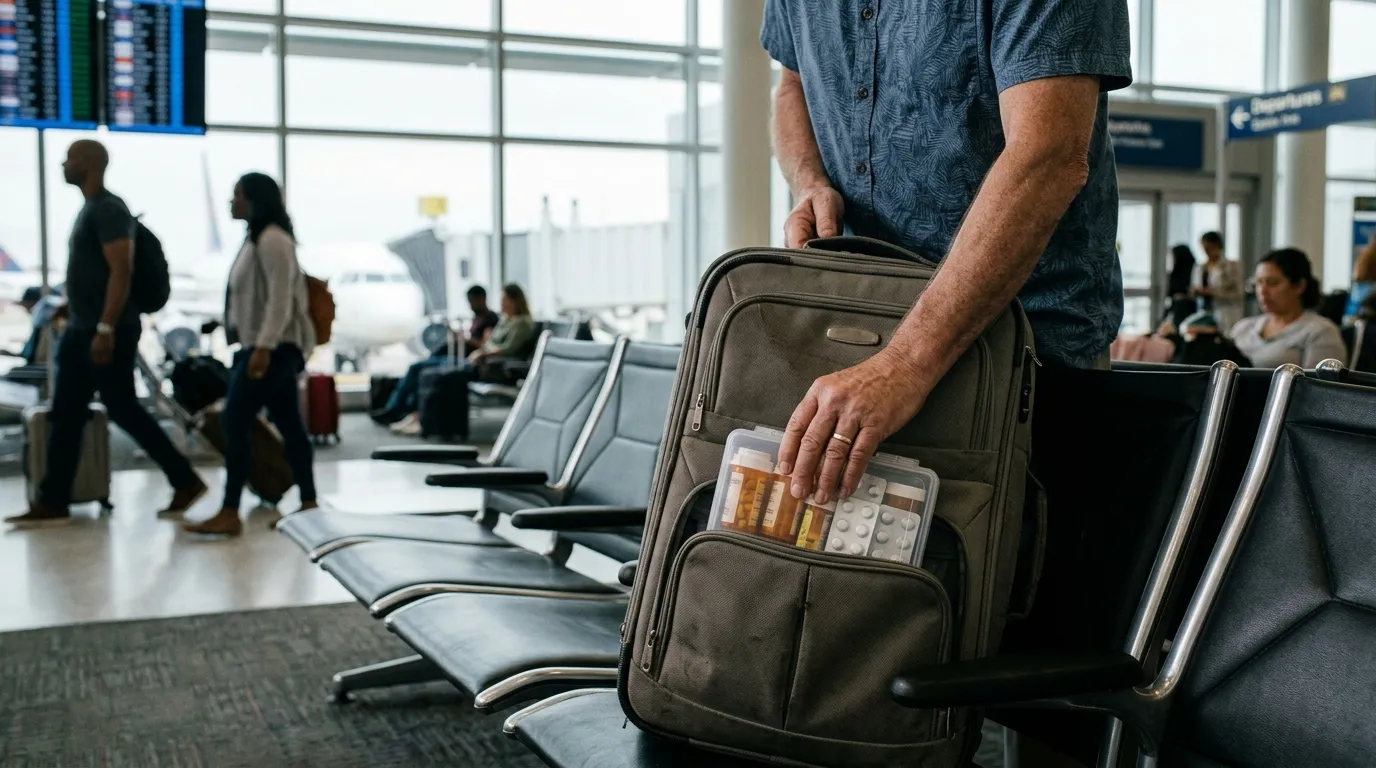
This isn’t a preference. It is a rule with zero exceptions.
Checked luggage gets lost, delayed, and misdirected – and when it does, the situation goes from inconvenient to genuinely serious the moment your prescription medications are inside it. Travelers managing chronic conditions learned this lesson the hard way, and the lesson stuck permanently.
TSA allows medications in reasonable quantities exceeding three ounces in carry-ons – they don’t even need to go in the zip-top liquids bag. Most travelers don’t know that. The ones over 70 who travel confidently do. And that same attention to the body carries straight into #4.
#4 – They Start Hydrating Long Before Boarding
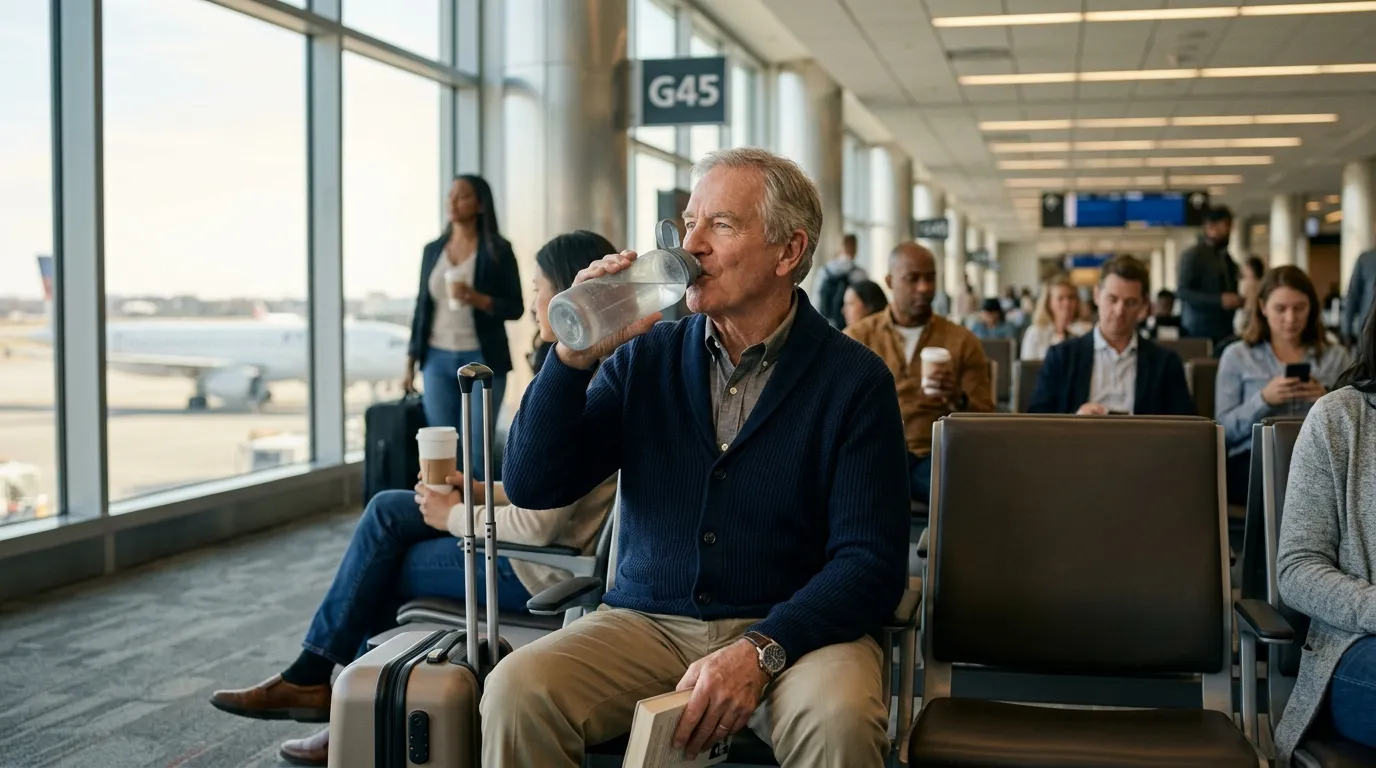
Dehydration on a flight isn’t just uncomfortable. For travelers over 70, it can quietly become a genuine health problem before they even notice it happening.
Cabin humidity typically runs below 20% – drier than most deserts – and the effects accumulate over hours. Experienced older travelers hydrate well before boarding and bring water on the plane, while also skipping heavy food and excess caffeine the morning of travel.
That same body-awareness extends to one of the most tactical habits on this entire list – a bathroom strategy almost nobody thinks about in advance. #3 is the one that surprises people most.
#3 – They Choose Their Seat Strategically Around Bathroom Access
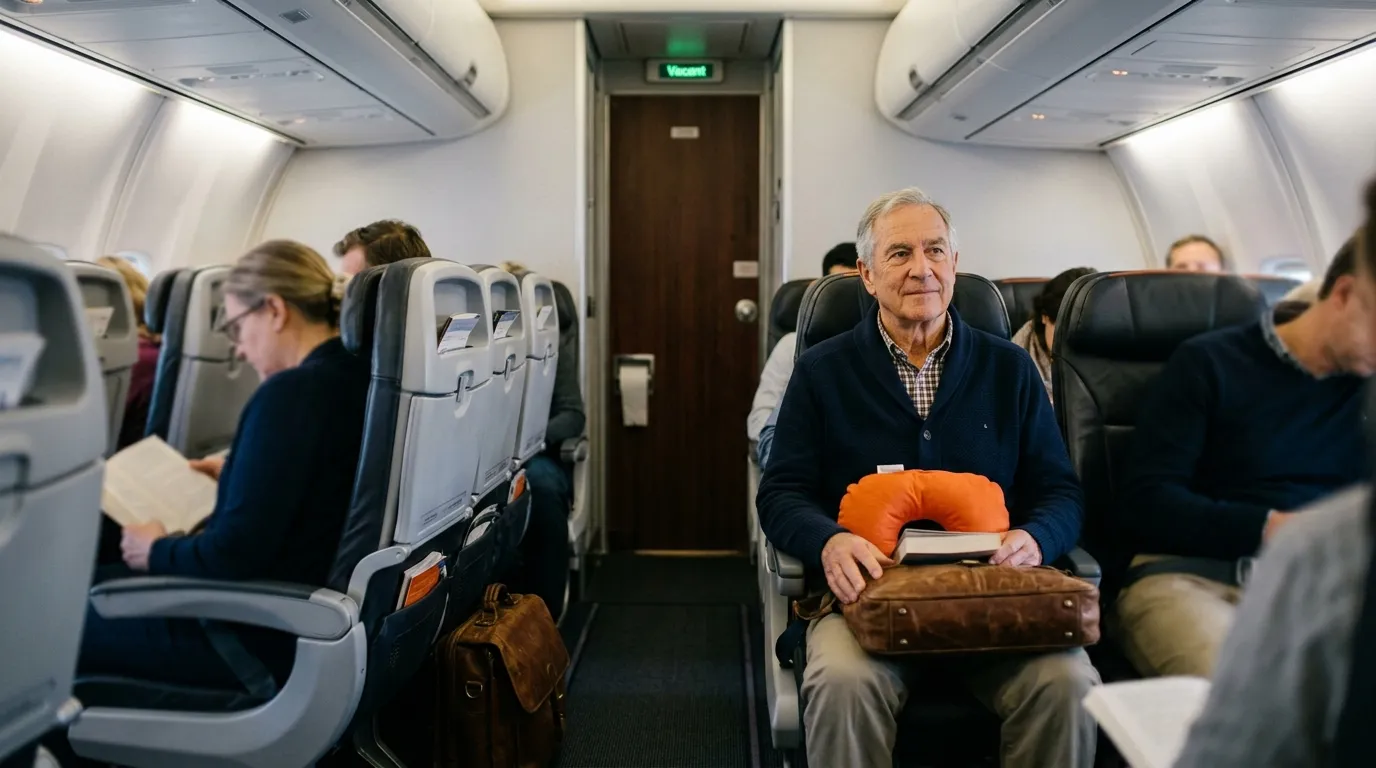
This sounds obvious until you realize how few travelers actually do it before reaching the gate.
Seasoned older travelers book aisle seats as close to a bathroom as possible – deliberately, not as an afterthought. Then they time their bathroom visit for right after the plane levels off, before food and beverage service begins, when the aisle is still clear and the queue hasn’t formed.
Timing the bathroom visit before the post-service rush is a move almost no casual traveler makes. It’s small, it’s free, and it matters more on a four-hour flight than you’d think. Seat strategy doesn’t end there, though – where you sit also determines how fast you get off the plane. And the habit in #2 is how experienced travelers beat the exit crowd entirely.
#2 – They Request Priority Boarding – and Actually Use It
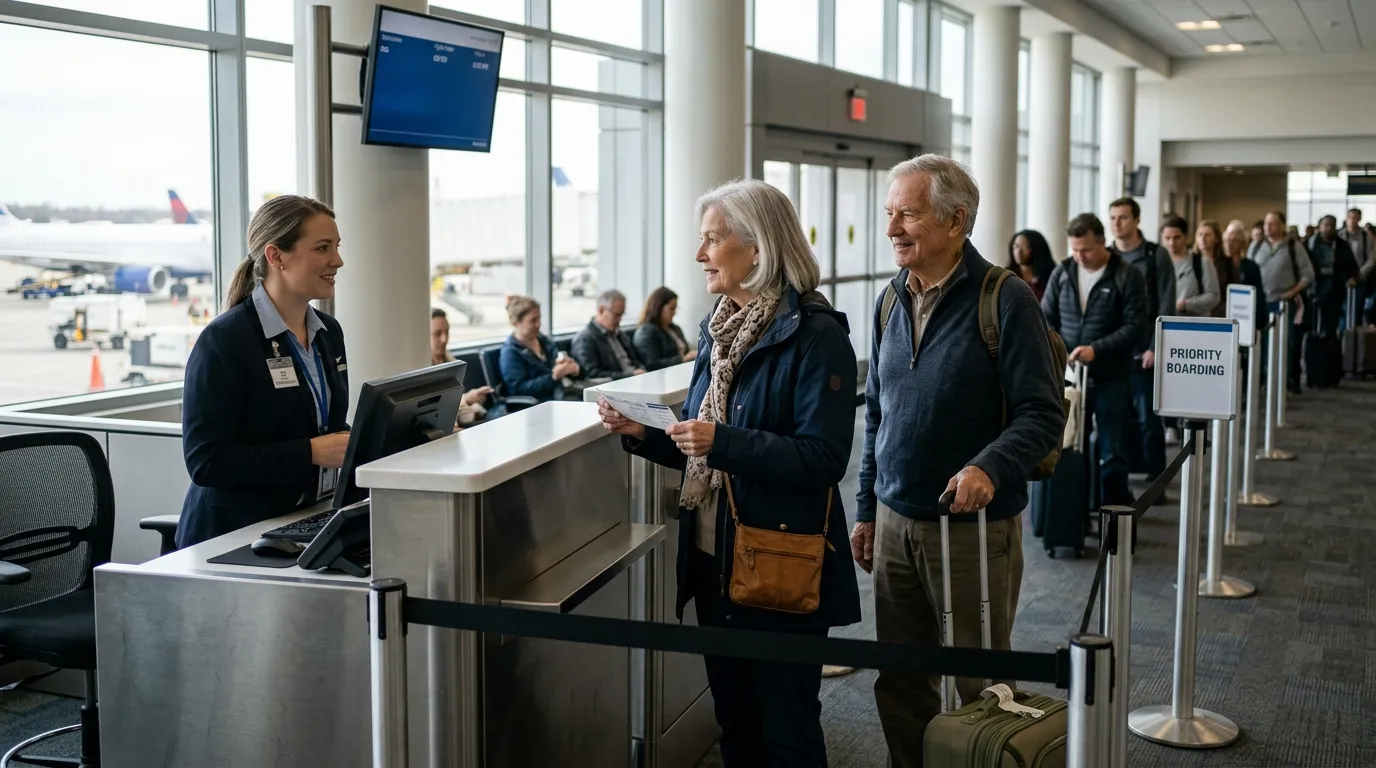
Many older travelers feel awkward asking for priority boarding. The ones with real experience have shed that hesitation entirely.
Airlines encourage seniors to preboard because it keeps the aisles less congested for everyone. You simply self-identify to a gate agent before boarding begins and mention that you need additional time – no doctor’s note, no special documentation required.
Pre-boarding means no jostling for overhead bin space, no standing in a snaking crowd for 15 minutes, and no fall risk in a packed jetway. This single habit eliminates the most physically taxing part of the entire airport experience. And then there’s #1 – the habit that costs nothing upfront and protects everything. Most travelers only learn it after something goes catastrophically wrong far from home.
#1 – They Secure Travel Insurance with Medical Evacuation Coverage Before Any Trip
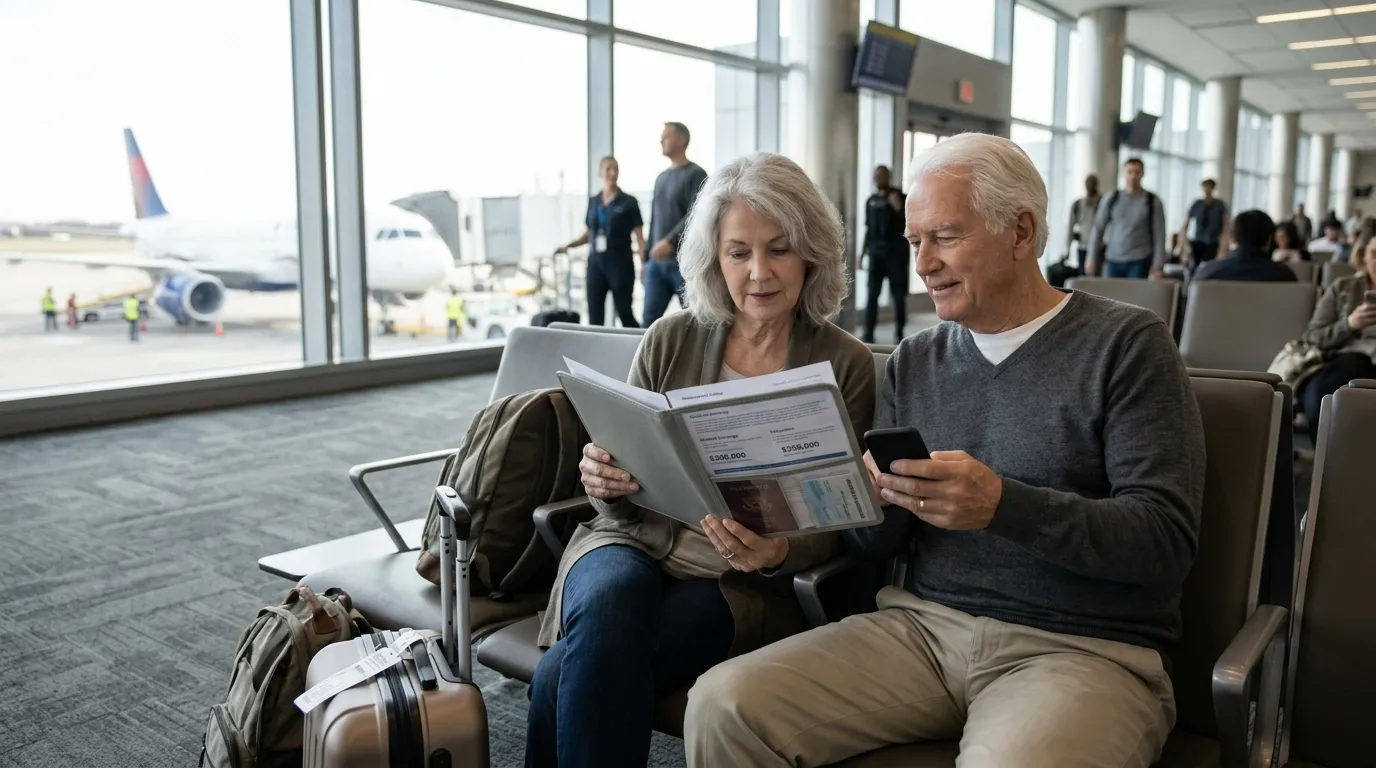
This is the habit that feels unnecessary right up until it’s the only thing that matters.
Medicare – the primary coverage for most Americans 65 and older – provides essentially no coverage outside the United States. An air ambulance back to the U.S. can cost over $100,000. Experienced travelers over 70 ensure their policy covers at least $250,000 for medical evacuation, and they buy it within 14-21 days of their first trip deposit to qualify for a Pre-Existing Condition Waiver.
Worth Knowing: Medicare Abroad vs. Travel Insurance
- Original Medicare covers almost nothing outside the U.S. and its territories – with only narrow emergency exceptions
- Part D prescription drug coverage also stops at the U.S. border – international pharmacy costs come entirely out of pocket
- Some Medigap plans (C, D, F, G, M, N) cover 80% of foreign emergency care after a $250 deductible, up to a $50,000 lifetime limit
- Dedicated travel insurance with medical evacuation is the only reliable safety net for most international trips
- Buy within 14-21 days of your first trip deposit to lock in Pre-Existing Condition Waiver eligibility
Travel insurance is not a luxury. For older travelers abroad, it is the only thing standing between a bad day and a financial catastrophe.
Frommer’s Travel Guides
The most experienced travelers over 70 don’t treat insurance as an optional add-on. They book it before the hotel, before the flights, before anything else. That single shift in thinking is what separates a bad day from a devastating one – and it’s the quiet habit that holds every other item on this list together.
These twelve habits cost almost nothing and require no special skill or status. They’re just the accumulated wisdom of people who’ve learned – sometimes painfully – what actually matters when you’re 35,000 feet from home. Which of these do you already swear by? Drop it in the comments.


