
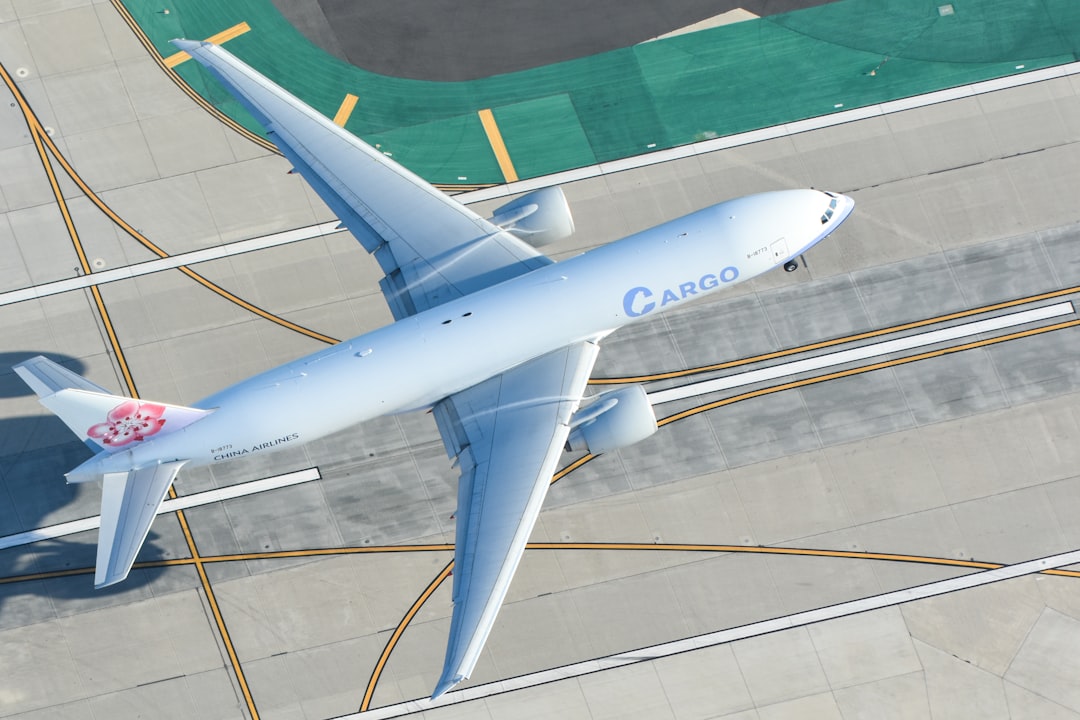
Most travelers believe that a flight delay is the ultimate travel nightmare, but industry data proves that the real stress begins long before you reach the runway. While we are told that modern infrastructure has streamlined the flying experience, the reality is that record-breaking passenger volumes have pushed America’s aging hubs to a breaking point. From “walking marathons” between gates to security lines that rival theme park queues, your choice of airport can dictate your mental health for the next 24 hours. Here’s what the federal data and frequent flyer metrics actually say.
#18 — Los Angeles International (LAX)

The sheer mention of LAX is enough to trigger a sympathetic nervous system response in seasoned travelers. While it sits at the bottom of our “most stressful” list, it is only here because recent multi-billion dollar renovations have marginally improved the internal flow.
The real “hassle” at LAX isn’t the terminals themselves, but the notorious “horseshoe” traffic loop that can take 45 minutes to navigate just to reach your drop-off zone. Frequent flyers have long argued that the LAX-it shuttle system for rideshares was a colossal mistake that added an entire layer of logistical friction to every arrival.
- The airport serves nearly 75 million passengers annually.
- The terminal layout requires separate security checks for many transfers.
Most critics argue that the traffic congestion outside the terminal is more stressful than the actual flight itself. If you aren’t arriving three hours early here, you are playing a dangerous game with the TSA gods. But that’s nothing compared to the confusing layout we found at #17…
#17 — Philadelphia International (PHL)

Philadelphia International is a masterclass in “old world” aviation design meeting modern-day overcapacity. While it serves as a massive hub for the Northeast, it consistently ranks low for traveler satisfaction due to its aging infrastructure and cramped corridors.
The primary stressor here is the disproportionately high rate of weather-related ground stops that ripple through the entire East Coast corridor. Because the runways are tightly packed, even a moderate thunderstorm can back up the taxiway for hours. Travelers often report that the food options in the regional terminals are “depressing” compared to the sleek amenities found in newer hubs.
- PHL often ranks in the bottom 10% for on-time departures.
- Terminal F is a notorious “hike” for those connecting from International arrivals.
Data shows that PHL has one of the highest baggage mishandling rates in the country, making it a destination where you should never, ever check a bag. But that’s nothing compared to the crowd density we found at #16…
#16 — Orlando International (MCO)

Don’t let the “vacation vibes” fool you; Orlando International is a unique flavor of chaos that even the most stoic business travelers fear. The stress here isn’t caused by business commuters in suits, but by thousands of families with strollers who have no idea how the security line works.
MCO is a high-volume leisure hub, meaning the TSA lines are notoriously slow because travelers are frequently carrying prohibited souvenirs or oversized liquids they bought at theme parks. The “false sense of security” provided by the monorail system often leads to travelers missing their flights because they didn’t realize how much time it takes to traverse the massive main hall.
- MCO consistently has some of the longest average TSA wait times in the U.S.
- The airport’s acoustics are designed in a way that creates a constant, draining “wall of noise.”
Expert travelers recommend getting “Clear” or “TSA Pre-Check” specifically for this airport more than any other in the nation. But that’s nothing compared to the sheer scale of the nightmare at #15…
#15 — Denver International (DIA)

Denver International is a marvel of conspiracy theories and tent-like architecture, but for the average traveler, it is a logistical marathon. The sheer physical size of the airport means that if you are assigned a gate at the end of Concourse C, you are looking at a multi-mile journey from the security checkpoint.
The stress at DIA is compounded by the “train of doom”—the automated people mover that is the only way to reach the concourses. When the train breaks down, which happens more often than the airport likes to admit, the entire facility grinds to a terrifying halt. DIA is frequently cited as the most physically exhausting airport to navigate in North America.
- The airport covers 53 square miles, larger than the city of Manhattan.
- High-altitude winds frequently cause “white-knuckle” turbulence on arrival.
While the views of the Rockies are stunning, the anxiety of making a 20-minute connection across three concourses is not. But that’s nothing compared to the delay-prone nightmare at #14…
#14 — San Francisco International (SFO)
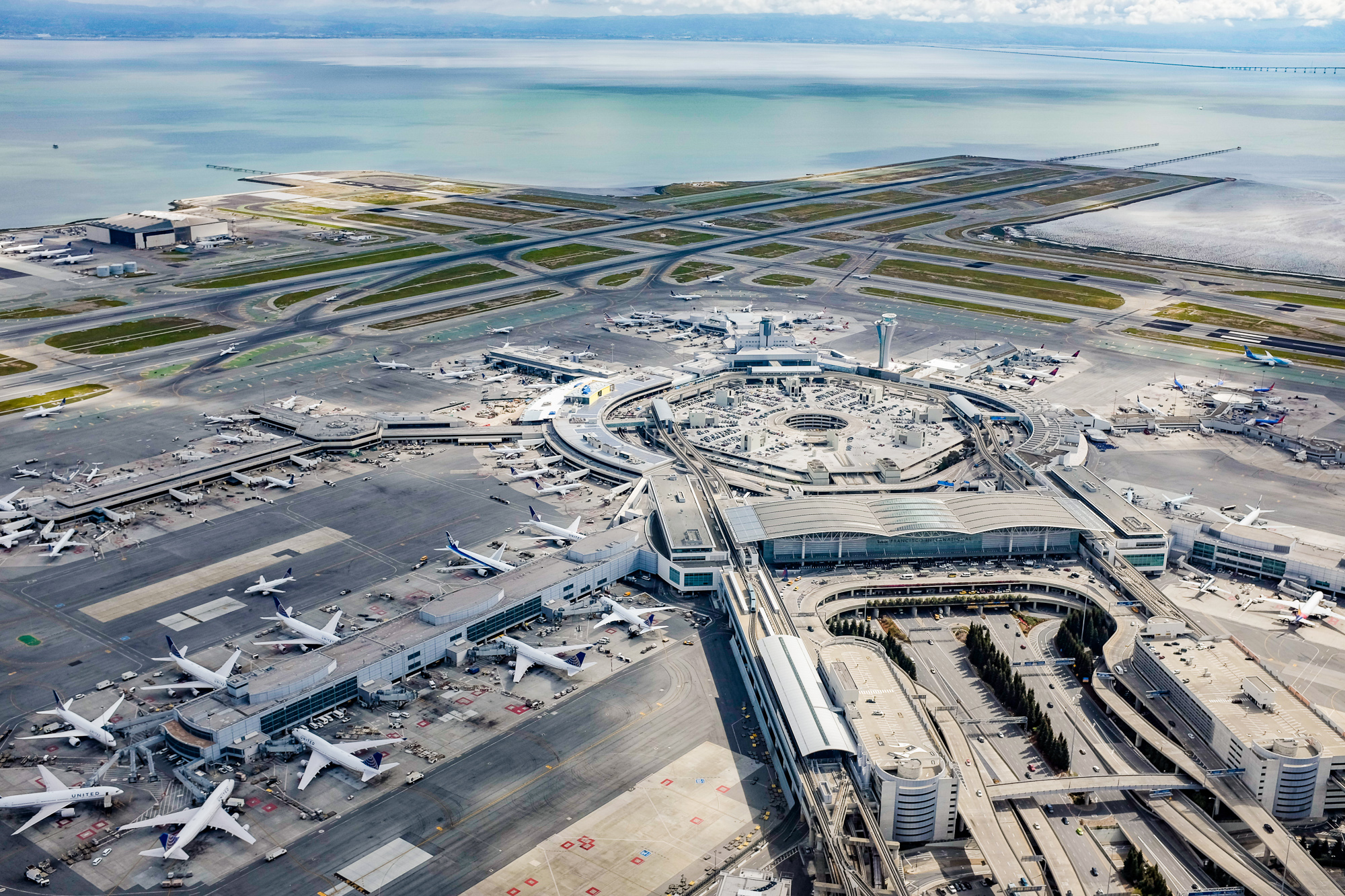
San Francisco International is a beautiful, modern facility that is unfortunately built in a place where the weather hates aviation. The airport’s parallel runways are positioned so close together that the FAA forbids simultaneous landings whenever the famous Bay Area fog rolls in.
This means that on a perfectly sunny morning in the city, your flight might still be delayed by three hours because of a “marine layer” at the airport. The constant threat of delays creates a high-tension environment where the departure boards are a sea of red text. Travelers at SFO are statistically more likely to experience a “creeping delay” than at almost any other West Coast hub.
- Runway separation is only 750 feet, requiring visibility that the Bay rarely provides.
- The airport features a “Yoga Room,” which many locals claim is a necessary response to the stress of the delays.
If you have a tight connection through SFO, you are essentially gambling with your schedule. But that’s nothing compared to the maze-like frustration of #13…
#13 — Miami International (MIA)
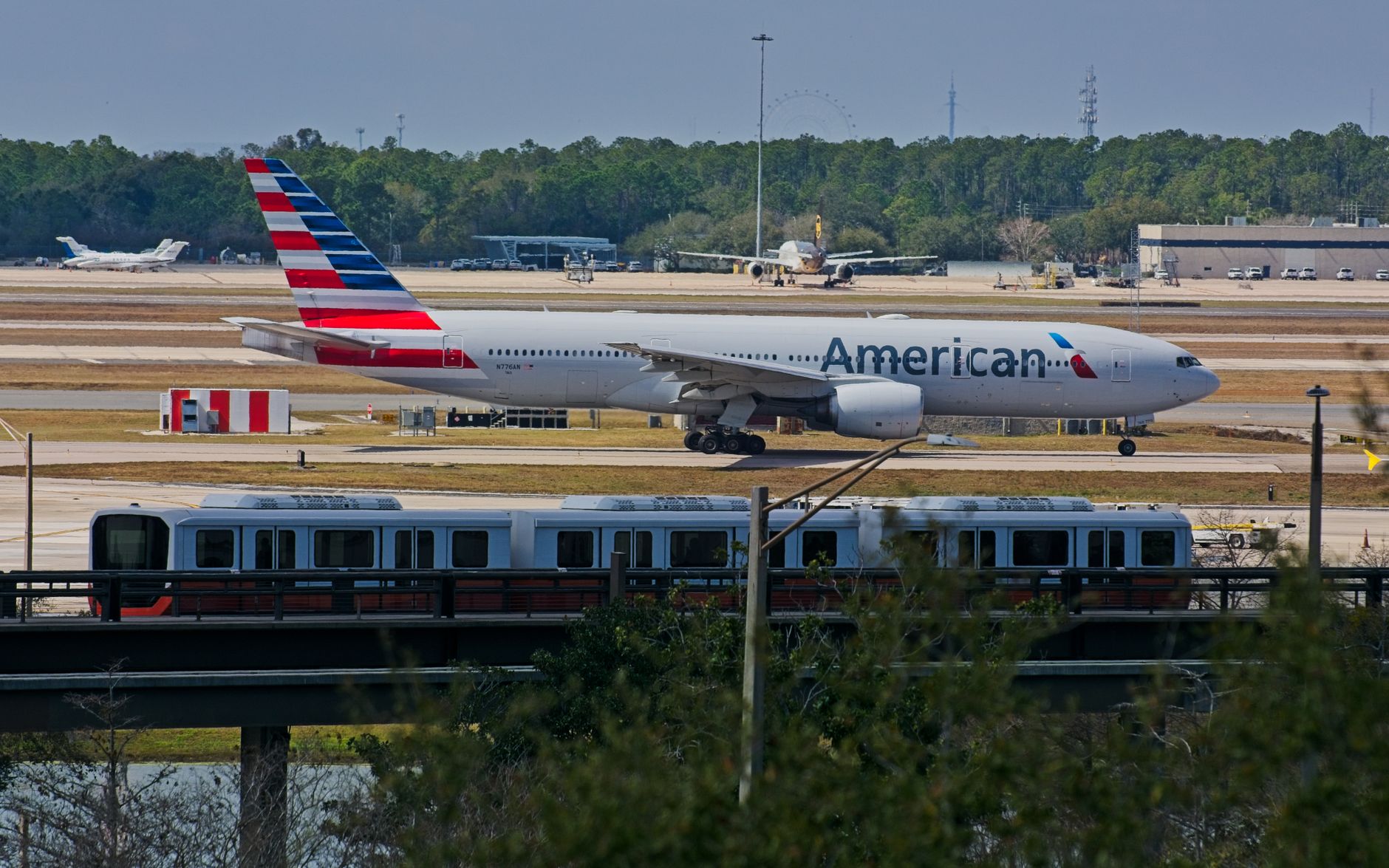
Miami International is characterized by a “survival of the fittest” mentality. As the primary gateway to Latin America, the airport is a swirling vortex of languages, massive luggage carts, and an infrastructure that feels like it hasn’t been updated since the 1980s.
The layout is a long, grueling “U” shape that requires immense amounts of walking. Furthermore, the immigration lines at MIA are legendary for being some of the slowest in the Western Hemisphere. International travelers frequently report waiting over two hours just to clear passport control, only to have to re-clear security for their domestic connection.
- MIA ranks poorly for “wayfinding,” with signs that many find contradictory.
- The humidity inside the “half-outdoor” sections can be draining during summer months.
It is an airport where you never feel like you’re actually moving toward your destination. But that’s nothing compared to the “city within a city” at #12…
#12 — Dallas/Fort Worth International (DFW)

DFW is so large it has its own zip code and its own police force, and for a traveler, that scale is the primary source of panic. The airport is organized into five semi-circular terminals, meaning that if your gate moves from Terminal A to Terminal E, you are essentially traveling to a different city.
The Skylink train is fast, but the anxiety of realizing you are on the wrong side of the world’s fourth-busiest airport is a top-tier stressor. Many frequent flyers argue that DFW’s design is “anti-pedestrian,” forcing you to rely entirely on automated systems that feel claustrophobic during peak hours.
- DFW is the primary hub for American Airlines, leading to massive “banks” of flights that overwhelm the terminals all at once.
- The weather in North Texas is prone to sudden “supercell” storms that ground everything instantly.
Navigating DFW requires a level of tactical planning usually reserved for military operations. But that’s nothing compared to the claustrophobia of #11…
#11 — LaGuardia (LGA)

For decades, LaGuardia was the laughingstock of the aviation world, famously compared to a “third-world country” by politicians. While a multi-billion dollar facelift has made the interiors look like a high-end mall, the fundamental geographic constraints of the airport make it a permanent hassle.
The runways are short and surrounded by water, meaning the “margin for error” is slim and delays are frequent. The real stress, however, is the ground transport. Because there is no direct rail link to Manhattan, travelers are at the mercy of the soul-crushing traffic on the Grand Central Parkway.
- LGA has some of the highest landing fees, which often translates to higher ticket prices.
- The new terminals are beautiful, but the walk from the garage to the gate has actually increased in length.
It’s an island of luxury in a sea of logistical misery. But that’s nothing compared to the “Great Trek” required at #10…
#10 — Washington Dulles (IAD)
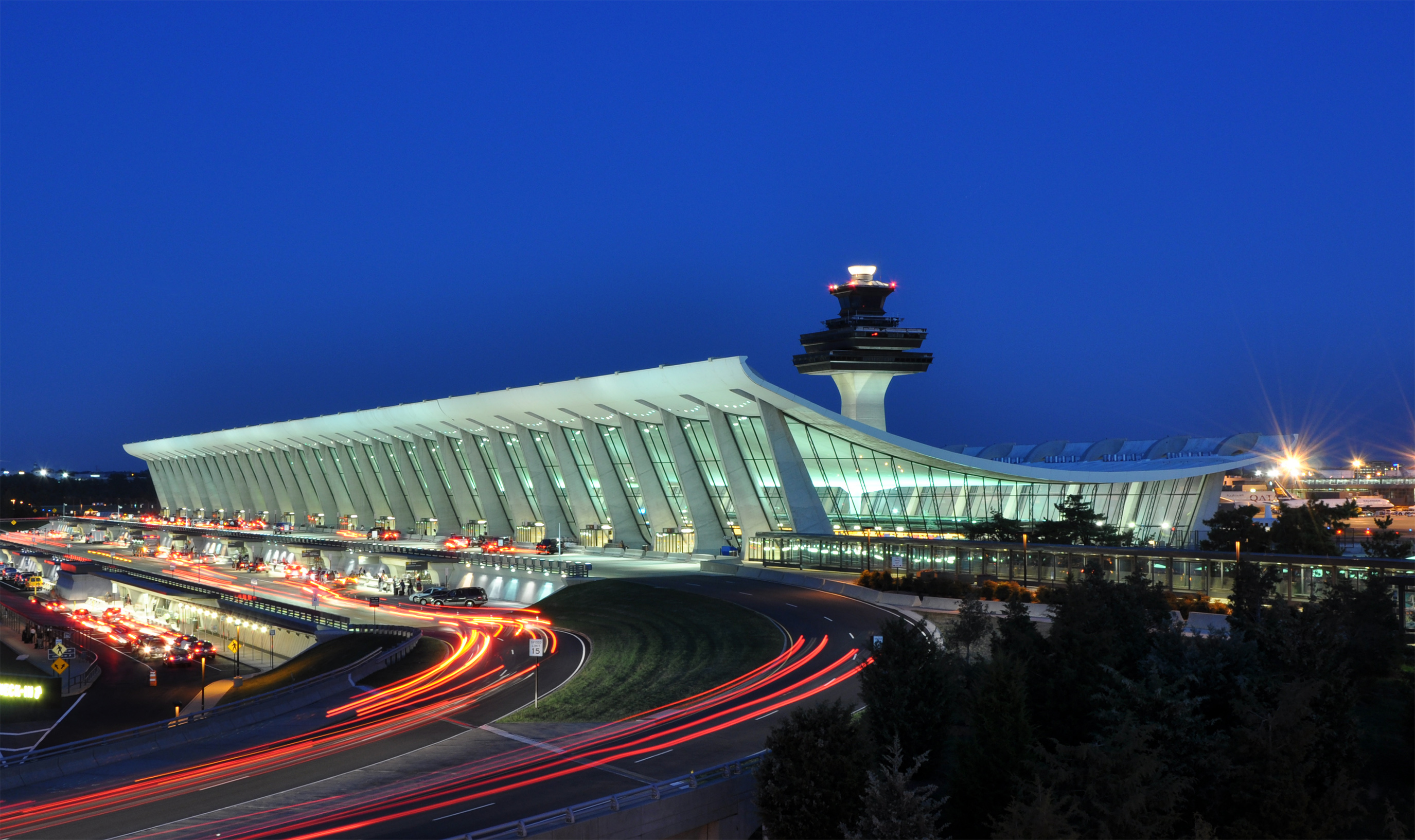
Washington Dulles is an architectural icon, but as a functional airport, it is an absolute chore. The primary source of stress is the absurd “Mobile Lounges”—the giant, prehistoric-looking buses on stilts that ferry passengers between the main terminal and the concourses.
While the newer “AeroTrain” exists, it doesn’t serve all gates, leading to a confusing two-tier system where you never quite know how you’re supposed to get to your plane. Travelers consistently rank IAD as having the most “confusing” flow of any major U.S. airport.
- The walk from the “C” gates to the main exit is one of the longest in the country.
- The security lines are often bottlenecked by a high volume of diplomats and “high-priority” travelers getting escorted through.
It’s an airport that feels like it was designed in the 1960s to be futuristic, but ended up just being inconvenient. But that’s nothing compared to the “Thunderstorm King” at #9…
#9 — Charlotte Douglas International (CLT)

Charlotte Douglas has quietly become one of the most crowded hubs in America, and its infrastructure has not kept pace. The stress here comes from the “compression” of too many people in too small a space.
The main walkways are consistently packed to the point where “walking at a normal pace” is impossible. Frequent flyers describe the atmosphere at CLT as a “perpetual mosh pit,” especially in the notorious Terminal E, which handles regional flights. Data shows that CLT has become a “connection trap” where a 45-minute layover is statistically impossible to make.
- The airport handles more flights per runway than almost any other hub.
- The “rocking chairs” at CLT are a nice touch, but you’ll never find an empty one.
If you’re connecting through Charlotte, wear comfortable shoes and prepare for a shoulder-to-shoulder experience. But that’s nothing compared to the “Gateway to Boredom” at #8…
#8 — George Bush Intercontinental (IAH)

Houston’s IAH is a sprawling giant that manages to feel both massive and incredibly cramped at the same time. The primary stressor here is the disjointed terminal layout that makes domestic-to-international connections a nightmare.
The underground “inter-terminal train” is slow and feels like it belongs in an 80s sci-fi movie, while the “Skyway” overhead train is often packed to the gills. Travelers frequently complain that IAH has the “least helpful” staff among major Texas hubs, adding a layer of frustration to an already long day.
- Construction has plagued IAH for years, leading to “temporary” walkways that feel like endless tunnels.
- The walk from the parking garage to Terminal C is a notorious endurance test.
It’s an airport that feels like it’s constantly under construction but never actually getting better. But that’s nothing compared to the “Windy City” chaos at #7…
#7 — Chicago O’Hare (ORD)
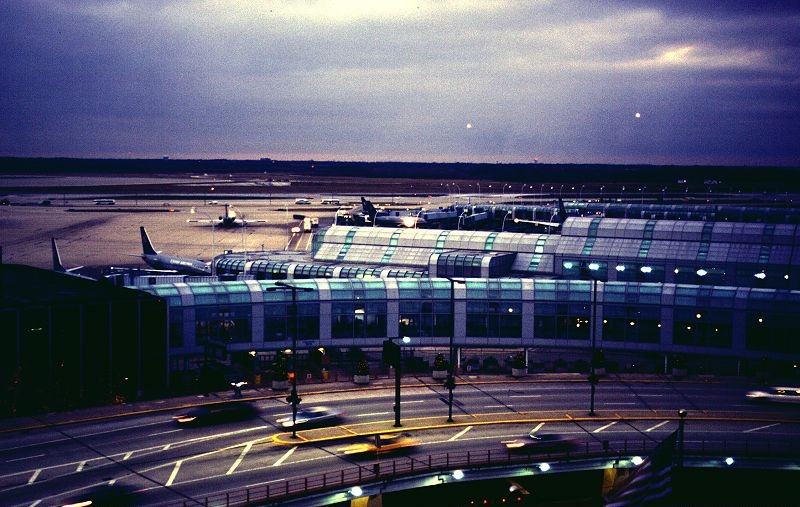
O’Hare is legendary for a reason. It is the crossroads of American aviation and a graveyard for travel plans. The stress at ORD isn’t just about the size—it’s the unpredictable weather and the “cascading delay” effect.
When it snows in Chicago, the entire nation’s flight schedule feels the tremor. Navigating between terminals (especially to the international Terminal 5) requires a train ride that takes you entirely out of the secure zone in some cases, forcing a second security screening. ORD is the only airport where you can regularly see people sprinting through the halls in a state of genuine panic.
- O’Hare has one of the highest volumes of “canceled” flights in the winter months.
- The literal distance between the furthest gates is over a mile.
It’s a place where you can feel the stress in the air. But that’s nothing compared to the “Big Apple” bottleneck at #6…
#6 — John K. Kennedy International (JFK)

JFK is a collection of six different airports pretending to be one. Because each terminal is essentially operated independently, transferring between airlines is a soul-crushing ordeal involving the “AirTrain” and a total re-entry into the security system.
The “hassle factor” here is driven by the volume of international travelers who are unfamiliar with U.S. customs procedures, leading to enormous bottlenecks at every checkpoint. Industry experts often cite JFK as the “least efficient” large-scale airport in the developed world.
- Taxing to the runway at JFK can take upwards of an hour during peak “push” times.
- The terminal designs vary wildly, from ultra-modern luxury to 1970s-era “basement” vibes.
It is an airport that requires a “New York attitude” just to survive the check-in process. But that’s nothing compared to the “Southern Struggle” at #5…
#5 — Hartsfield-Jackson Atlanta (ATL)

Atlanta is the busiest airport in the world, and that title comes with a heavy dose of anxiety. The sheer volume of humanity moving through the “Plane Train” tunnel is enough to trigger agoraphobia in the calmest travelers.
The stress at ATL is all about time pressure. Because it is a massive hub for Delta, thousands of passengers are trying to make 35-minute connections across several “concourses” that are nearly a half-mile wide each. Missing the “Plane Train” at ATL is the equivalent of missing your flight, as walking between concourses is a 15-minute uphill trek for the physically fit.
- The TSA security line “T-Point” is widely considered the most intimidating sight in aviation.
- ATL handles over 100 million passengers a year—roughly the population of Egypt.
It’s a machine, but it’s a machine that will chew you up if you move too slowly. But that’s nothing compared to the “New Jersey Nightmare” at #4…
#4 — Newark Liberty International (EWR)

Newark is the airport people use when they can’t get into JFK, and they usually regret it. While Terminal A has been recently rebuilt, Terminals B and C remain the pinnacle of “low-ceiling, high-stress” environments.
The airport is notorious for having the worst “on-time” record in the United States. Data shows that you are more likely to be delayed at Newark than at almost any other airport on this list. The combination of heavy New York airspace and frequent equipment failures makes every departure a gamble.
- Newark consistently ranks last in “customer satisfaction” surveys by J.D. Power.
- The “United” hub dominance means if one flight is canceled, there are 500 people ahead of you in line for the service desk.
It’s an airport that feels like it’s working against you. But that’s nothing compared to the “Rocky Mountain Bottleneck” at #3…
#3 — Salt Lake City International (SLC)

This might be the most controversial entry on the list, but ask any frequent flyer about the “New SLC” and they will groan. When the airport was rebuilt recently, they designed a “single-terminal” concept that resulted in the longest walk from security to gate in the entire country.
If you are flying out of the “B” gates, you are looking at a mandatory 15-to-20 minute walk through an underground tunnel. There is no train. For people with mobility issues or families with children, SLC has become a “physical endurance test” disguised as a modern airport.
- The walk to the furthest gate is specifically measured at .65 miles from the main plaza.
- Travelers have nicknamed the connector tunnel “The Tunnel of Doom.”
It’s beautiful, but it’s a marathon. But that’s nothing compared to the “Northeast No-Go” at #2…
#2 — Boston Logan (BOS)

Boston Logan is a logistical “Rubik’s Cube.” The airport is located on a tiny peninsula, meaning there is no room to grow, leading to cramped gates and corridors that feel like subterranean tunnels.
The real stressor at BOS is the “Tunnel Traffic.” To get to the airport from the city, you must go through one of two tunnels that are perpetually backed up. If there is a minor fender-bender in the Sumner Tunnel, you are going to miss your flight. Inside, the security checkpoints are oddly placed and often understaffed, leading to “surging” wait times that come out of nowhere.
- The gate areas are so small that passengers often have to sit on the floor during boarding.
- The “wayfinding” at Logan is notoriously poor, with hidden elevators and confusing signage.
It’s a high-pressure environment in a high-pressure city. But that’s nothing compared to the undisputed King of Hassle at #1…
#1 — Seattle-Tacoma International (SEA)

Welcome to the most stressful airport in America. SEA-TAC has become a victim of its own success, as the “tech boom” in Seattle has overwhelmed an airport that simply wasn’t built for this volume. The “security line of death” at SEA-TAC is famous, frequently snaking out of the terminal, across the sky-bridges, and into the parking garage.
The airport is in a constant state of “emergency” construction, leading to cramped walkways and a lack of seating. Combined with the “Pacific Northwest Gloom” that causes frequent flight holds, SEA-TAC is a pressure cooker of frustrated tech workers and confused tourists. Statistically, it is the airport where you are most likely to experience “TSA-line-induced panic.”
- SEA-TAC has a “Spot Saver” program because the security lines are so predictably long.
- The satellite terminals require a confusing underground train system that is often over-capacity.
It is the definitive “hassle” experience in modern travel.
The Bottom Line
Navigating American airports in the 2020s has become an exercise in patience and tactical planning. From the “walking marathon” at Salt Lake City to the “security purgatory” at Seattle-Tacoma, the data is clear: the physical layout and the volume of passengers are outstripping the capacity of our aging hubs. To survive, savvy travelers are now opting for “Clear,” packing lighter than ever, and arriving at least three hours early regardless of what the airline app says. The “hassle factor” is real, and it’s only getting worse.
Did your “favorite” nightmare airport make the list, or did we miss a hub that deserves a spot in the Hall of Shame? Drop your travel horror stories in the comments below!