
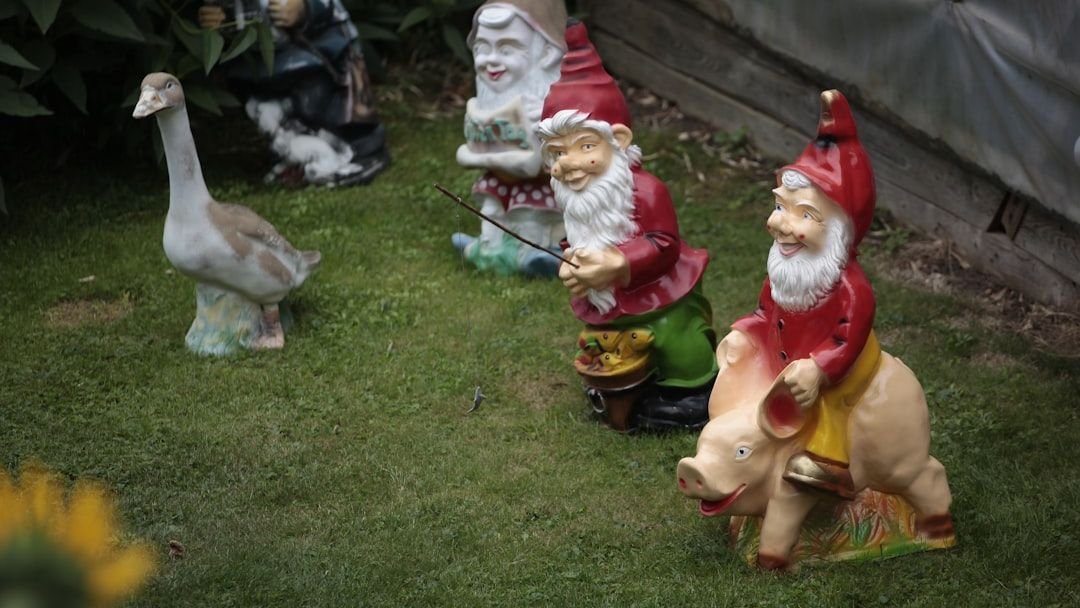
Your garden is your space. Nobody’s arguing that. But there’s a reason your neighbour pauses just a half-second too long when they walk past your yard, or why your street has that one house everyone quietly mentions by address instead of by name. Most people who own the items on this list genuinely love them. That’s what makes this so uncomfortable – the gap between how something looks from inside your own driveway and how it lands from the sidewalk at 8 a.m. on a Tuesday is enormous, and almost nobody tells you.
Some of these are obvious offenders. Others are items you probably own right now and have never once questioned. A few of them are so specific that reading their entry will feel like someone installed a hidden camera in your front yard. We’re counting down from #23 to the single most universally condemned garden situation in American suburban history – and it’s not the one you’re picturing yet.
#23 – Oversized Novelty Mailboxes Shaped Like Animals or Tractors
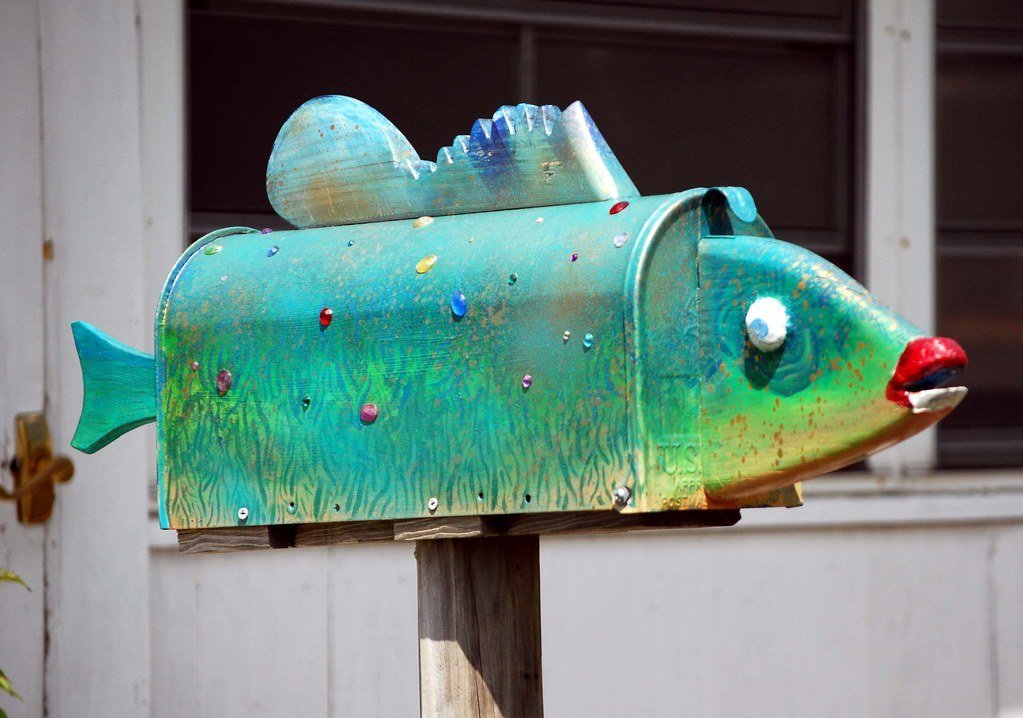
There are a hundred ways to make your house stand out on the street. The fish-shaped mailbox is not one of them. It signals a sense of humour that peaked somewhere around a 2003 county fair and hasn’t been updated since – and unlike actual county fairs, it doesn’t go away after the weekend. The novelty wears off for everyone except the owner within about one season, and by year two it just looks exhausted.
Real estate agents will quietly tell you that a bizarre mailbox is one of the first things prospective buyers photograph and text to their friends as a red flag – not a dealbreaker, but a tone-setter for everything that follows. There’s also the vandalism factor: novelty mailboxes attract attention from the wrong kind of passersby, and replacement costs add up faster than anyone expects when they’re cheerfully screwing a ceramic rooster to their post in the first place.
#22 – Artificial Flowers Stuffed Into Porch Planters
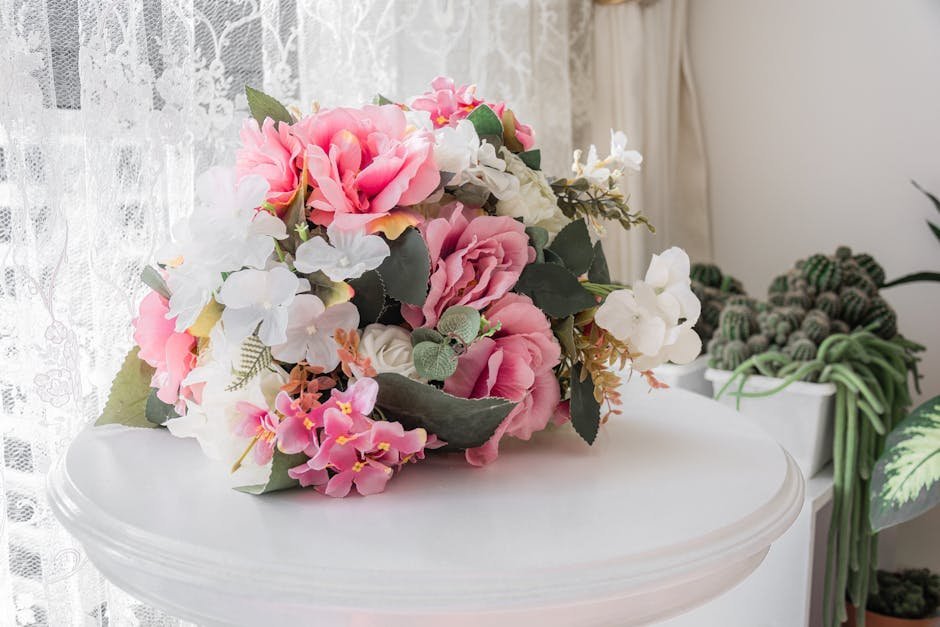
The idea is completely reasonable: colour on the porch without the watering schedule. The execution is where it falls apart. Plastic petals fade to a chalky, sun-bleached version of their original colour within a single season, and almost nobody replaces them on schedule. By late summer, what started as cheerful red geraniums looks like a planter full of faded pink regret.
Your neighbours can tell the difference between a thriving planter and a sun-damaged approximation of one. The dead giveaway isn’t even the colour – it’s the texture, the way the petals sit at the same angle forever, the fact that nothing has changed since April. Artificial flowers need regular cleaning and rotation to maintain any illusion of life. Left alone, they don’t age gracefully. They just age visibly.
Worth Knowing
- UV exposure breaks down plastic pigments within 3–6 months in direct sun, turning reds chalky and yellows grey
- Silk flowers fare better than plastic but still collect visible dust and spider webs outdoors within weeks
- A single high-quality real seasonal planting costs roughly the same as a multi-pack of artificial stems that fade by August
- Most garden designers recommend replacing outdoor faux florals every single season at minimum – almost nobody does
#21 – Mismatched Solar Stake Lights Crammed Along Every Path
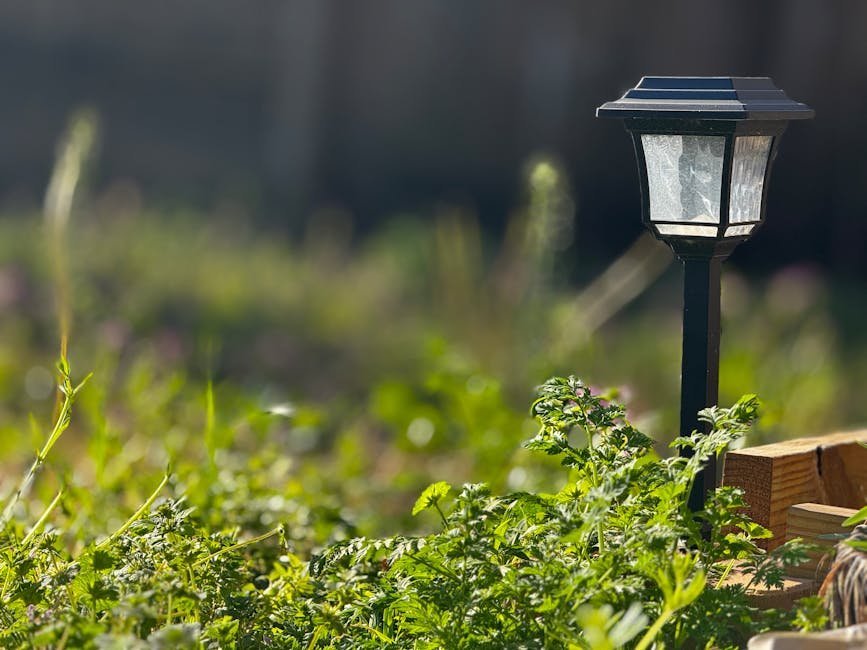
A handful of matching solar lanterns placed thoughtfully along a garden path is genuinely lovely. Twenty-seven mismatched mushroom-and-butterfly stakes jammed every eight inches like a runway for very confused fairies is a completely different situation. No two are the same height. Three of them stopped working in September. They’re all still out there, flickering at different intensities like a distress signal nobody is sending on purpose.
The specific problem isn’t solar lighting – it’s the multi-pack impulse purchase and what happens after. When the fixtures are cheap and the arrangement is chaotic, the overall effect reads as clutter rather than charm. Neighbours who live nearby also notice the light bleed at night: a dozen mismatched stakes pointed outward create a low-grade glow that enters adjacent yards and windows in a way no single tasteful lantern ever would.
#20 – Wind Chimes Hung in Clusters Along the Fence

One set of bamboo chimes near a back porch is genuinely peaceful. Four sets of metal-tube chimes strung along the entire fence line facing your neighbour’s bedroom window is a noise complaint with decorative ambitions. The owner hears the gentle, meditative tinkling from inside their kitchen and loves it. The neighbour trying to have a conversation six feet away hears something closer to a wind tunnel full of loose change.
The cruelty of the cluster wind chime situation is that it’s entirely invisible to the person responsible for it. They positioned themselves to hear the nicest version. Everyone else gets the full unfiltered experience – including at 3 a.m. during a storm, when four sets of metal chimes achieve a volume and intensity that no amount of goodwill toward their owner can fully excuse. Context is everything, and clusters ignore it entirely.
#19 – Random Lawn Ornaments Scattered With No Visual Logic
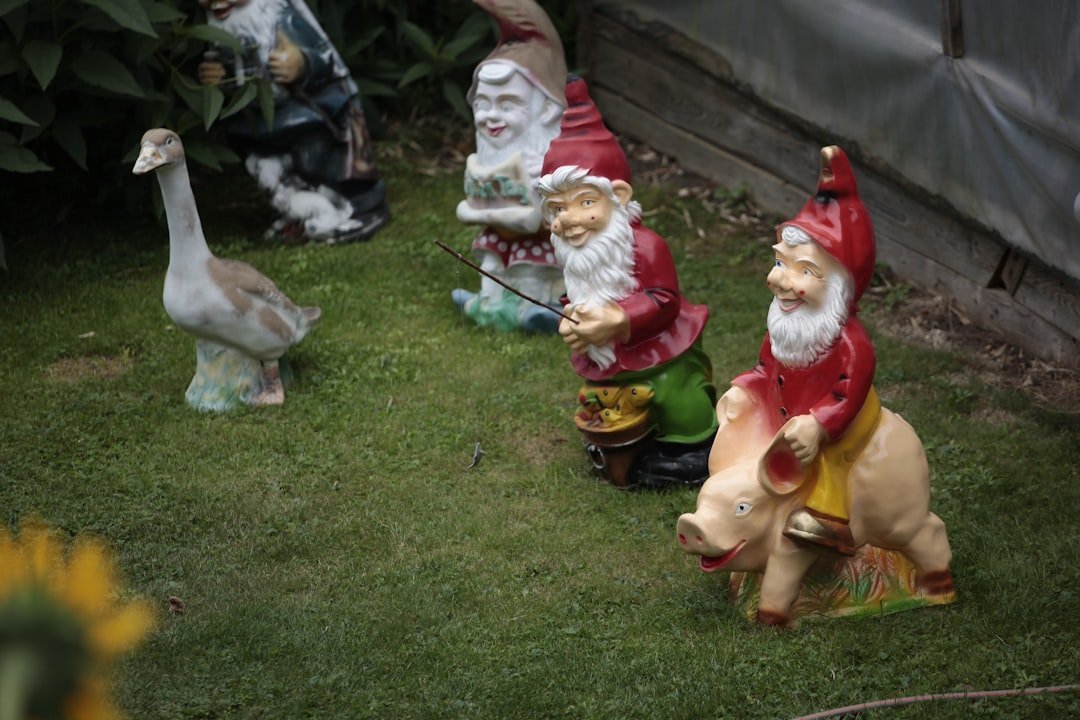
This is one of the most common silent judgment triggers in any neighbourhood, precisely because the homeowner loves every single item in the yard. The duck, the stepping-stone frog, the miniature wishing well, the lighthouse, the cement rabbit – each one was a deliberate, affectionate purchase. Together, with no clear arrangement or scale relationship, they read as visual noise rather than a garden personality.
The difference between a curated garden and a cluttered one is almost always editing rather than taste. Keeping six things you love on display instead of showcasing all forty simultaneously is what separates a garden that draws admiring looks from one that draws slow, puzzled drives-past. Neighbours aren’t judging what you own. They’re responding to the accumulated visual weight of everything being out at once, all the time, forever.
#18 – Vintage Lamp Posts Completely Out of Architectural Context

A wrought-iron Victorian lamp post looks magnificent outside a brownstone in Boston. It looks genuinely confused outside a 1990s ranch house in a Phoenix suburb. The lamp post itself isn’t the problem – the tonal mismatch between a decorative element that belongs to a completely different century and the house it’s standing in front of is what makes neighbours do a quiet double-take every single time they drive past.
What’s being judged here isn’t the lamp post’s quality or the owner’s intentions. It’s the jarring clash of registers – as if someone placed a cathedral gargoyle on a condo balcony because they thought it looked distinguished. When one element belongs to a completely different architectural world than everything around it, it stops reading as a design choice and starts reading as an accident that nobody has corrected yet.
Quick Compare
- Works: Victorian post outside a Victorian or Craftsman home with period-appropriate landscaping
- Doesn’t work: Victorian post outside a 1990s vinyl-sided ranch or a modern stucco build
- Works: Lantern-style post light chosen to match the home’s existing exterior hardware finish
- Doesn’t work: Ornate scrollwork post beside a flat-roofed contemporary or a split-level with aluminum trim
The Garden Decor Etiquette Quiz
How well do you know the unspoken rules of suburban curb appeal? Test your knowledge on the history, maintenance, and neighborly impact of common garden ornaments.
Think you caught the key details? Take the quick quiz and see how sharp your instincts really are.
#17 – Ceramic Toilets Used as Planters
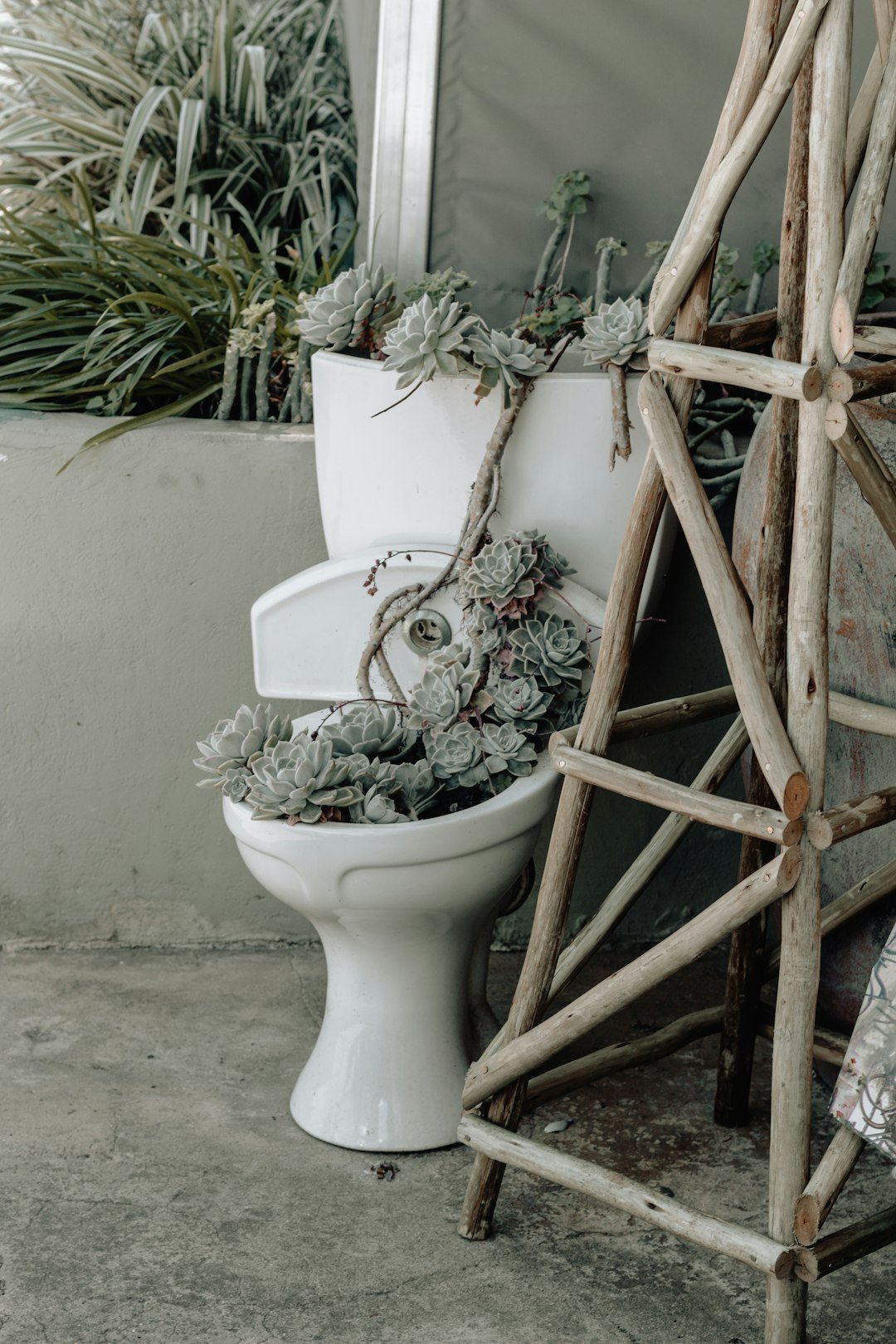
In Springfield, Illinois, a homeowner actually received a penalty notice for four ceramic toilets placed in his front garden – and in fairness, he’d done it in deliberate retaliation for a previous citation about his inflatable hot tub. That backstory is genuinely funnier than most garden features will ever manage to be. But it also illustrates the core issue perfectly: the toilet planter exists in a very specific category of yard humour that the owner finds hilarious and that everyone walking past finds somewhere between baffling and aggressively odd.
Repurposing unexpected objects as planters can actually work beautifully – old boots, watering cans, vintage suitcases. The toilet is the exception that proves the rule. It is the single most reliably polarising front-yard planter in existence, and in most neighbourhoods it will generate more whispered street-corner conversations than any other item on this list. The hostas growing out of the bowl do not soften the situation. They never have.
#16 – Political Lawn Signs Left Up Year-Round

A yard sign during an active campaign season is participation in democracy, and it has a clear, socially understood shelf life. The issue is the signs that never come down – the yard still displaying signage from an election cycle two years ago. At that point, it’s no longer a political statement. It’s a maintenance statement, and the story it tells is different from the one the owner intends.
Beyond HOA violations (which are common), permanent political signage creates a low-grade social tension that lingers in every neighbourly wave and driveway interaction. People on the street often aren’t reacting to the position itself – they’re responding to the permanent confrontational energy of a yard that never lets the block relax. The sign that stays up forever eventually stops being about its message and starts being about the fact that it never came down.
#15 – The Bent-Over Lady Garden Statue

If it got a genuine laugh the first time you put it out, it almost certainly hasn’t gotten one since. The woman-bent-over-in-the-garden ornament is the garden decor equivalent of a dad joke told at every single family dinner for thirty years – the punchline was marginal to begin with, and familiarity has not improved it. Every neighbour who has ever walked past it has seen it, clocked it, and quietly filed it away in their permanent mental record of the house.
What makes it especially cringeworthy now is how visibly dated the joke feels. It was a novelty item in the early 2000s, and it has not evolved in any direction. The floral bloomers, the painted expression, the specific suburban lewdness of the whole premise – it’s a relic that outlasted whatever brief window it had to be considered cheeky rather than just cheap. The fact that garden centres still sell it by the pallet is one of retail’s more persistent mysteries.
#14 – Reflective Glass Gazing Balls on Pedestals
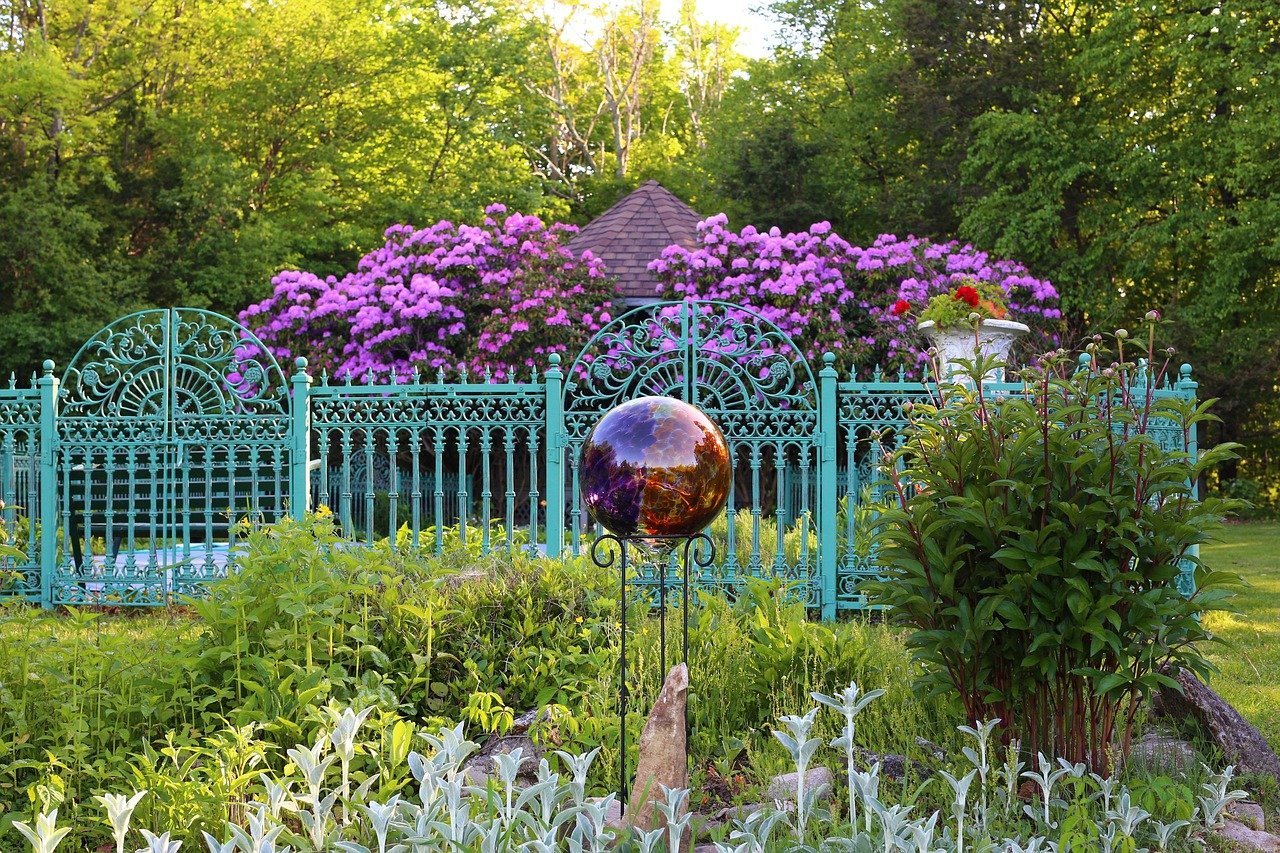
The gazing ball had a legitimate moment in Victorian gardens, where the convex mirror surface served a practical purpose – allowing hosts to monitor approaching guests from a distance. Today’s mass-produced iridescent version sitting on a concrete pedestal in a suburban front yard serves no purpose beyond creating squinting problems at the wrong angle of morning sun. The catalogue version looks dreamy. The real-world version functions as a miniature neighbourhood annoyance.
The detail neighbours notice most is the glare. The homeowner rarely stands at the exact angle that produces the blinding flash. The person walking their dog every morning at 8 a.m. absolutely does – every single morning, from the same spot on the pavement, without fail. It’s the kind of daily minor irritation that never rises to the level of a formal complaint but absolutely shapes how that yard is remembered and discussed.
#13 – Permanent Multi-Flag Bracket Installations

A single team flag flying from the porch during playoff season is neighbourhood bonding. A permanent bracket drilled to the front of the house holding six flags simultaneously – mixing sports allegiances, novelty slogans, and rotating seasonal greetings – is something else entirely. The flags flap loudly in any breeze, several fade to unreadable blurs within a season, and the overall effect reads more like a roadside vendor stand than a home.
The noise is the sleeper complaint here. Neighbours rarely say anything about the flags themselves, but persistent fabric slapping against a metal bracket during a windy night enters your awareness in a way that’s surprisingly hard to tune out. It’s the kind of sound that, once noticed, surfaces every subsequent windy evening without invitation. The visual clutter is the part people mention. The 2 a.m. flapping is the part they actually lie awake thinking about.
Fast Facts
- Nylon flags in direct sun typically fade to illegible within 6–12 months
- Metal-on-metal bracket clatter registers at roughly the same decibel level as a loud conversation
- Six flags on one bracket is the visual equivalent of putting six bumper stickers on a single car door
- HOAs in many states can require removal of flags that aren’t officially protected under the Freedom to Display the American Flag Act
#12 – Freestanding Plug-In Water Fountains With Visible Cords
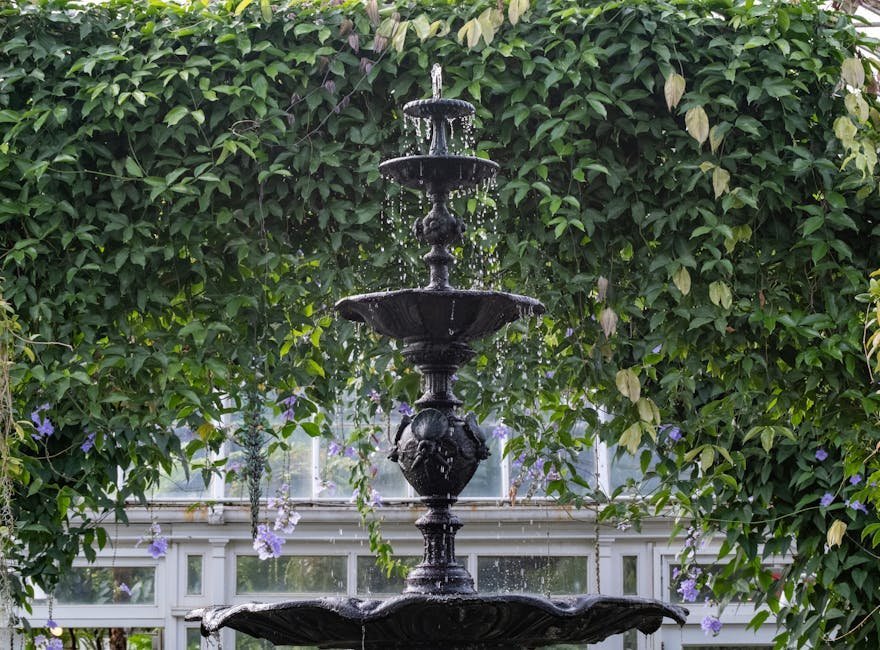
The concept is solid: the sound of moving water is genuinely relaxing, and a garden water feature can anchor a whole outdoor space beautifully. The freestanding plug-in version undermines its own ambition with one detail – the bright orange extension cord running through the mulch and across the patio. The idea was a serene bubbling centrepiece. The execution includes a power cable snaking past the resin cherub toward the exterior outlet, which collapses the illusion immediately.
There’s a maintenance problem layered on top of the aesthetic one. Low-end freestanding fountains accumulate green algae faster than most owners clean them, turning what was supposed to be a calming focal point into a stagnant bowl of murky water with a visible cord. Neighbours notice the algae buildup before the owner does, because the owner mostly sees the fountain from inside – through a window, from an angle, at a distance where the green film doesn’t fully register yet.
#11 – Scarecrows Left Standing Well Past Halloween

October scarecrows are entirely legitimate. They’re seasonal, they’re festive, and the good ones are genuinely charming. The problem is the ones that never come down. By mid-November, the stuffed-shirt figure with the burlap face has started to sag noticeably. By December, the hat has blown into the hedgerow. By February, it’s a collapsed pile of plaid with a painted expression, and it has been in that state for so long that the neighbours have quietly given it a name.
The scarecrow is a specific variant of the post-holiday neglect problem because it doesn’t carry the same cultural grace period as Christmas lights. Nobody feels even mild warmth toward a February scarecrow. It reads as pure forgetfulness – and every additional week it stays up, it tells a story about the homeowner that they almost certainly wouldn’t choose to tell if they thought about it for thirty seconds.
#10 – Meerkat Statue Colonies
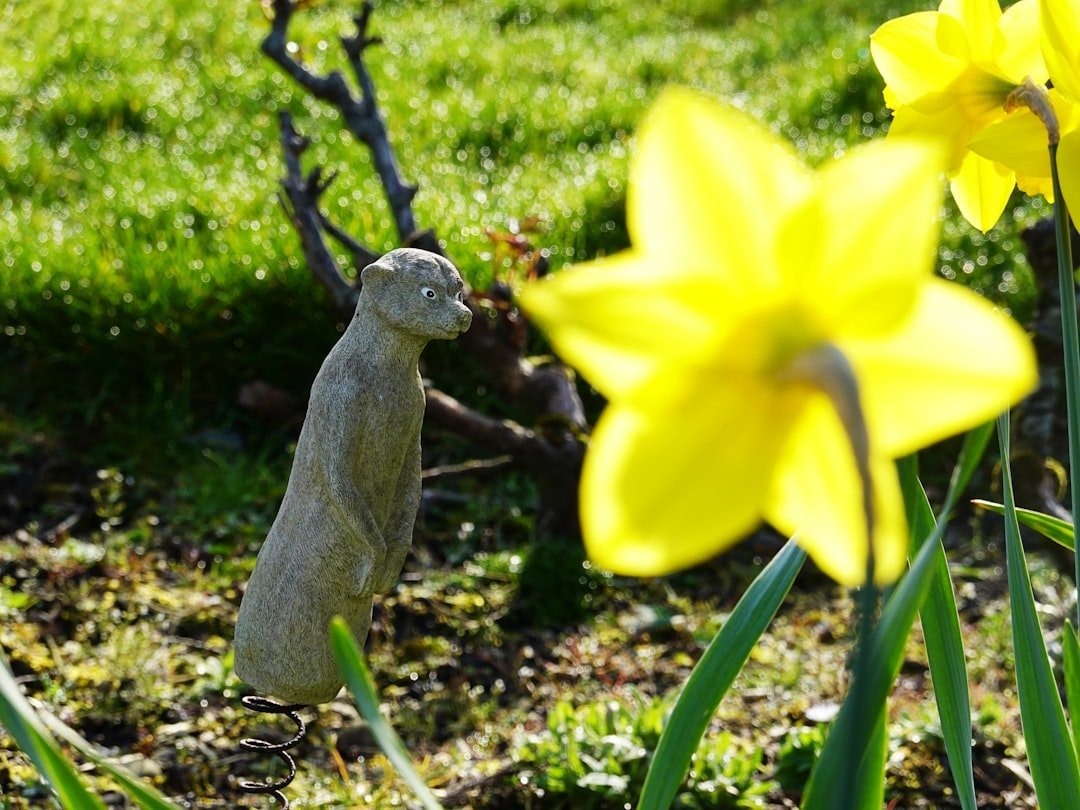
A single curious meerkat peering over a flower bed has a certain undeniable charm. Six meerkats at varying heights staring toward the street in formation looks like the opening sequence of a nature documentary filmed entirely in a suburban garden centre. The meerkat statue trend arrived in the mid-2000s and never fully departed, which means a lot of yards are now home to resin meerkat populations that have been slowly fading and chipping for the better part of two decades.
The colony effect is what makes this particular ornament so reliably judged – these things are almost never purchased individually. Sets come in threes and fours, and enthusiastic owners tend to add more over time. Before long, the garden has a meerkat problem rather than a meerkat feature. The painted details on resin meerkats chip and fade in a way that makes them look increasingly forlorn rather than charming, and forlorn meerkats in a row is a very specific aesthetic that no front garden should be accidentally committing to.
#9 – Easter Island Head Replicas

An Easter Island head in your front garden will not read as exotic or well-travelled. It will make your neighbours and every first-time visitor quietly wonder why it’s there – and that question, once it surfaces, doesn’t resolve itself. Unlike a garden gnome or a flamingo, which have at least some established lawn ornament lineage, the Easter Island head exists in a decorative no-man’s-land. It’s too large to feel incidental, too out of cultural context to feel intentional, and too inscrutable to invite any conversation that ends comfortably.
The people who own them almost always have a genuine reason – a trip, an interest in archaeology, a moment of inspiration in a garden centre aisle. That reason is completely invisible from the street. What’s visible is a 90-pound replica of a monument from a remote Pacific island sitting between the mailbox and the rose bushes, raising more questions about the household than any front garden should be generating on an ordinary Wednesday morning.
#8 – Novelty Peeing Boy or Rude-Gesture Statues

The Manneken Pis in Brussels is a beloved cultural landmark that has stood since 1618. The mass-produced resin cherub urinating into a birdbath in an American front garden occupies a somewhat different cultural position. These novelty statues – whether it’s the peeing boy, the mooning figure, or the raised-middle-finger statue that a genuinely surprising number of people install facing their neighbours – exist in a category of garden humour that is confrontational by design, whether the owner frames it that way or not.
The middle-finger statue deserves specific mention because it has generated actual legal disputes in multiple U.S. states. Courts have generally found that yard art, including offensive statuary, is protected expression – but legal protection and neighbourly goodwill are two completely different things. The rude-gesture statue is the most direct version of the confrontational garden item in existence, and the disputes it creates have a way of outlasting the original grievance that inspired the purchase by a considerable margin.
#7 – Oversized Bigfoot or Sasquatch Yard Figures

“Some neighbours are Bigfoot enthusiasts – they have a giant Bigfoot ape in their courtyard. It is, frankly, so stupid.” That’s a direct quote from an actual neighbour, and it captures the situation with perfect economy. The giant Bigfoot figure – often standing five to six feet tall, cast in dark resin, positioned to peer around a tree or over a fence – functions as exactly one joke. That joke lands once. After that, it’s just a large cryptid with a permanent residency in the front garden.
Bigfoot statues have become common enough to qualify as a genuine trend – garden centres and online retailers sell thousands annually. But novelty wears off faster than resin does, and what remains is a large, vaguely aggressive-looking primate that every delivery driver, mail carrier, and first-time visitor will startle at before catching themselves. That momentary fright is funny to the owner approximately once and mildly uncomfortable for everyone else on an indefinite ongoing basis.
#6 – Garden Gnomes in Rude or Pop-Culture Costumes
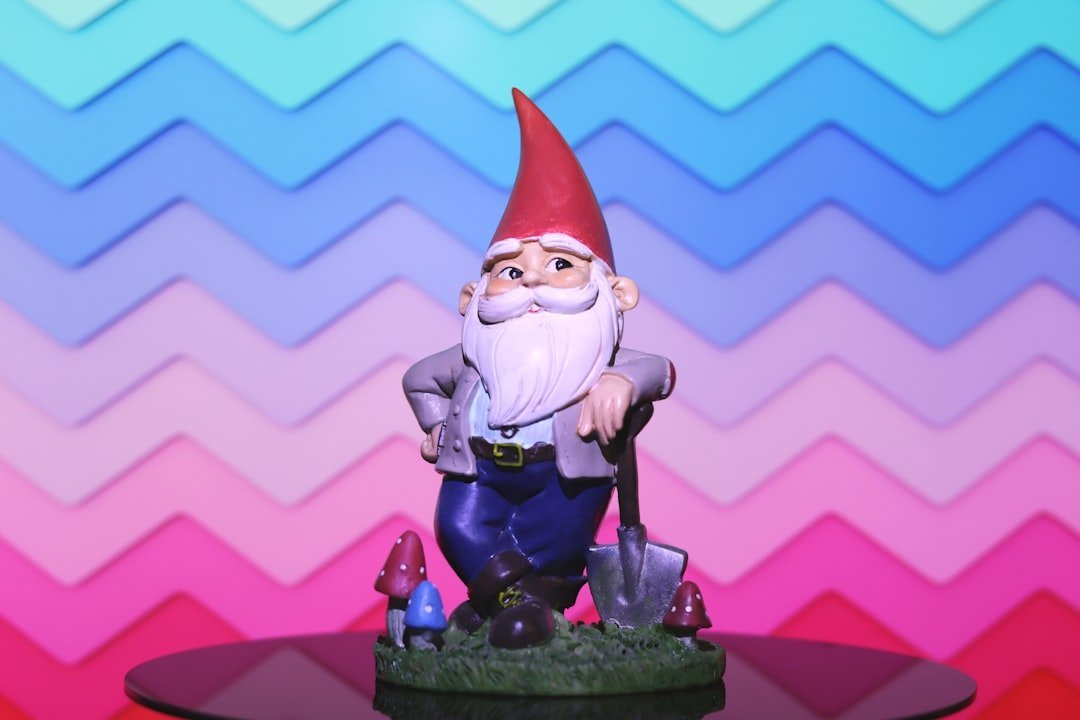
Decorative gnomes date back to 19th-century Germany, where they were handcrafted garden guardians with genuine folkloric roots. Today’s mass-produced variants dressed as Harley-Davidson riders, posed as Minions, or arranged in anatomically explicit positions for comedic effect are a different matter entirely. The traditional gnome was already losing its cultural standing before the costume variant arrived to accelerate the process.
The pop-culture costume gnome is the logical endpoint of a long escalation, and the collection problem applies here just as much as it does to meerkats and flamingos. One gnome in a garden is a nod. Twelve gnomes in assorted novelty costumes is a yard that has committed fully to a bit that most visitors stopped finding funny several visits ago. At a certain density, they stop reading as individual decorations and start reading as a single overwhelming statement about the household’s relationship with restraint.
#5 – Christmas Lights Still Up in Spring

Every neighbourhood has this house. The lights are still on the gutters in March. They’re still technically there in May, just not lit. The homeowner who leaves Christmas lights up well past the holidays generates more unsolicited neighbour commentary than almost any other item on this entire list – and uniquely, it produces consensus across aesthetic preferences, age groups, and political affiliations. Nobody is rooting for the April lights.
The cruel irony is that these are often the same households that put up the most impressive display in December. The effort that went into installation makes taking everything down feel disproportionately daunting – but neighbours don’t see the December effort anymore by the time April arrives. They just see the neglect. The lights that once said “we celebrate the holidays enthusiastically” now say something else entirely, and the message gets less flattering with every passing week after New Year’s.
#4 – Giant Holiday Inflatables Left Deflated on the Lawn
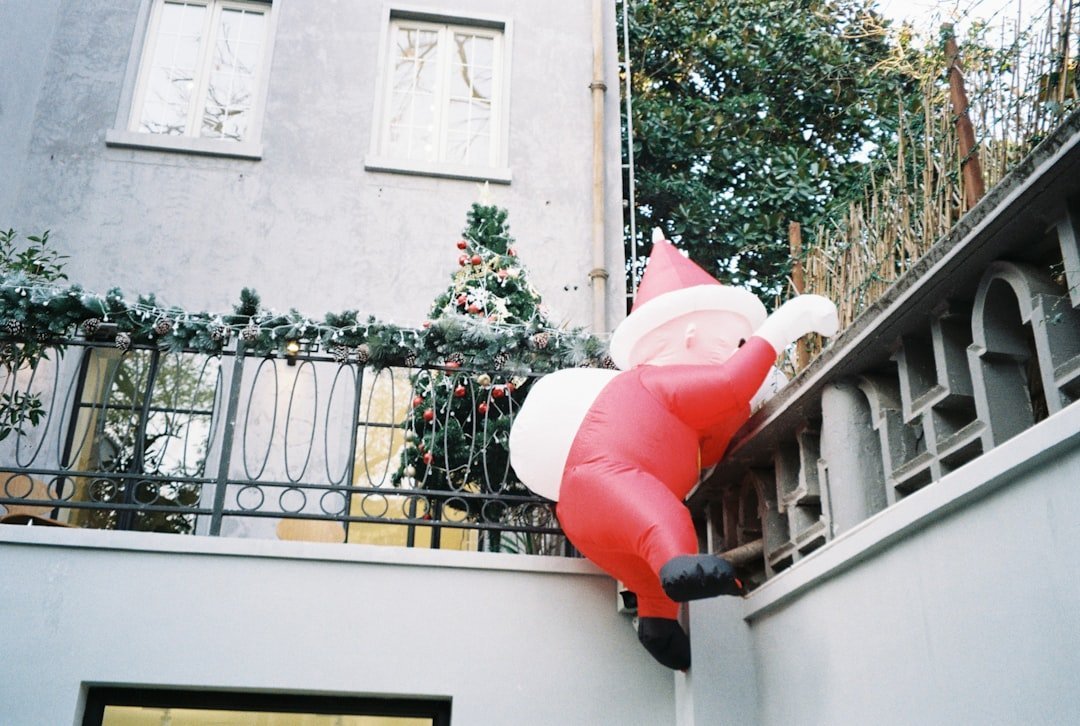
Inflatable yard decorations have become a genuine cultural institution since the mid-2000s – the 12-foot Santa, the LED-eyed snowman, the grinning pumpkin that inflates at dusk like a sentient weather balloon. When they’re fully inflated during the actual holiday season, the judgment is about taste, and reasonable people can disagree. When they’re deflated, the conversation changes completely.
A powered-down inflatable collapses into a heap of wrinkled nylon that looks like a giant discarded grocery bag left on the lawn. That’s the version that generates the strongest reactions – not the inflated display, but the flat, crumpled aftermath left on the grass between the hours the timer runs, or worse, left outside for weeks after the holiday has passed. It is the most visually chaotic state any garden item is capable of achieving, and there is no angle from which a deflated 10-foot snowman face-down in January mud reads as anything other than defeat.
At a Glance
- The inflatable yard decor market hit $1.98 billion globally in 2024, with North America leading at roughly 38% of that total
- Gemmy Industries launched the first airblown inflatable in 2001 – an 8-foot Santa – and now holds an estimated 90–95% U.S. market share
- Inflatables left running overnight generate fan noise and light bleed that neighbours in adjacent bedrooms cannot avoid
- A daytime-deflated inflatable on a timer spends more hours as a crumpled heap than as an upright display in most households
#3 – Plastic Pink Flamingos
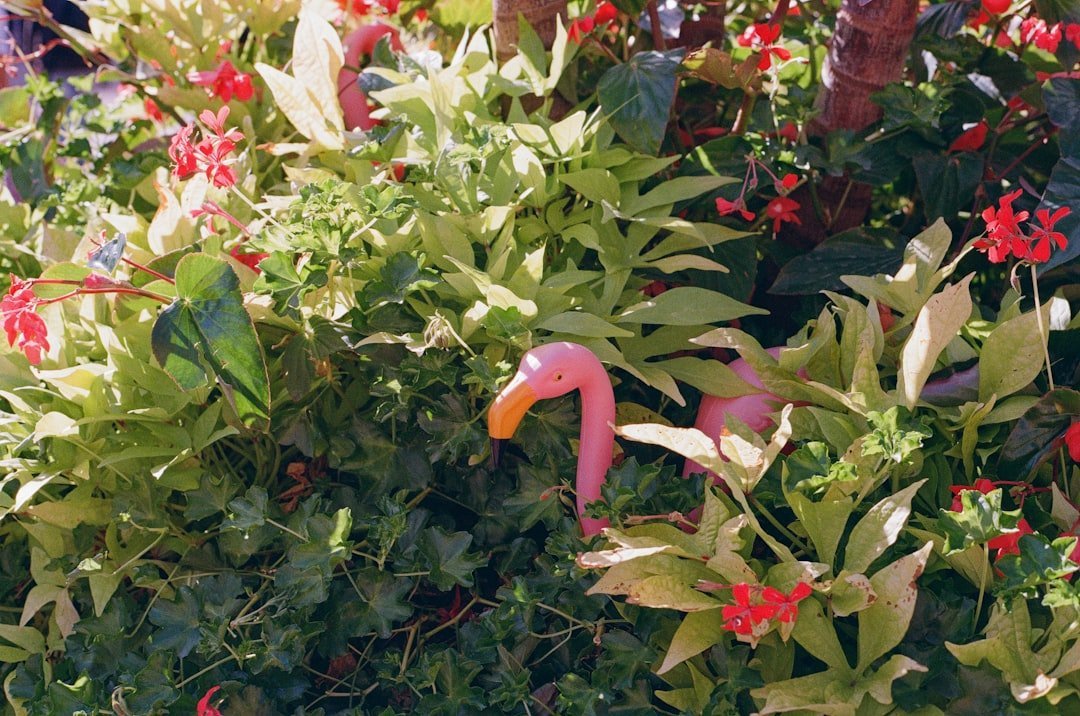
Don Featherstone designed the plastic pink flamingo for Union Products in 1957, modelling it from National Geographic photographs since live birds weren’t available. It went on sale in 1958 at $2.76 a pair and became a cultural symbol almost immediately – though exactly what it symbolised has always been contested.
One or two flamingos reads as a knowing wink at lawn ornament tradition. An entire flock is a different proposition – and flamingos are sold in pairs, which means pairs have a natural tendency to multiply. Before long, the yard has committed to flamingos in a way that left the winking-irony stage several birds ago. Their charm, such as it is, fades faster than the plastic does. The sun-bleached, listing flamingo that’s been out since spring is one of the most reliably commented-on sights in any suburban neighbourhood.
“Before that, only the wealthy could afford to have bad taste.”
Don Featherstone, creator of the plastic pink flamingo, to the Chicago Tribune, 2007
The Garden Decor Etiquette Quiz
How well do you know the unspoken rules of suburban curb appeal? Test your knowledge on the history, maintenance, and neighborly impact of common garden ornaments.
Think you caught the key details? Take the quick quiz and see how sharp your instincts really are.
#2 – Overloaded Holiday Displays That Cover Every Visible Inch of Yard

There is always that one house where no grass is visible from November through January – just a dense, layered installation of reindeer, snowmen, Santas, inflatables, rope lights, projector beams, and animated figures covering every available surface. Everyone slows down to look. Nobody on the block is entirely sure whether to be impressed or appalled, and most people privately feel both things at once, which is a difficult emotional position to sustain for two months.
The tourist appeal is real – people genuinely drive to see the maximalist holiday yard, and some of those homeowners have embraced that role with full commitment. What those visitors don’t experience is the 11 p.m. light show strobing through the curtains of every adjacent bedroom from Thanksgiving to New Year’s. The neighbours who live closest to the fully saturated yard aren’t experiencing a festive spectacle. They’re experiencing a seasonal condition they have to manage, sleep through, and politely not mention at the block party in February.
#1 – The Complete Collection: Every Tacky Item Combined in One Yard
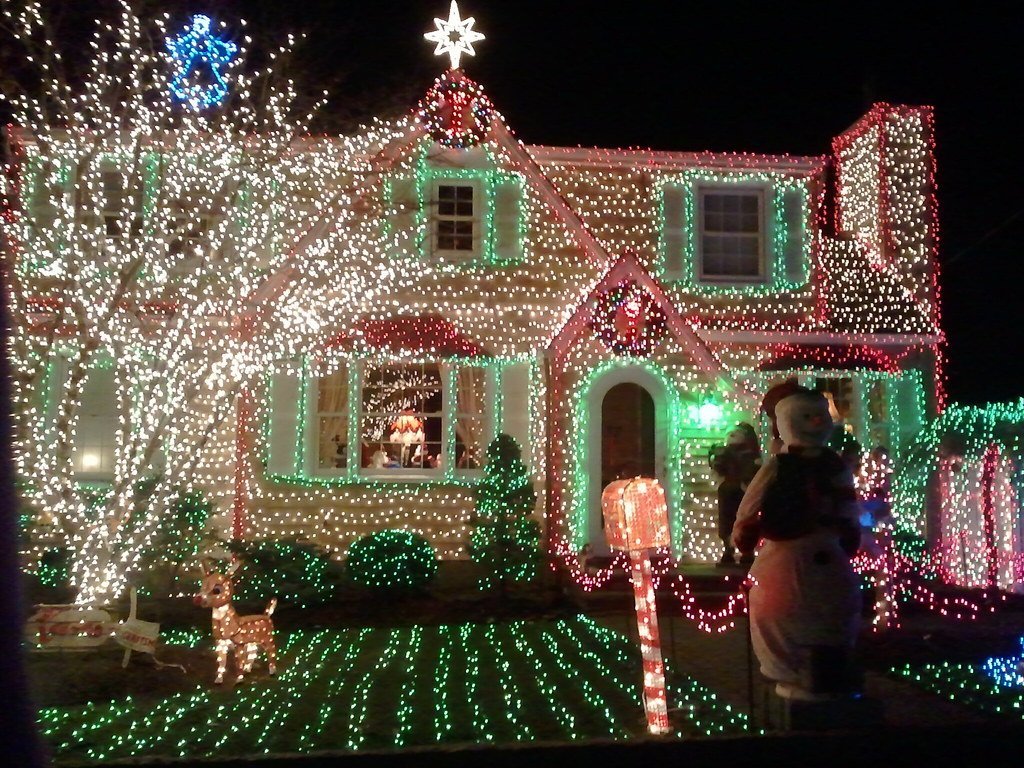
Every neighbourhood has exactly one. It’s not the flamingos alone, or the gnomes alone, or the deflated inflatable alone – it’s the yard that has somehow accumulated all of them simultaneously, over years of enthusiastic purchasing and zero editing. The gnome colony standing beside the gazing ball, which reflects the peeing boy statue, which stands next to the Bigfoot, which guards the toilet planter, which is flanked by mismatched solar stakes, all of it framed by Christmas lights that are still up in July and wind chimes audible from three houses away. Each item arrived as a decision. Together they became a neighbourhood landmark.
No single item on this list is necessarily fatal on its own. Most of them come from a genuinely good impulse – the desire to personalise a space, express something, make a home feel alive and individual rather than generic. That instinct is worth keeping. What it needs is an editor. Walk to the end of your street, turn around, and look at your own garden the way your neighbours see it every single morning. If you can’t immediately read the story it’s telling, there’s a solid chance the story being told isn’t the one you intended. The yard that says everything, ultimately says nothing – except that nobody has walked to the end of the street and looked back in a very long time.